

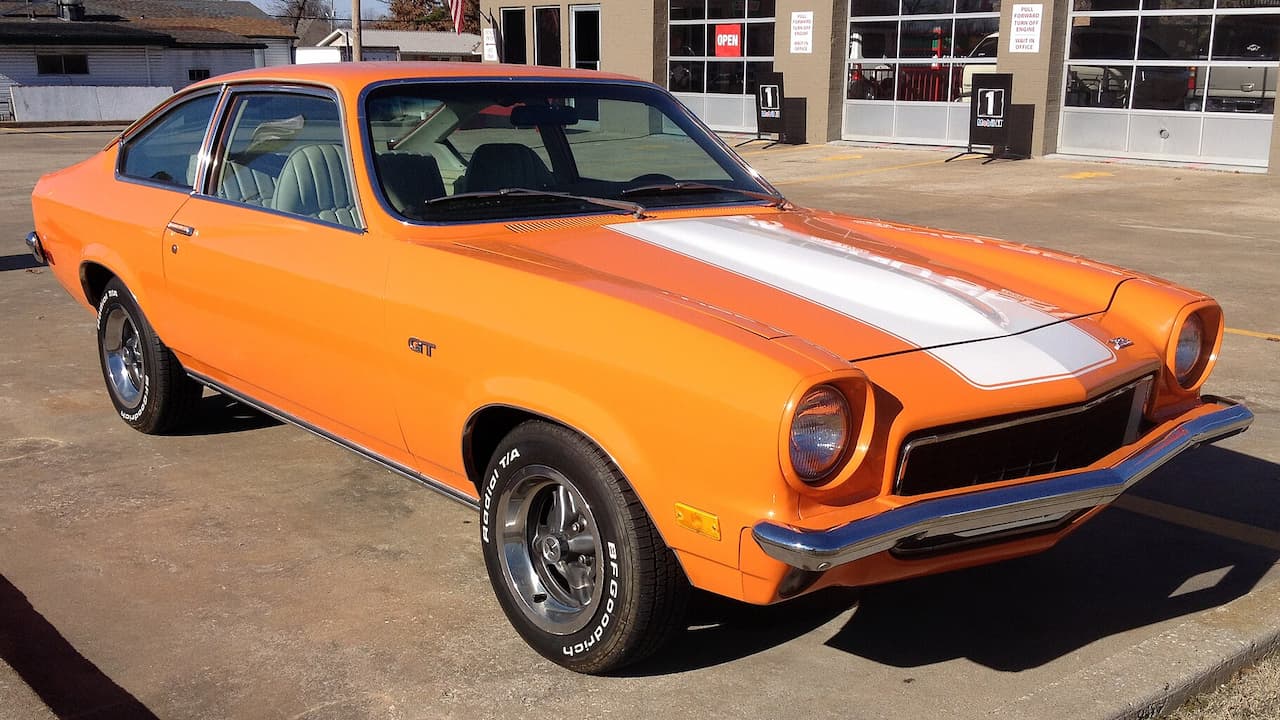
Despite their initial buzz, several cars from the 1970s failed to meet consumer expectations, leaving buyers disappointed and manufacturers scrambling. This article examines six overhyped models that, for various reasons, did not live up to their promised performance, reliability, or value. Understanding these failures not only sheds light on the automotive industry of the time but also serves as a cautionary tale for contemporary car enthusiasts.
1. Ford Mustang II (1974-1978)
The Ford Mustang II was introduced as a response to the 1973 oil crisis, designed to be smaller and more fuel-efficient than its predecessors. However, the shift to a compact platform alienated many loyal fans who craved the raw power of the original Mustangs. Sales peaked at around 125,000 units in 1975, but the model’s performance and styling failed to resonate, leading to a significant drop in sales by the end of its production run.
2. Chevrolet Vega (1971-1977)
Chevrolet touted the Vega as a revolutionary compact car with a lightweight aluminum engine and innovative design. Unfortunately, it quickly gained a reputation for rust problems and engine issues, with many owners experiencing major repairs within the first few years of ownership. Despite selling over 1.3 million units, the Vega’s reliability issues tarnished its reputation, leading to its discontinuation in 1977.
3. AMC Pacer (1975-1980)
Launched with a unique design and marketed as a “futuristic” vehicle, the AMC Pacer initially generated excitement among consumers. However, its quirky appearance could not mask its poor handling and subpar performance. The Pacer’s average annual sales of about 100,000 units in its first few years dwindled as the public grew disenchanted, resulting in a total production of just over 280,000 units before its demise.
4. Chrysler Cordoba (1975-1983)
Marketed as a luxury car with “rich Corinthian leather,” the Chrysler Cordoba was heavily promoted in the mid-1970s. However, the promise of luxury was undermined by reliability issues and underwhelming performance. Despite selling well in its first year with over 150,000 units, consumer interest waned as competitors offered more reliable and better-performing alternatives, leading to a decline in sales and the car’s eventual discontinuation.
5. Pontiac Trans Am (1970-1981)
The Pontiac Trans Am was initially celebrated for its bold styling and performance, particularly with the iconic “Smokey and the Bandit” film association. However, as emissions regulations tightened in the late ’70s, the performance that made the Trans Am famous significantly declined. By 1979, sales had dropped to around 46,000 units, and many fans were left disappointed by the car’s transformation from a muscle car to a mere shadow of its former self.
6. Datsun 280Z (1975-1978)
The Datsun 280Z was introduced as the successor to the popular 240Z, but it struggled to maintain the same level of excitement. While it offered improved comfort and features, many enthusiasts felt it lacked the raw driving pleasure of earlier models. Sales reached a peak of about 25,000 units per year, but customer dissatisfaction over performance and steering led to a decline in interest, and the model was phased out by 1978.
Conclusion: Lessons Learned from the Past
The 1970s were a tumultuous time for the automotive industry, marked by changing consumer preferences and stringent regulations. The six cars highlighted in this article serve as reminders that even the most hyped vehicles can fail to deliver on their promises. As car buyers today sift through marketing claims and production numbers, it is crucial to consider the lessons learned from these overhyped models. Buyers should always conduct thorough research and test drives before making a purchase to avoid the pitfalls of history.
Stay informed about the automotive market and share this article with friends who may be considering a classic car. Understanding the past can help shape better choices for the future.