

There’s something undeniably thrilling about the growl of a classic car. The harmony between mechanics and design often creates a symphony on wheels, a testament to automotive history. However, not all classics lived up to their sounds in terms of performance. I’ve curated this list based on expert opinions and auto aficionado trends, focusing on vehicles that, for all their auditory charm, had more bark than bite. By the end, you’ll have a new appreciation for these intriguing contradictions of style and substance.
1968 Dodge Charger
With a growl that could make any car enthusiast’s heart skip a beat, the 1968 Dodge Charger was all about swagger. Its curvaceous bodywork and iconic double-diamond design made it a standout in any crowd. Its deep, menacing rumble hinted at power and speed.
However, despite the Charger’s powerful voice, it was notoriously difficult to handle, particularly at high speeds. Its heavy body and light steering made for a somewhat unwieldy driving experience. But let’s be real: that sound still makes it worth a ride.
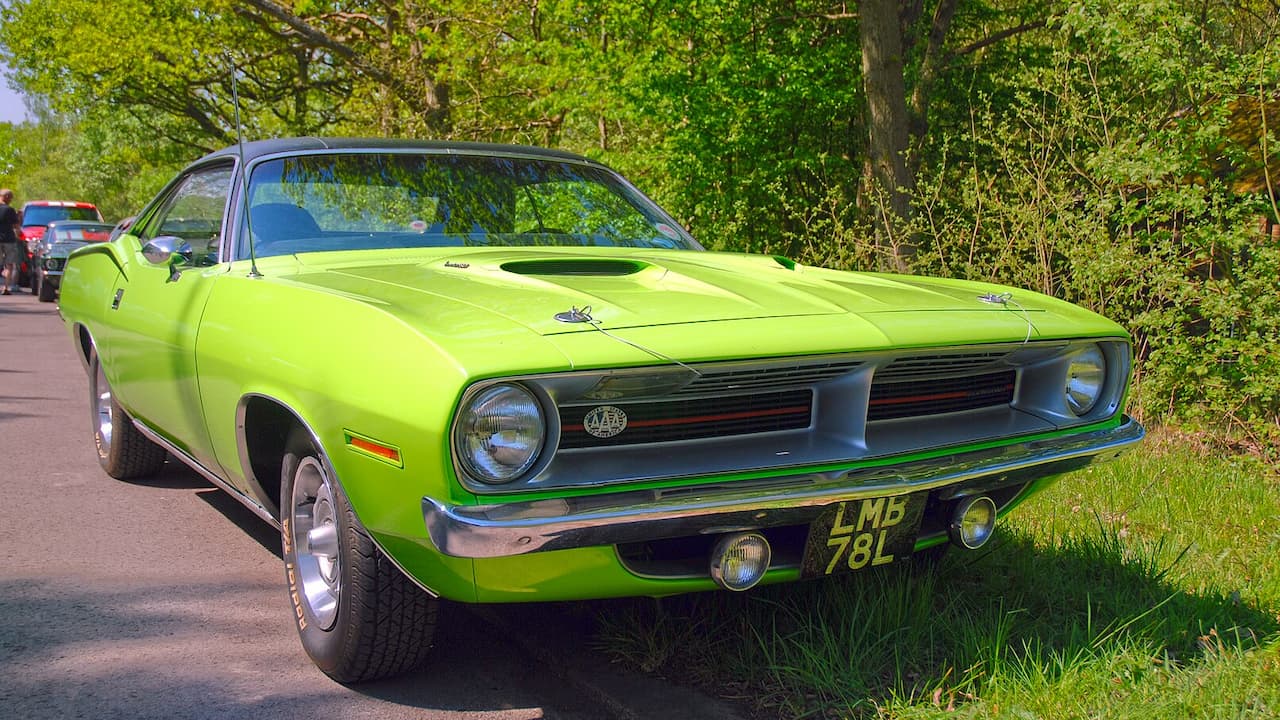
1970 Plymouth Barracuda
The 1970 Plymouth Barracuda was a statement piece. Its muscular form and bold grille promised a thrilling ride, and its engine’s throaty roar was enough to send shivers down your spine. This was a car that announced its presence with authority.
Unfortunately, its thunderous voice didn’t quite translate into a smooth ride. Its handling was known to be sluggish, and its brakes were less than efficient. But the Barracuda’s roar remains a siren song for classic car enthusiasts.
1965 Ford Mustang
The 1965 Ford Mustang was the epitome of American muscle. Its sleek lines, robust aesthetic, and the purr of its engine made it an instant classic. The sound it produced was a symphony of mechanical harmony, a testament to the era’s engineering mastery.
Though it was a beauty to behold and listen to, the ’65 Mustang was notorious for its subpar braking performance. The drum brakes were prone to fading under heavy use, making high-speed adventures a bit of a gamble. But, oh, that melodious engine note!
1971 Chevrolet Chevelle
The 1971 Chevrolet Chevelle was an embodiment of American automotive grandeur. Its robust form and the distinct growl of its V8 engine were proof of its muscle car heritage. The sound it produced was a symphony of raw power and mechanical prowess.
Despite its impressive sound, the Chevelle was known for its heavy steering and less-than-ideal cornering ability. It was a straight-line cruiser rather than a nimble racer. Nonetheless, the Chevelle’s engine note remains a classic melody in the world of automobiles.
1957 Cadillac Eldorado
The 1957 Cadillac Eldorado was a true symbol of luxury. Its sleek, opulent design and the purr of its V8 engine were hallmarks of its time. The Eldorado’s voice was a gentle rumble, a soothing reminder of its elegance and prestige.
However, for all its auditory charm, the Eldorado was known for being a bit of a handful on the road. Its size made it difficult to maneuver, and its brakes were less than effective. But its melodious hum still speaks of a bygone era of luxury and style.
1970 Pontiac GTO
The 1970 Pontiac GTO was a car with character. Its bold design and the throaty roar of its engine made it an icon of the muscle car era. The GTO’s voice was a symphony of power and aggression, a testament to its raw, untamed spirit.
Despite its impressive sound, the GTO was known for its less-than-stellar handling. Its weight and size made it less agile than some of its contemporaries. But the GTO’s growl remains a classic tune in the automotive world.
While these classic cars may not have delivered the driving experience their sounds promised, they remain beloved symbols of automotive history. Their voices speak of a time when design and performance were in a harmonious dance, even if they occasionally stepped on each other’s toes. So, let’s celebrate these melodious machines, for their symphony continues to echo in the hearts of car enthusiasts around the world.