

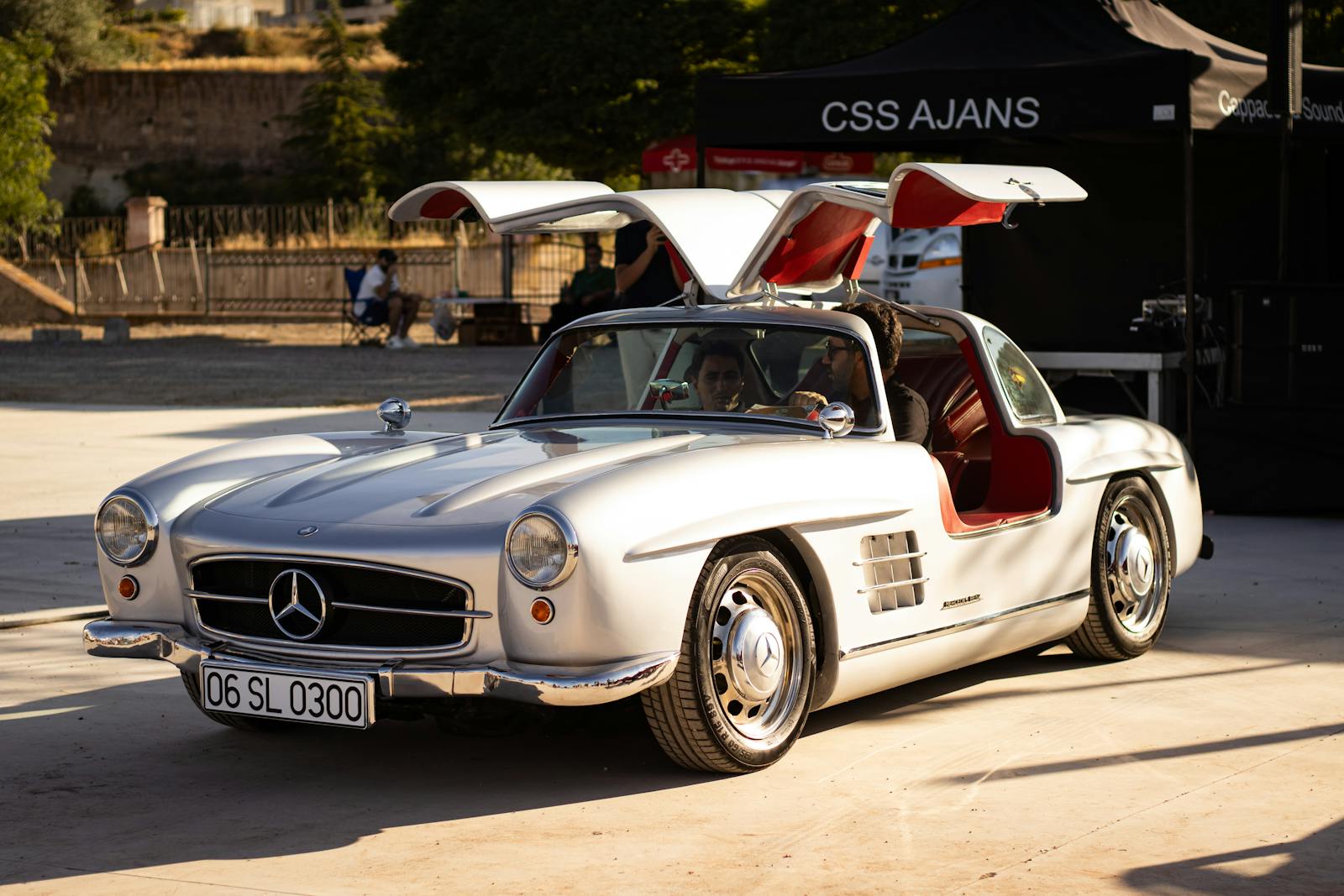
Throughout automotive history, several classic cars have not only defined their eras but also set trends that were far ahead of their time. These vehicles often introduced groundbreaking technology, innovative design, or unmatched performance that would not be fully appreciated until years later. Understanding their impact offers insight into the evolution of the automotive industry and the ongoing quest for excellence among car manufacturers.
1. 1955 Mercedes-Benz 300SL Gullwing
The 1955 Mercedes-Benz 300SL Gullwing is often hailed as one of the most iconic sports cars in automotive history. Its unique gullwing doors were not just a stylistic choice; they were a response to the need for a lightweight chassis and aerodynamic performance. Powered by a 3.0-liter inline-six engine, the 300SL could reach speeds of up to 140 mph, making it a formidable competitor on the racetrack at the time.
Beyond its performance, the 300SL introduced fuel injection technology to the mass market, a feature that remained rare in the 1950s. This innovation improved power output and fuel efficiency, setting a precedent for future sports cars. Today, the 300SL is valued at over $1 million at auctions, highlighting its lasting legacy in the automotive world.
2. 1966 Ford Mustang
The Ford Mustang, introduced in 1966, revolutionized the American automotive landscape by creating the “pony car” segment. With its long hood and short rear deck, the Mustang combined style with performance, offering a variety of powerful engine options starting from 105 horsepower. Its affordability—starting at about $2,368—made it accessible to a younger demographic eager for a sporty vehicle.
The Mustang’s impact extended beyond sales; it influenced car culture and inspired generations of automotive enthusiasts. By 1970, Ford had sold over 1 million units, solidifying the Mustang’s status as a cultural icon. The model’s design and marketing strategy paved the way for future muscle cars, making it a key player in shaping the automotive industry.
3. 1970 Citroën DS
The 1970 Citroën DS was a marvel of engineering that introduced several advanced features to the automotive market. With its hydropneumatic suspension system, the DS offered a smooth ride that was virtually unmatched at the time. This technology allowed the car to adapt to different road conditions, automatically adjusting the suspension for optimal comfort and handling.
Additionally, the DS’s aerodynamic design contributed to its impressive fuel efficiency, utilizing a streamlined shape that reduced drag. The model also included innovative safety features such as disc brakes and the ability to self-level, making it a leader in automotive technology for its era. The DS remains a symbol of innovation, with a production run that lasted until 1975 and over 1.4 million units sold globally.
4. 1982 DeLorean DMC-12
The DeLorean DMC-12, released in 1982, is renowned for its distinctive stainless-steel body and gullwing doors, but it also introduced features that were cutting-edge for its time. While it struggled with production issues and a limited run of only about 9,000 units, the DMC-12’s design was revolutionary, focusing on a futuristic aesthetic that captured the public’s imagination. It became an icon after its appearance in the “Back to the Future” films.
Despite its initial failure in the market, the DMC-12’s emphasis on safety features, such as a reinforced structure and crumple zones, was ahead of its time. These elements have since become standard in modern vehicles. Today, the DeLorean is celebrated not only as a cultural artifact but also as a testament to the importance of innovation in automotive design.
5. 1994 Mazda RX-7
The 1994 Mazda RX-7 is often cited as one of the best sports cars of its era, largely due to its unique rotary engine design. This lightweight engine provided impressive power-to-weight ratios, allowing the RX-7 to accelerate from 0 to 60 mph in just 5.5 seconds. With a top speed of around 155 mph, it was a formidable competitor in the sports car segment.
The RX-7’s design focused on optimizing weight distribution and handling, making it a favorite among driving enthusiasts. Its innovative engine technology, which differed from traditional piston engines, offered a glimpse into alternative powertrains that would become more prevalent in the following decades. With only 25,000 units sold in the U.S. by 1995, the RX-7 is now