

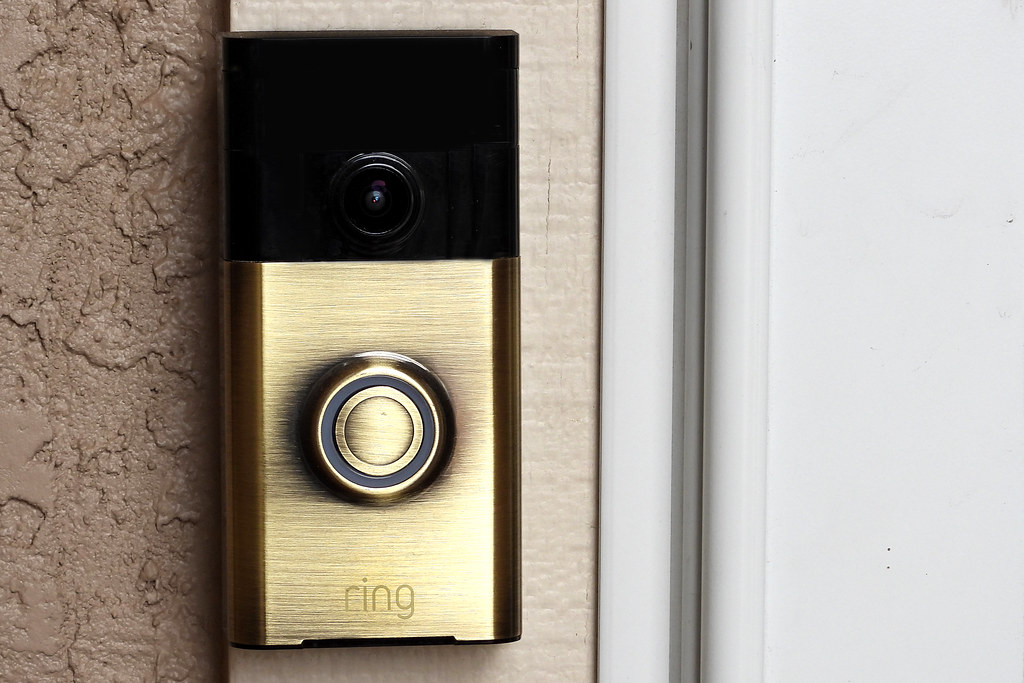
The clip is only a few seconds long, but it hits every modern homeowner’s nightmare: a quiet driveway, a parked car, and a doorbell camera that suddenly freezes just as thieves move in. By the time the video jumps back to life, the car is gone and the thieves are already down the street. That eerie gap is now racing around social feeds, not just because it is unsettling to watch, but because it hints at a new, tech driven way to make cars and cameras go dark at the same time.
What looks like a glitch is increasingly being treated as a tactic. Investigators and cyber experts say criminals are learning how to jam wireless signals, hijack key fobs and plug straight into car computers, often in full view of security cameras that never record a thing. The viral doorbell clip is not an isolated fluke, it is a window into how fast car theft is evolving and how far everyday gadgets have to go to keep up.
The viral driveway clip that set off alarm bells
The story that has grabbed so much attention starts on a quiet residential street, where a woman watched her own car disappear from her driveway while her doorbell camera appeared to take a coffee break. In the footage, the vehicle sits clearly in frame, then the recording freezes for several minutes, and when the feed resumes the driveway is empty. The owner, Melissa Harris, later said she believes thieves used some kind of jamming device to create that window of opportunity, long enough to get into the vehicle and drive away without leaving a usable video trail, a detail she shared after speaking with the BBC.
In a separate account of the same incident, Melissa Harris described scrubbing through the footage and spotting what she called a “big gap,” roughly seven minutes where the cameras all froze. She said her car was visible before the freeze and gone when the system came back, which only deepened her suspicion that someone had deliberately knocked the cameras offline while they worked. She also voiced a worry that has clearly resonated with viewers, that criminals are now walking around with devices that can quietly shut down home security systems while they commit a crime, a concern echoed in a follow up interview where she stressed how exposed that made her feel.
Inside the Maidenhead mystery: a frozen doorbell and a missing car
The viral clip is not the only case raising eyebrows. In Maidenhead, a town in Berkshire, a woman told reporters she felt “violated” after her car was stolen in almost the same way, with her doorbell camera apparently knocked out just as the thieves arrived. The footage again showed the vehicle parked on the drive, then a sudden stop in recording, followed by an empty space where the car had been. The homeowner asked a blunt question that many viewers are now repeating: did car thieves jam her doorbell camera, and if so, how easy is that to pull off, a question that framed a detailed BBC breakdown of the case.
Investigators looking at the Maidenhead theft have not publicly confirmed exactly what device was used, but the victim said she was told about a gadget disguised as a watch that could interfere with wireless signals. That detail, which surfaced in the same report, fits with what cyber specialists say about compact jammers that can be carried in a pocket or worn on the wrist. For residents, the idea that someone can stand on the doorstep with what looks like a smartwatch and quietly knock out both a camera and a car’s defenses is exactly why these clips are spreading so fast online.
How Wi‑Fi jamming actually works
To understand what might be happening in those frozen clips, it helps to look at how wireless jamming works in the first place. At a basic level, a jammer overwhelms the normal signal between a device and its router or hub with a flood of interference, a kind of electronic noise that drowns out the real conversation. Engineers describe it as blasting so much unwanted traffic at a frequency that legitimate messages cannot get through, which is why a camera can suddenly stop sending video without anyone ever touching it, a process explained in detail in a technical explainer on wireless interference.
Security professionals say this is not just a theory. One guide aimed at homeowners notes bluntly that “Criminals Can and Do Jam Wi, Fi Cameras Jamming,” and warns that intruders are already using handheld devices to knock smart doorbells and other wireless cameras offline before breaking in. The same advisory explains that a jammer does not have to be particularly powerful if it is close to the target, since it only needs to overpower the relatively weak signal between a camera and its base station, a point that has been underscored in consumer focused advice on how criminals are already experimenting with these tools.
From home break‑ins to drive‑off thefts
Police and cyber analysts say the same playbook that burglars use to slip past indoor cameras is now being tested on driveways and carports. A cyber threat bulletin circulated by a specialist group notes that Police are warning about burglars who arrive with compact Wi‑Fi jammers, disable wireless security cameras, then move in while the system is blind. The alert stresses that even professionally installed systems that rely on wireless links between cameras and recorders can be neutralized with a single device, a warning that has been shared widely by the Police focused Cyber Threat Intelligence Center.
Car thieves appear to be adapting that same idea, only their target is not just the camera but the vehicle itself. One breakdown of emerging tactics notes that, like a radar jammer, a Wi‑Fi blocker creates “noise” to interfere with a wireless internet signal, and that criminals get close enough to a home network or camera to knock it offline while they break in and steal a ride. The analysis explains that these devices are often marketed as “signal blockers” or “Wi‑Fi jammers,” and that they can be used to disrupt both security cameras and smart locks, which is why experts now warn that criminals are pairing them with more traditional car theft tools.
Southern California’s warning shot: high‑tech thefts in Anaheim Hills
While the viral clips have grabbed global attention, police in Southern California have been watching a related trend unfold in real time. In Anaheim Hills, investigators say thieves have been targeting newer, high end vehicles that use keyless entry, sometimes stealing them in a matter of minutes without ever touching the owner’s keys. In one set of incidents, officers concluded that a vehicle was taken after thieves intercepted the signal from a key fob inside the house, a method described as “Accessing key fob signal theft” in a detailed account of how, in the Anaheim Hills incidents, criminals captured the key fob signal from outside the door to unlock and start the car, a pattern laid out in a report.
Anaheim Police Department Sgt. Matt Sutter has been one of the most visible voices explaining how these thefts work. He told one local station that detectives are investigating at least two similar thefts that occurred over a single weekend, and that the pattern points to organized crews who understand both car electronics and home security habits. Sgt. Sutter described how suspects can stand near a front door, capture the signal from a key fob inside, and then use that to unlock and start the vehicle, a process he linked to a broader wave of high tech car thefts in Anaheim and surrounding neighborhoods.
Tablets, ports and a new kind of break‑in
Signal hijacking is only one part of the story. Investigators in Orange County say criminals are also going hands on with the cars themselves, forcing their way into locked vehicles and then plugging directly into onboard computers. In one explanation shared with residents, officers described thieves breaking a window or forcing a door handle, climbing into the driver’s seat and connecting a tablet or other electronic device to the car’s diagnostic port. Once they are in, they can reprogram the vehicle to accept a new key or even start without one, a method that has been highlighted in warnings about how Orange County thieves are going high tech to steal expensive cars.
Through home surveillance footage reviewed by the police department, Sgt. Sutter said one burglar forced entry into a vehicle, plugged a tablet into the car’s computer system, and within minutes had reprogrammed it before driving away. That sequence, described as “Tablet reprograms car computer theft,” shows how little time it can take for a determined thief with the right gear to defeat factory security. A detailed account of that case notes that the suspect never needed the owner’s original key, relying entirely on the tablet and the car’s own electronics, a scenario laid out in a technical breakdown of the incident.
What Anaheim Police and others are telling drivers
Law enforcement agencies are trying to get ahead of the trend by spelling out exactly what they are seeing. In a briefing shared with local media, Anaheim Police framed the pattern as a new, sophisticated trend where thieves are using technology and computer skills to steal cars that many owners assume are safer because they are newer. The Brief, a segment that summarized the department’s concerns, stressed that these are not joyriders but organized groups who understand both wireless systems and vehicle electronics, a point that has been repeated in public warnings from Anaheim Police.
Reporters By Alex Rozier and Karla Rendon have also walked viewers through the mechanics of these thefts, relaying police descriptions of suspects who pull up in a separate car, step out with a tablet, force their way into the target vehicle and climb in. In that account, officers explained that once the thief is inside, they can connect to the car’s systems and quickly program a new key, then drive off as if they owned it. The segment, which was Published November and later Updated with additional detail, underscored that these methods are being used on driveways and in front of homes, not just in dark parking lots, a point that has been emphasized in coverage that quotes Alex Rozier and on how the crimes unfold.
Surveillance video shows how fast it happens
If the idea of thieves reprogramming a car in a driveway sounds abstract, the surveillance clips that investigators have released make it painfully concrete. In one case, video provided to NBC News shows suspects pulling up to a pickup truck parked in a residential driveway, breaking in and then driving it away in what looks like a routine errand. The footage, which has been used to illustrate how easily thieves can steal a vehicle right out of a driveway, captures the suspects moving with the kind of confidence that suggests they have done it before, a point highlighted in the segment shared with NBC News.
Other clips from Southern California show masked suspects walking up to high end vehicles with what appears to be a signal intercepting tool in hand. In one widely shared example, home surveillance cameras captured a masked man holding such a device, and moments later the car’s lights flashed and it unlocked, allowing the thief to get in and drive away. That sequence, described in detail in a report that noted how quickly the theft unfolded, has been cited as a textbook example of how a signal intercepting tool can be used to defeat keyless entry in Moments that barely last longer than a social media clip.
Why high‑end cars and smart homes are in the crosshairs
What drivers and homeowners can realistically do next
More from Wilder Media Group: