


You are not supposed to stumble across a one-of-two concept car while scrolling through used crossovers and lawnmowers, yet that is exactly what happened when a long-lost Ford Probe IV surfaced for sale online. The car, a radical 1983 vision of aerodynamic efficiency, had effectively vanished from public view before reappearing in a casual listing that treated it like any other used vehicle. For anyone who cares about design history, it is a reminder that the future you were promised can end up one click away on a classifieds app.
The Facebook Marketplace discovery that stunned car nerds
You find some pretty fascinating things on Facebook Marketplace, but even seasoned shoppers did a double take when one listing turned out to be a Ford Probe IV concept that most people assumed was gone for good. The seller presented it as a used oddity rather than a priceless artifact, and the listing, which surfaced via Ford Authority, showed the slippery silver shape sitting in what looked like an ordinary driveway, a surreal backdrop for a car that once headlined glamorous auto shows. The casual tone of the ad made the discovery feel even more unreal, as if you had accidentally swiped into a museum catalog while looking for a commuter car.
Once enthusiasts realized what they were looking at, the story spread quickly, with people sharing screenshots of the Marketplace photos and marveling that this particular Probe IV had survived at all. The car was described as one of the original aerodynamic studies that Ford used to chase lower drag and futuristic styling, a machine that had never been built with any consideration for safety or production practicality, which is exactly why seeing it parked among daily drivers felt so jarring. That sense of disbelief is what turned a routine scroll into a viral moment, and it is why the resurfaced listing is now being treated as a small but meaningful piece of design history, as detailed in coverage of the lost Ford Probe IV concept.
Why the Probe IV mattered so much in the first place
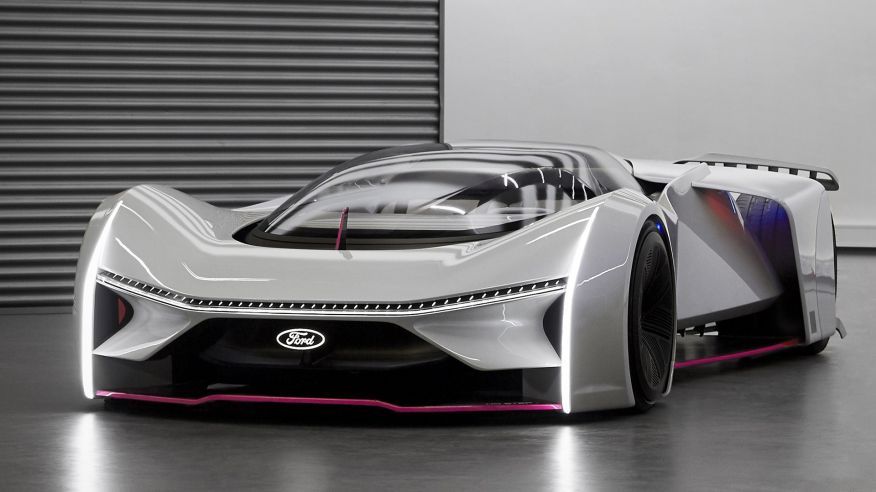
To understand why this Marketplace car matters, you have to put yourself back in the early 1980s, when Ford was desperate to shake off the boxy look that had defined American sedans. The company poured resources into a series of Probe concepts that treated aerodynamics as a design religion, using wind tunnel data to sculpt bodies that looked like they had been poured rather than stamped. With the Probe series, Ford explored futuristic forms that would later filter into production, and the Probe IV in particular pushed the idea of a low drag coefficient to extremes that regular buyers would never see.
Those experiments did not stay locked in the design studio. Ford’s implementation of these principles on the Taurus completely transformed the way that American cars looked and helped reset expectations for family sedans. The Probe IV’s smooth nose, tucked wheels, and flowing roofline previewed the softer, more efficient shapes that would define the late 1980s, even if the concept itself remained a showpiece. When you look at the resurfaced car, you are not just seeing a curiosity from a forgotten auto show, you are looking at a missing link in the chain that runs from wild concept to showroom reality, a connection underscored in reporting on how Ford and the Taurus reshaped American design.
One of two survivors, and the other lives in a museum
Part of what makes this particular Probe IV so compelling is its rarity. You are looking at one of only two 1983 Ford Probe IV concepts built by Ghia, a tiny production run even by concept car standards. The other Probe IV concept is owned by Petersen Museum, where it lives in a curated environment that treats it as a priceless artifact rather than a used car. That contrast, one car preserved behind velvet ropes and the other photographed in a driveway, captures the strange afterlife that concept cars often face once their moment in the spotlight ends.
The newly surfaced car was long believed to have disappeared, which is why its sudden appearance on an online marketplace feels like a plot twist. Coverage of the sale has emphasized that you would normally expect a prestigious auction house to handle a one-of-two concept built between 1979 and 1985, not a casual listing that could be scrolled past in seconds. Instead, the car ended up as an online grab for whoever recognized its significance, a scenario that highlights how fragile automotive history can be when it leaves corporate or institutional hands, as seen in detailed accounts of the one-of-two 1983 Ford Probe IV concept.
The car you can buy is far from perfect, and that matters too
If you zoom in on the Marketplace photos, the Probe IV you can actually buy looks every bit like a concept that has spent decades outside the safety of a museum. The car is also missing a front wheel cover and the other front one will not stay in place, details that break up the otherwise seamless look that designers obsessed over in the wind tunnel. Inside, the gear selector plate is broken and the cabin shows the kind of wear you would expect from a prototype that was never meant to live this long, let alone be driven regularly. Those flaws are not just cosmetic, they are a reminder that concept cars are often fragile, hand-built objects that age poorly once they leave the controlled world of auto shows.
Mechanical condition is another question mark. Reports on the listing note that this particular unit was thought to have been stored for years, with issues like air leaking from the valve stems hinting at how much recommissioning work might be needed before you could even think about driving it. For a buyer, that means treating the car more like a rolling sculpture than a weekend cruiser, at least at first. Yet for many enthusiasts, the imperfections are part of the appeal, proof that this is the real, working artifact that once toured the world rather than a static replica, a point driven home in coverage of the Probe IV concept’s condition.
Fire, loss, and why this rediscovery hits so hard
Your excitement about a rediscovered concept car is sharpened by the knowledge of what has already been lost. Earlier, another Ford Ghia Probe concept was destroyed in a fire shortly after appearing at a show, a disaster confirmed by its owner, Scott Grundfor Company, which shared images of the aftermath. That car had just been celebrated in enthusiast circles when it was suddenly gone, a stark reminder that even historically important prototypes can vanish in a single night. When you put that loss next to the survival of the Marketplace Probe IV, the stakes of preservation feel much more real, as documented in reports on the Ford Ghia Probe concept destroyed in a fire.
That sense of fragility is echoed in another story, where enthusiasts captured what turned out to be the last video of a priceless Ford concept car only hours before it was destroyed. The footage, framed as Seeing It For The Last Time, showed the Prob concept in motion, covering the equivalent of 1.1 million miles on a test rig before its fate was sealed. It is not clear what happened after that recording, but the fact that the car’s final moments exist only on video underlines how quickly physical artifacts can disappear, leaving you with pixels and memories instead of metal. Against that backdrop, the survival of the Probe IV on Marketplace feels less like a quirky listing and more like a narrow escape, a theme captured in the account of Seeing It For The Last Time.
From auction listings to museum halls, where this car belongs next
Long before the Facebook listing, the Probe IV had already dipped a toe into the world of private sales. A previous offering framed it as The Rad Era that could have been, positioning the 1983 Ford Probe IV Concept for collectors who wanted a tangible piece of early eighties futurism. That sale highlighted how nothing represents the futuristic aspirations of that period quite like this car, with its extreme aero focus and sci-fi silhouette. The asking price then, reportedly around six figures, suggested that at least some buyers understood they were looking at more than a curiosity, a point made clear in the detailed description of the Rad Era Ford Probe IV Concept for sale.
Today, the question is whether the newly resurfaced Probe IV should stay in private hands or join its twin in an institution. The Other Probe IV Concept Is Owned By Petersen Museum, where it sits among other historically significant vehicles that trace the evolution of automotive design. With the series of Probe concepts, Ford used these cars to test ideas that would shape mainstream models, which makes them ideal candidates for preservation in a place like the Petersen Automotive Museum. Enthusiast coverage has even noted that one Probe concept changed hands for about 125,000 dollars in 2022, a figure that hints at the financial commitment required to keep such a machine alive, as explored in analysis of how the other Probe IV concept is owned by Petersen Museum. Whether the Marketplace car ends up restored in a climate-controlled gallery or continues its improbable journey through private garages, you are watching a rare piece of Ford history get a second chance at being seen.
More from Wilder Media Group: