
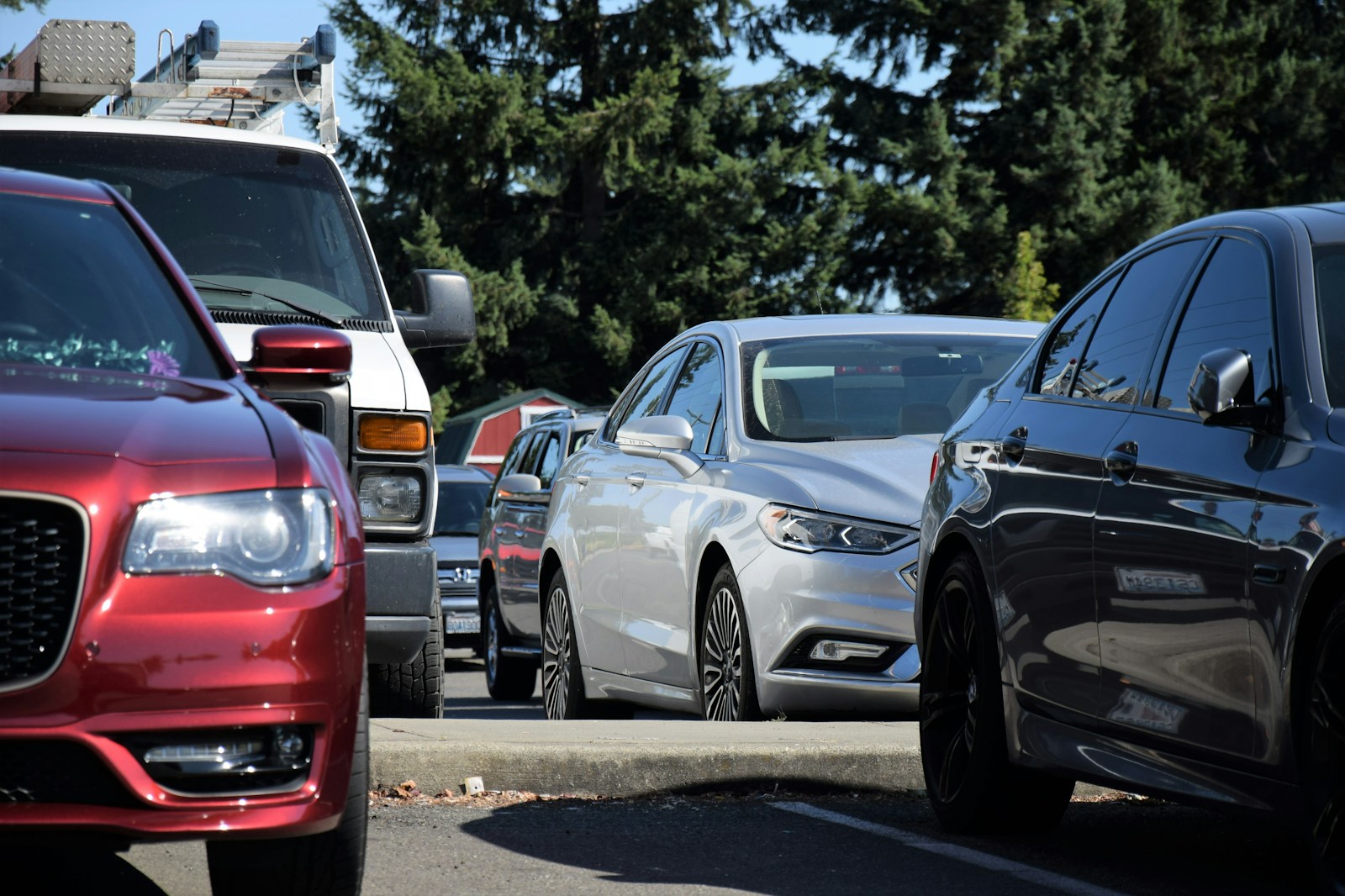

A tense argument in a suburban parking lot has become the latest viral car clip, crystallizing how quickly everyday friction can escalate once cameras start rolling. What begins as a dispute over driving and personal space ends with vehicles edging dangerously close and millions of strangers weighing in on who crossed the line.
I see this moment as part of a broader pattern, where parking spaces, traffic lanes, and even grocery store exits turn into stages for anger, performance, and sometimes outright violence. From a confrontation outside a Kroger to a high stakes clash with federal agents and even a stunt in China, the same ingredients keep reappearing: frustration, metal, and the knowledge that someone, somewhere, is filming.
The Kroger parking lot flashpoint
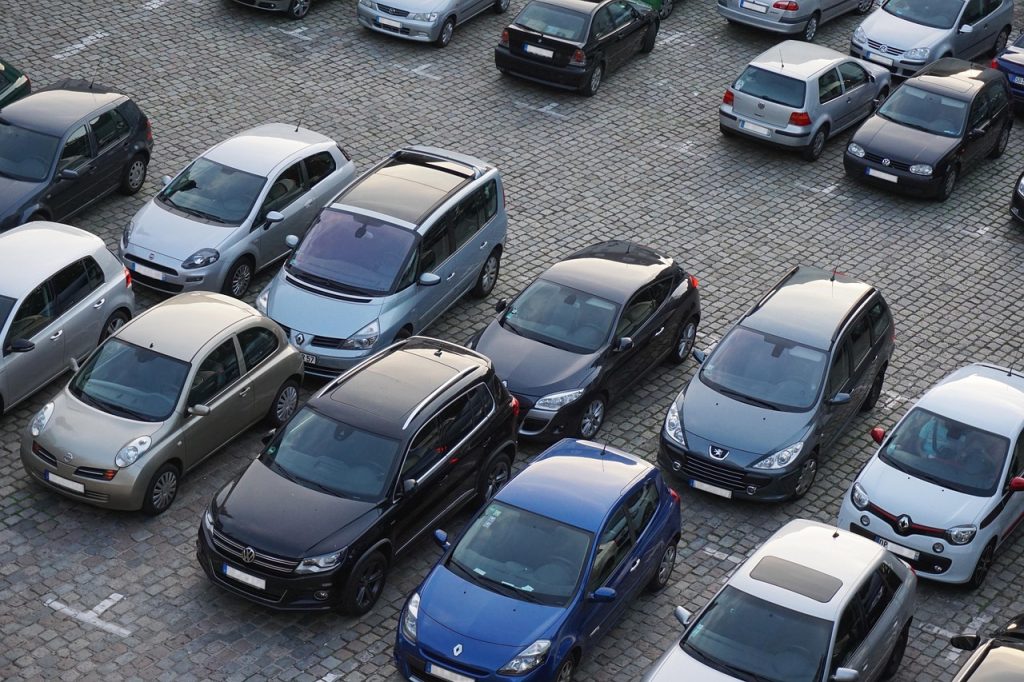
The most immediate spark for the latest debate is an altercation in a Kroger parking lot near Garfield and Canal in Clinton Township, where a routine shopping trip devolved into a shouting match between drivers. The confrontation reportedly began after a woman started recording a vehicle she believed was driving aggressively, turning a minor dispute over space and courtesy into a public spectacle as voices rose and tempers flared. In the video, the lot’s ordinary backdrop of carts and sedans becomes a kind of arena, with the camera framing the vehicles and their drivers as opposing sides in a conflict that neither seems willing to deescalate.
What makes this scene stand out is not just the argument itself but the way the camera changes everyone’s behavior, including the person filming. The woman’s decision to document the encounter appears to harden positions, as the driver being recorded reacts to the lens as much as to the complaint about their car. The clip, shared widely from Clinton Township, shows how a simple disagreement over parking etiquette at Kroger can morph into a viral incident once it is framed as evidence, entertainment, and a public referendum on who is in the wrong.
How a local dispute went viral
Once the footage from Garfield and Canal hit social platforms, it stopped being just a neighborhood story and became a national talking point about driving culture and public shaming. The clip, posted with a brief description of the altercation, quickly drew tens of thousands of reactions and thousands of comments, as viewers dissected every gesture, horn tap, and shouted phrase. People who had never set foot in Clinton Township suddenly felt entitled to judge the drivers’ motives and character, treating the parking lot as if it were a courtroom and the video as the only admissible evidence.
The speed and scale of that reaction reflect how car incidents have become a staple of online feeds, especially when they are framed as dramatic confrontations. A version of the Kroger clash shared by a local account racked up 43K likes and 3,960 comments, a scale of attention that would have been unthinkable for a parking lot argument a decade ago. The viral spread turns a fleeting moment of anger into a lasting digital artifact, one that can follow the people involved long after the cars have driven away.
The TikTok angle and replay culture
On TikTok, the same Kroger confrontation takes on a slightly different life, shaped by the platform’s looping format and remix culture. Short, tightly edited clips emphasize the most dramatic seconds, such as the moment a car inches forward or a voice cracks with anger, inviting viewers to replay and scrutinize the footage frame by frame. The repetition encourages people to freeze the argument in time, focusing less on how it started or ended and more on the single instant that feels most outrageous or meme worthy.
That dynamic is visible in a widely shared TikTok version of the incident, where the argument is compressed into a burst of conflict that fits neatly into a feed of dance trends and comedy skits. I find that this context can make serious confrontations feel like just another piece of content, flattening the emotional stakes for the people involved while amplifying the entertainment value for everyone else. The more the clip is replayed, the more it becomes detached from the real parking lot and the real consequences that might follow.
When frustration turns into a weapon
Not every viral car video is just about shouting or posturing. In some cases, the vehicle itself becomes a tool for expressing despair or anger, with far more dangerous consequences. In January 2025, a video from China captured a man who, overwhelmed by frustration with his life, positioned himself as a human obstacle in front of a truck and triggered a crash that quickly spread online. The footage shows how a moment of personal crisis can intersect with heavy machinery, turning a private breakdown into a public incident that raises questions about mental health, responsibility, and the limits of empathy from strangers watching on their phones.
The Chinese clip, which circulated widely again this year, underscores how vehicles can serve as both symbols and instruments of control, especially when someone feels they have lost control elsewhere. The man’s decision to stand in front of the truck, and the resulting collision, were documented and shared as a kind of cautionary tale, with viewers debating whether he was seeking help, attention, or an escape from his circumstances. The resurfaced video, linked to a January account of the event in China, shows how quickly a single act of desperation can be reframed as content, often without the full context of the man’s identity or his current situation.
From parking spat to federal crime
The stakes rise even higher when car incidents intersect with law enforcement, turning what might look like a parking lot standoff into a serious criminal case. In San Antonio, U.S. Immigration and Customs Enforcement agents were involved in a confrontation with a Cuban national, Robyn Argote Brooks, who allegedly used his vehicle to ram federal cars while trying to evade arrest. According to federal officials, the encounter unfolded in a parking area during a targeted operation, with the suspect reportedly accelerating into two government vehicles as agents moved in.
That clash, which has been described as part of a broader pattern of risks faced by Immigration and Customs Enforcement officers, illustrates how vehicles can become weapons in high pressure encounters. A video shared under the tagline ROAD TO NOWHERE shows the moment agents close in on the suspect, warning viewers to “watch out behind you” as the car moves. The clip, which highlights the arrest of Cuban national Robyn Argote Brooks, blurs the line between public safety messaging and viral spectacle, inviting viewers to see the incident both as a warning and as gripping footage.
The San Antonio parking lot confrontation
More detailed accounts from San Antonio describe how the Department of Homeland Security identified the suspect as a Cuban migrant who allegedly rammed into ICE vehicles during the operation. Officials say the encounter took place as agents attempted to detain him in a parking lot, where the confined space magnified the danger once the vehicle began to move. The description of the scene, with federal cars boxed in and agents on foot, echoes the claustrophobic feel of civilian parking disputes, but with the added weight of federal charges and potential injuries.
In this case, the parking lot is not just a backdrop but a tactical environment, one that shapes how both the suspect and the agents respond. The report that DHS identified the Cuban migrant as the driver who allegedly rammed ICE vehicles in San Antonio underscores how quickly a car can shift from transportation to alleged weapon. I see a direct line between the logic of “standing your ground” in a grocery lot and the far more dangerous calculus of trying to flee a federal arrest by using a vehicle to break through a perceived blockade.
ICE, risk, and the politics of viral enforcement
The San Antonio case has also been framed as part of a larger conversation about the risks faced by ICE officers and the politics surrounding immigration enforcement. Federal officials have pointed to incidents like the alleged ramming by Robyn Argote Brooks as evidence of an increase in assaults against agents, arguing that each confrontation carries the potential for serious injury or death. In their telling, the parking lot is not just a neutral space but a frontline where officers must balance the need to apprehend suspects with the imperative to protect bystanders and themselves.
Coverage of the incident notes that the Cuban driver allegedly rammed two ICE cars in a San Antonio parking lot during the targeted operation, a detail that has been used to highlight the dangers of vehicle based resistance. The account of Robyn Argote Brooks allegedly ramming two ICE cars has been folded into broader arguments about enforcement, with some voices emphasizing officer safety and others questioning the tactics used in such operations. Either way, the imagery of cars colliding in a parking lot has become a potent symbol in the debate over how far both suspects and agents are willing to go.
Tech steps in: Autopark as conflict referee
Not all parking lot showdowns end with human drivers pressing the accelerator. In China, a different kind of viral car video has circulated, showing a Tesla owner using the Autopark feature to navigate a dispute over space with locals who had lined up scooters to block a spot. Instead of arguing or trying to squeeze in manually, the driver reportedly activated the car’s automated parking system, letting the vehicle inch its way into the contested space with algorithmic precision. The move turned a brewing confrontation into a demonstration of software, as the Tesla calmly threaded itself between obstacles that had been placed there to keep it out.
The clip, which spread widely earlier this month, has been celebrated by some viewers as a clever way to defuse tension by outsourcing the decision making to technology. The idea is that if a computer is doing the parking, the driver can claim a kind of neutrality, shifting the blame or credit to the machine. The video of the Tesla using Autopark in China to settle a parking dispute shows how automation can both cool and inflame tempers, depending on whether bystanders see the technology as a fair arbiter or as an arrogant flex by a driver who trusts their car more than their neighbors.
What these clips reveal about us
Across these incidents, from the Kroger lot at Garfield and Canal to the San Antonio operation and the Chinese Autopark stunt, a common thread emerges: cars have become extensions of our identities, our fears, and our grievances. I see drivers using vehicles to assert status, defend pride, or escape accountability, while cameras capture every move and beam it to audiences far beyond the immediate scene. The parking lot, once a forgettable in between space, now functions as a stage where social norms, legal boundaries, and technological capabilities collide in real time.
At the same time, the viral nature of these clips shapes how we interpret them, often flattening complex situations into simple narratives of hero and villain, victim and aggressor. A woman recording at Kroger, a Cuban migrant in a San Antonio lot, a frustrated man in front of a truck in China, and a Tesla owner trusting Autopark all become characters in stories that strangers tell about road rage, enforcement, and the future of driving. I am struck by how much power we grant to these short videos, and how rarely we see what happens after the cameras stop, when the cars are towed, the charges are filed, or the people involved try to return to ordinary life.
More from Wilder Media Group: