
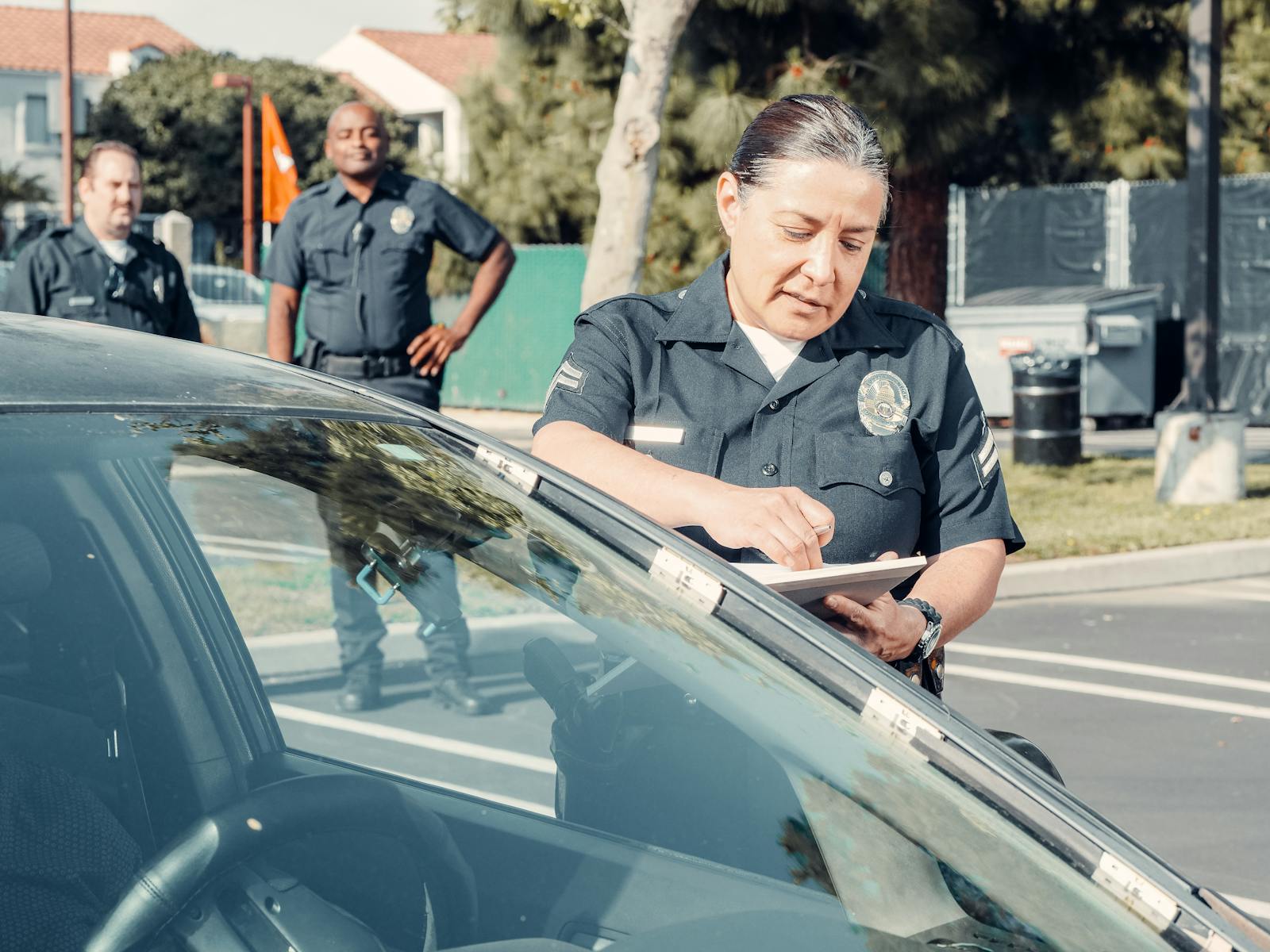

It started the way a lot of everyday stories start: a quick drive, a small mistake (or what I thought was a small mistake), and flashing lights in the rearview mirror. I pulled over, turned down the music, and did the little mental inventory we all do—license, registration, insurance, and “Okay, what did I do?”
The officer walked up, polite enough at first, and told me I’d been stopped for a traffic violation. I asked a simple question—something like, “Can you tell me exactly what I did?”—because I genuinely wasn’t sure. That’s when the mood shifted, and he hit me with: “You should be grateful I’m only giving you a warning.”
A routine stop that didn’t feel routine
Look, I’m not naïve. I know traffic stops can be tense for everyone involved, and officers deal with a lot. But there’s a difference between “Here’s what happened, drive safely” and the vibe of “Don’t question me.”
My question wasn’t sarcastic or combative. It was the same kind of clarification you’d ask a barista when they repeat your order back wrong, except with higher stakes and a lot more adrenaline.
Why “be grateful” lands like a brick
When someone with authority tells you to “be grateful,” it can feel less like a reminder and more like a warning of its own. It suggests the baseline expectation is punishment, and anything less is a favor. And that’s a weird dynamic when you’re talking about the basic act of understanding what rule you supposedly broke.
It also flips the script: now you’re not just trying to understand the situation, you’re managing the other person’s reaction to your curiosity. Suddenly you’re thinking, “If I ask another question, will this get worse?” That’s not a great foundation for public trust.
What I was actually asking for (and why it matters)
I wasn’t asking for a debate on the side of the road. I wasn’t asking the officer to pull up a slideshow or consult a legal textbook. I just wanted a clear explanation—what rule, what behavior, what part of the road, what moment—so I could avoid doing it again.
And honestly, that’s one of the main points of a warning, isn’t it? A warning without clarity is basically a vague scolding. It might make you drive home in silence, but it doesn’t necessarily make you a safer driver tomorrow.
The bigger issue: discretion shouldn’t feel like leverage
Most people understand that officers have discretion. Sometimes you get a ticket, sometimes you get a warning, sometimes you get a “slow it down” and a wave. But when discretion is presented as a personal gift—“You’re lucky I’m not doing worse”—it can feel like leverage rather than judgment.
That matters because the public experience of policing is often built from these small moments. Not everyone attends community forums or reads policy memos. A lot of what people “know” about law enforcement is shaped by a ten-minute interaction on the shoulder of a road.
How to ask questions without escalating things
If you’ve ever been in a similar spot, you know there’s a fine line between “respectful clarification” and “perceived challenge,” even if your intent is totally normal. One approach that can help is keeping it short and specific: “Could you tell me what I did so I don’t do it again?” That frames your question as cooperation, not confrontation.
It also helps to avoid rapid-fire follow-ups, even when the explanation is confusing. Ask one question, listen, then decide whether you actually need another. It’s frustrating, but the goal in that moment is getting through the stop safely, not winning a courtroom drama on the roadside.
What you’re generally allowed to do during a traffic stop
In most places, you can politely ask what you’re being stopped for, and you can ask for clarification. You can also usually ask for the officer’s name and badge number if it’s not already provided. You’re not required to consent to a search in many situations, though the details vary widely depending on where you are and what’s going on.
The tricky part is that “allowed” and “advisable in the moment” aren’t always the same thing. Even if you’re within your rights, the power imbalance is real, and you may decide it’s better to save certain questions for later—especially if the officer is clearly irritated.
If something felt off, what to do after you drive away
Once you’re home and your heart rate is back to normal, write down what happened while it’s fresh. Note the date, time, location, what was said, and any identifying details like patrol car number or the officer’s name. If you have dashcam footage, save it immediately.
If you believe the interaction crossed a line, you can look up the department’s complaint process and submit a factual account. Keep it boring: no dramatics, no mind-reading, just what happened and why it concerned you. You can also request body camera footage where that’s permitted, though policies and timelines differ.
Why clarity and courtesy aren’t too much to ask
I keep coming back to the same thing: I wasn’t asking for special treatment. I was asking for basic information about a situation where I had very little power and a lot to lose—money, points on my license, or simply peace of mind.
A warning should feel like a nudge toward safer behavior, not a reminder that you’re at someone else’s mercy. And a simple question—“Can you clarify?”—shouldn’t require you to swallow your pride and perform gratitude to avoid consequences.
The takeaway I didn’t expect
I drove away with no ticket, which, sure, is objectively good. But I also drove away with that sour feeling you get when an interaction technically ends fine and still doesn’t sit right. The kind of moment you replay later, wondering if you could’ve phrased things differently—or if it would’ve mattered at all.
Maybe the best we can do is keep insisting, calmly and consistently, that transparency is part of safety. Because if the goal is fewer violations and safer roads, people need to understand the rules—not just feel intimidated into silence.
More from Steel Horse Rides: