


It started the way so many “nothing” moments start: I was driving home, thinking about dinner, when red-and-blue lights filled my rearview mirror. I pulled over, hands visible on the wheel, doing the whole “be polite, be boring, be safe” routine most of us have learned through a mix of common sense and nervous cultural osmosis. The officer walked up, asked for license and registration, and the temperature of the whole interaction shifted fast.
When I asked—calmly, genuinely—“Am I being detained, and if so, why?” the officer paused, then hit me with a line that’s oddly familiar to anyone who’s ever tried to advocate for themselves: “Your attitude isn’t helping.” It wasn’t shouted, exactly. It was worse in a way—flat, dismissive, like my question itself was a kind of misbehavior.
A small question that suddenly feels “big”
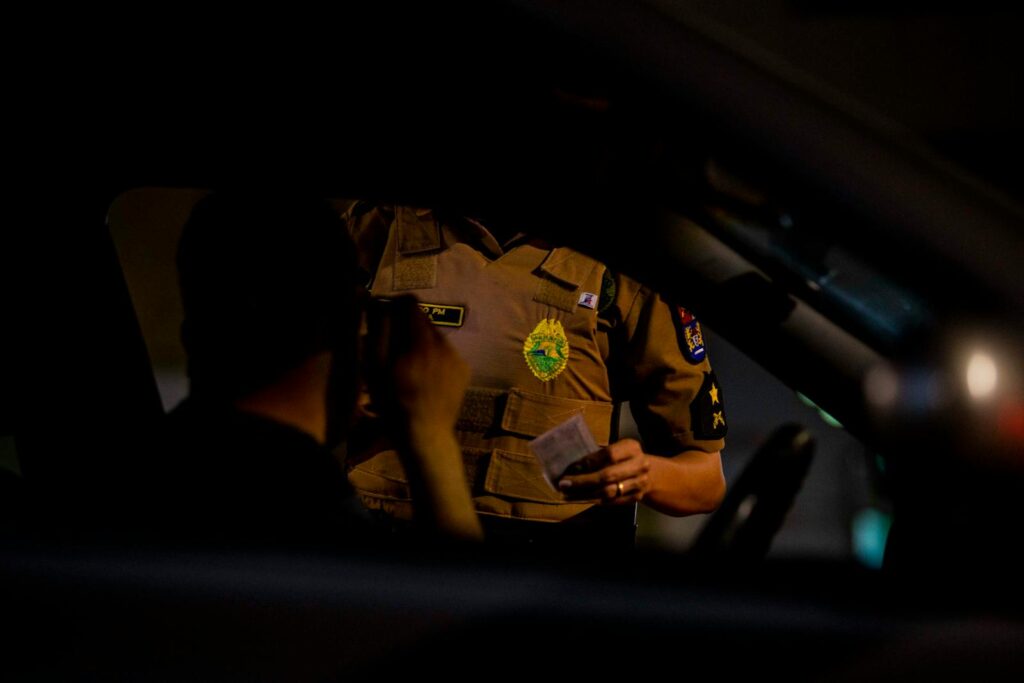
Here’s the thing: “Why am I being detained?” is not a rude question. It’s a basic one, the kind you’d expect in any other context where someone is restricting your movement. If a store security guard blocked the exit and told you to wait, you’d ask why; if an airline agent pulled you aside, you’d ask why. But with police encounters, normal curiosity can get rebranded as “attitude” in about half a second.
Legal experts say the phrase “Am I being detained?” can be useful because it clarifies whether you’re free to leave or whether the stop has escalated. A traffic stop is already a form of detention, but the scope matters—whether it stays a routine stop or turns into a broader investigation. The trouble is that even a calm question can feel like a challenge to an officer who expects compliance to look like silence.
What witnesses heard—and what they didn’t
A couple in a car behind me later said they could see my hands and my head turned toward the officer, but they couldn’t hear the words. That’s part of what makes these moments so slippery: tone becomes everything, and tone is in the ear of the badge-holder. One person’s “I’m trying to understand” becomes another person’s “You’re being difficult.”
The officer’s body camera—if it was on—would likely capture the exchange, but body-cam footage doesn’t always settle things the way people hope. Cameras don’t capture adrenaline, or the feeling of being boxed in by a squad car and bright lights, or the way your voice can sound shakier than you intend. And they definitely don’t capture the internal calculation most people do: How do I protect my rights without making this worse?
Why “attitude” becomes a catch-all charge
“Attitude” is one of those words that can mean anything and therefore gets used for everything. It can mean a raised voice, sure. But it also gets used to describe someone who asks questions, someone who seems nervous, someone who doesn’t smile, someone who doesn’t perform the right kind of deference. In practice, it can become a shortcut to justify escalating the interaction—more commands, more pressure, sometimes even searches or threats of arrest.
Community advocates have been saying for years that these “tone-based” escalations disproportionately affect people who are already more likely to be viewed as suspicious—especially Black drivers, young people, and anyone who “reads” as not fitting the officer’s expectations. That’s not about individual feelings; it’s about patterns. If the system routinely treats calm questions as provocation, the system quietly punishes people for acting like citizens instead of subjects.
What you can say that’s clear, calm, and hard to twist
If you ever find yourself in this spot, wording matters—not because you should have to manage someone else’s ego, but because you want to get home safely. A simple, steady line can help: “Officer, I’m not trying to argue. I just want to understand what’s going on.” It’s annoying that you might need to preface a basic question with a reassurance, but it can lower the temperature.
Other useful phrases: “Am I free to leave?” and “What is the reason for the stop?” If a search comes up, you can say, “I don’t consent to any searches,” without getting snarky about it. And if you’re being given instructions, it’s okay to clarify: “I’m going to reach for my registration now—my wallet is in my pocket, is that okay?”
Your rights exist even when the moment feels unequal
In most places, you have the right to remain silent beyond identifying yourself during a lawful stop, and you generally don’t have to answer investigative questions like “Where are you coming from?” or “Do you have anything illegal in the car?” (Though rules vary by jurisdiction.) You also usually have the right to ask if you’re being detained and to request a supervisor—again, not as a power move, but as a documentation move. The important part is keeping your voice and hands calm while you do it.
Recording can also be legal in many states as long as you’re not interfering, but that’s another area where local laws matter. If you choose to record, you can say, “For everyone’s safety, I’m going to record this interaction.” Sometimes that alone changes the officer’s tone. Sometimes it doesn’t, but it creates a record that isn’t filtered through memory and stress.
How departments talk about “officer safety” vs. public dignity
Police training often emphasizes “officer safety” as the organizing principle of stops, and nobody reasonable wants officers hurt on the job. But there’s a difference between safety and control, and the public can feel that difference in their bones. When a polite question is treated like disrespect, it signals that the goal isn’t just safety—it’s unquestioned authority.
Some departments have moved toward de-escalation training and “procedural justice,” which basically means explaining what’s happening and treating people with respect even when enforcing the law. It sounds obvious because it is. The frustrating part is how unevenly it shows up on the street, especially in high-stress situations or in communities where trust is already thin.
What happens after the stop matters, too
If you believe you were wrongly detained or treated unfairly, writing down details right away helps—time, location, badge number, patrol car number, what was said, and who witnessed it. If there’s body-cam footage, public records requests can sometimes obtain it, though agencies may deny or delay depending on local rules. Complaints can be filed with internal affairs or civilian oversight boards where they exist, and speaking with an attorney can clarify whether the encounter crossed legal lines.
And if you’re thinking, “But will that actually do anything?”—that’s a fair question. Sometimes complaints disappear into a bureaucratic fog. Still, documentation has power, especially when patterns emerge, and patterns are how policy changes get justified.
The quiet lesson in “your attitude isn’t helping”
What stuck with me wasn’t even the inconvenience of being pulled over. It was the message baked into that one sentence: that a calm question could be treated as a problem, and that my role in the interaction was not to understand, but to submit. That’s a hard pill to swallow in a country that teaches civics in school and then acts offended when you try to practice it on the side of the road.
Maybe the most human part of all this is how normal it’s become. People trade scripts online like survival tips—say this, don’t say that, keep your hands here, don’t move too fast—and we all pretend it’s just “being responsible.” But a system that interprets calm curiosity as “attitude” doesn’t just create tense traffic stops. It quietly trains the public to stop asking questions, and that should make everyone a little uneasy.
More from Steel Horse Rides: