
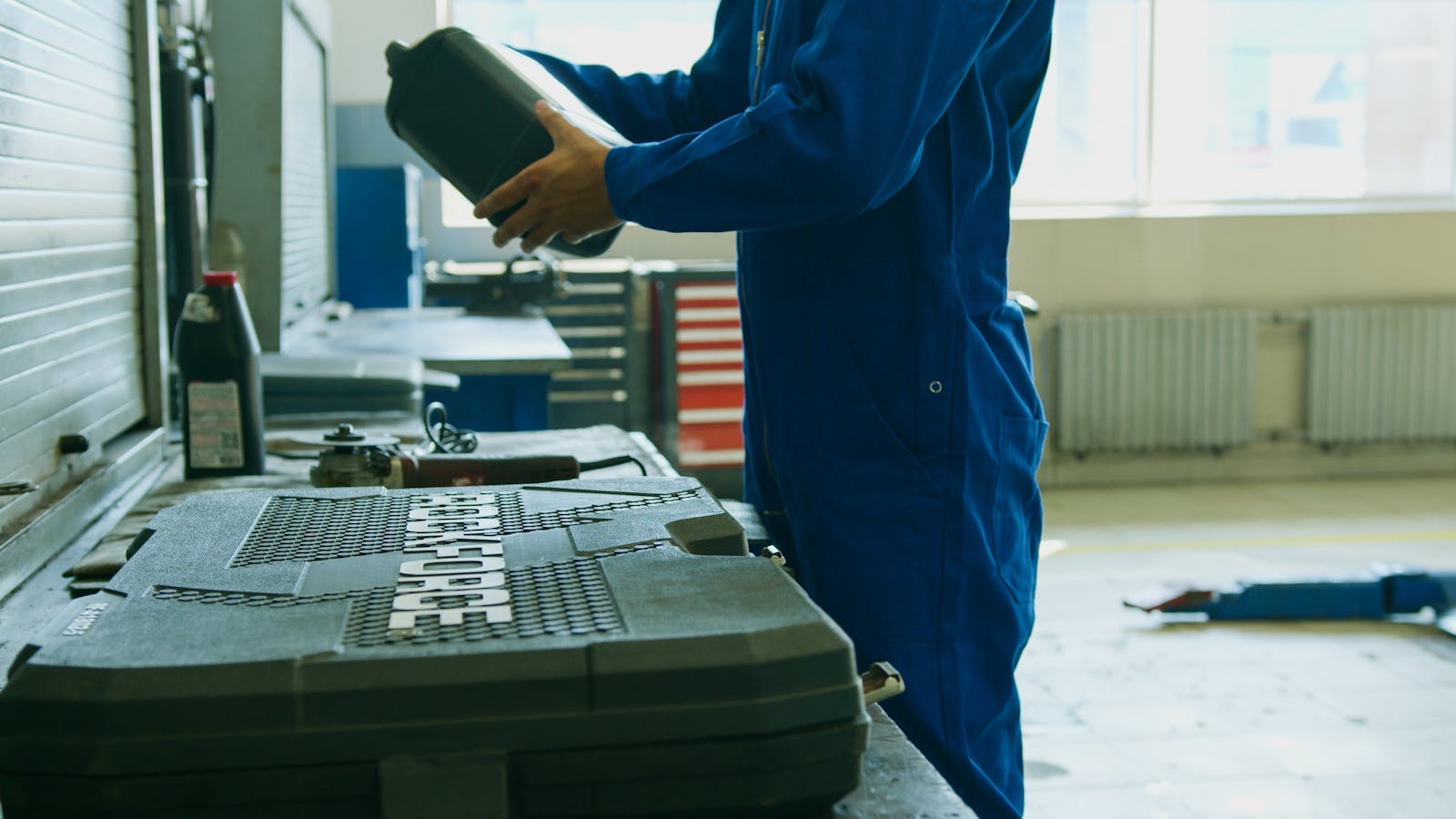

I showed up for a simple oil change thinking it’d be the kind of errand you barely remember afterward. You drop the keys, sip some coffee, maybe answer a few emails, and before you know it, you’re back on the road with fresh oil and that smug “I’m an adult who maintains things” feeling.
Instead, I got the slow-motion version of car care. The kind where time stretches, the waiting room TV plays the same five commercials on loop, and you start learning everyone’s life story just by overhearing their phone calls.
A front-row seat to nothing happening
The weirdest part wasn’t even the wait at first. It was that my car didn’t move. Not an inch.
From where I was sitting, I could see it through the service bay windows, parked in the same spot like it had paid rent. Every so often, a technician walked past it like it was invisible, and I kept thinking, “Okay, any minute now.” Minutes turned into an hour, and then… well, the morning started getting ideas about becoming the afternoon.
“We’re prioritizing more urgent vehicles”
Eventually, I wandered up to the counter and asked for an update, trying to sound casual instead of like a person who’s mentally counting every minute. The service advisor tapped at the computer, nodded like the screen was telling a fascinating story, and then hit me with: they were “prioritizing more urgent vehicles.”
Now, I get it. In theory. If someone’s brakes are grinding like a subway train or a car won’t start and they need it for work, that’s more urgent than my routine oil change.
But here’s the part that made my eyebrows do that slow climb: I had an appointment. And if the plan is to bump scheduled maintenance for walk-in emergencies, that’s not “prioritizing,” that’s “overbooking with a side of optimism.”
When an appointment doesn’t actually mean an appointment
A lot of service departments treat appointments like a place in line rather than a reserved time slot. In other words, it’s not “We’ll start at 9:00,” it’s “You’re allowed to arrive at 9:00 and then we’ll see what the day feels like.”
And if their shop is short-staffed, slammed with recalls, or juggling warranty work that pays differently than quick maintenance, your oil change can quietly slide down the priority list. No one says it out loud, but you can feel it happening in real time, like watching your luggage fail to appear at baggage claim.
The quiet math behind service department decisions
Here’s what most people don’t realize until they’re the one watching their car sit untouched: shops are doing constant triage. Advisors are balancing technician availability, parts on hand, how long jobs actually take (not how long they’re supposed to take), and which repairs can’t wait.
There’s also the not-so-small factor of workflow. If a bay is tied up with a complicated repair, that bottleneck can ripple through the whole day, and suddenly the “quick” jobs become awkward puzzle pieces no one can fit in.
Still, none of that changes the customer experience, which is basically: “I came for a 45-minute oil change and accidentally joined a book club.”
What they should’ve said (and why it matters)
I’m not even against the idea of urgent vehicles going first. I’m against being told after the fact, once my morning is already gone and I’m mentally rescheduling everything else I had planned.
A better approach would’ve been simple: tell me up front. Something like, “We’re running behind because we had a few urgent repairs come in. If you’re okay waiting, we can still get you in today, but it’ll be a couple hours.”
That kind of honesty is weirdly calming. It gives you choices—go run errands, reschedule, grab a ride-share, or at least settle in with the correct expectations instead of false hope.
What you can do in the moment (without being “that person”)
If you’re stuck in this situation, the first move is to ask a specific question: “When will a technician actually start on my car?” Not “How much longer?” because that invites vague, weather-forecast answers.
You can also ask whether you’re waiting on a bay, waiting on a technician, or waiting on parts. Those are three totally different problems, and the answer tells you whether you should hang tight or cut your losses and reschedule.
And if time matters, say so plainly. “I have to be out of here by noon—can you make that happen, or should we book another time?” It’s not rude. It’s basic coordination, like confirming whether a friend is actually five minutes away or still looking for parking.
How to protect your time next visit
When you book, ask what the appointment means in their shop: “Is that a drop-off time or a start time?” If they sound confused by the question, that’s information.
If you can, schedule early in the day and early in the week. Mondays can be chaotic because everyone puts off car stuff over the weekend, and afternoons are when delays pile up like laundry you meant to fold yesterday.
Another small trick: ask if they offer “waiter” appointments specifically. Some places separate “drop-off” jobs from “wait while we do it” jobs, and getting the right category can be the difference between 45 minutes and half a day.
The bigger takeaway: respect is a schedule, not a slogan
By the time my car finally moved, I’d watched enough activity in the service drive to understand the pressure they’re under. People are stressed, cars are complicated, and emergencies don’t RSVP.
But customers aren’t wrong for expecting an appointment to mean something. If a shop can’t honor the schedule, that’s fine—life happens. The problem is when they act like your time is infinitely flexible until you prove otherwise.
In the end, “prioritizing more urgent vehicles” might be a fair policy. It just shouldn’t be a surprise policy, delivered casually while your car sits in the same spot like it’s waiting for permission to exist.
Because an oil change is supposed to be the low-drama relationship you have with your car. If it starts feeling like a cliffhanger, you’re not asking for too much—you’re just asking for a plan.
More from Steel Horse Rides: