
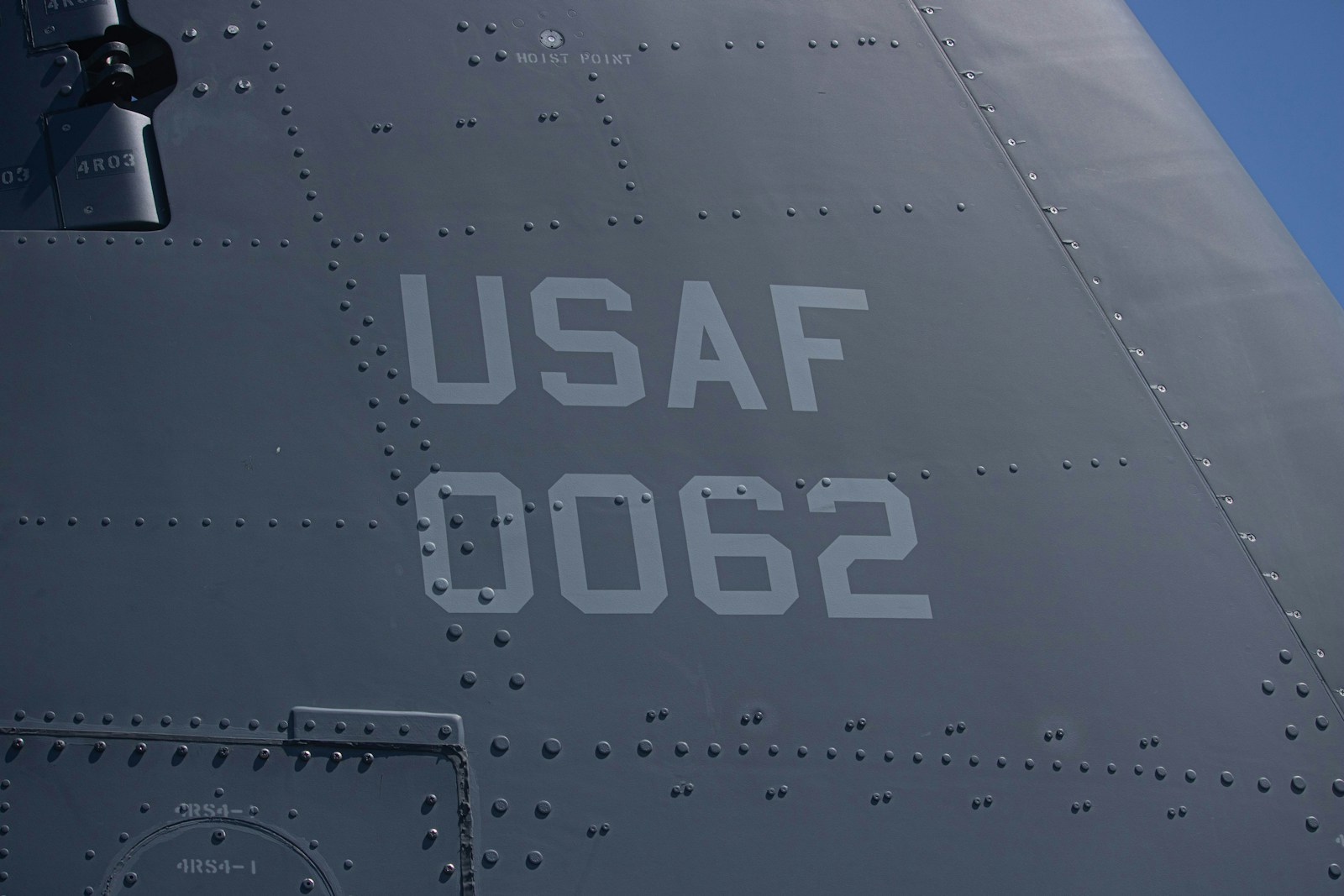

Across the United States military, some of the most decisive combat missions are still flown by aircraft that first took to the skies when slide rules and vacuum tubes were standard tools. America’s oldest combat aircraft still flying today are not museum pieces but front‑line machines that have been upgraded, re‑engined, and rewired to keep pace with modern threats. Their longevity reflects a mix of rugged original design, steady investment, and a strategic choice to stretch proven airframes rather than rush untested replacements into service.
From nuclear‑armed bombers to tanker workhorses and versatile transports, these aging giants reveal how the Pentagon balances cost, risk, and capability. They also show how engineering decisions made in the early Cold War still shape the way the United States projects power, supports allies, and responds to crises around the world.
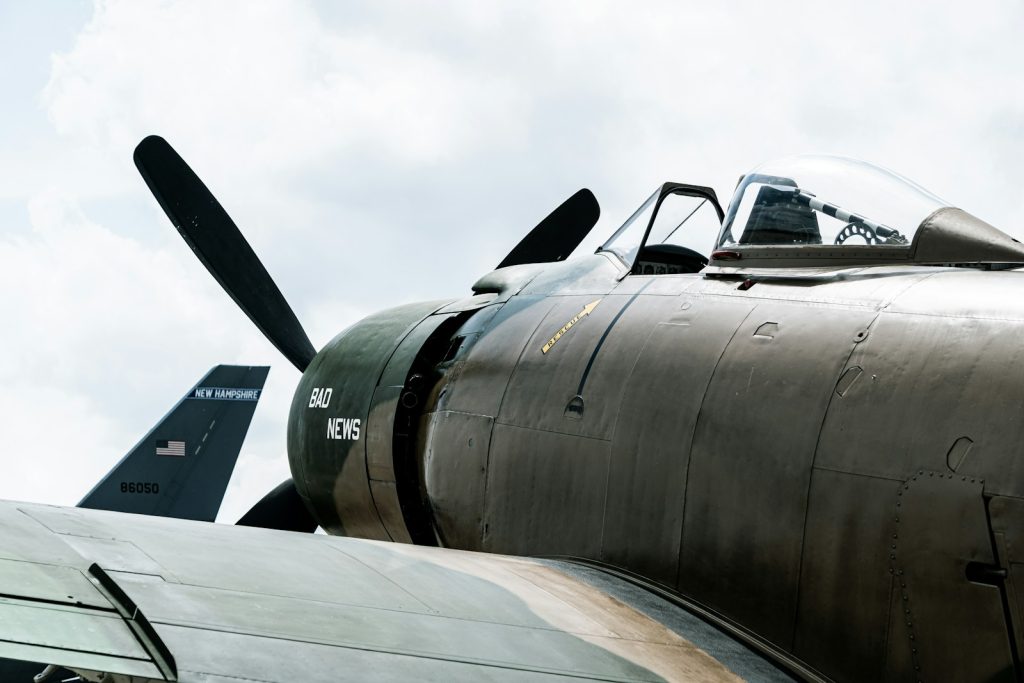
The B-52 Stratofortress: Seven Decades of Deterrence
The Boeing B‑52 Stratofortress is the archetype of the enduring combat aircraft, a bomber that has outlived the factories that built it and many of the designers who drew its lines. First introduced to the Air Force in the mid‑1950s, the B‑52 has now been flying in American service for roughly 70 years, a span that covers the height of the Cold War, the Vietnam conflict, the Gulf War, and the post‑9/11 campaigns. Reporting on America’s oldest bombers notes that the Stratofortress has officially been flying for the Air Force for 70 years, underscoring how a design that predates satellites still anchors nuclear and conventional strike planning.
That longevity is not an accident. The B‑52 was built with a large, adaptable airframe and generous internal volume, which has allowed successive generations of engineers to add new avionics, electronic warfare suites, and precision weapons. The B‑52H variant, for example, can carry a maximum bomb load of approximately 70,000 pounds in its internal bay and on underwing pylons, a payload that lets it mix gravity bombs, cruise missiles, and maritime strike weapons on a single mission. Analysts who track the oldest aircraft in service consistently list the B‑52 among the top entries, and one review of the 10 oldest aircraft types in the USAF highlights the Boeing Stratofortress as the quintessential long‑lived bomber, with plans to keep it flying into the 2050s.
KC-135 Stratotanker: The Aging Backbone of Air Refueling
If the B‑52 is the symbol of long‑range strike, the KC‑135 Stratotanker is the quiet enabler that keeps fighters, bombers, and transports in the air. Introduced in the late 1950s, the KC‑135 has been refueling American and allied aircraft for generations, turning short‑legged fighters into global assets. A detailed ranking of the Top 5 Oldest US Air Force Aircraft Still In Service identifies the KC‑135 Stratotanker as one of the very oldest types still flying, noting that The KC airframe dates back to the 1950s and that its refueling role remains indispensable for long‑range operations.
The KC‑135’s age has forced the Pentagon to confront a recurring dilemma: whether to keep upgrading or finally replace it. An assessment of Replacement Or Upgrade options for The Fate Of The 5 Oldest US Military Aircraft Still Flying singles out the Boeing KC‑135 Stratotanker as a prime example of this tension, with modernized avionics and structural reinforcements extending its life even as newer tankers arrive in limited numbers. Civil and defense aviation analysts also track the KC‑135’s place in global fleets, with one overview of the oldest military planes in service listing the Boeing KC‑135 stratotanker (1956) as a benchmark for how far a well‑maintained tanker can be pushed. The fact that the KC‑135 continues to deploy alongside stealth fighters and modern bombers shows how central aerial refueling remains to American power projection.
C-130 Hercules: The Timeless Tactical Workhorse
While bombers and tankers grab strategic headlines, the Lockheed C‑130 Hercules quietly carries out the daily grind of military logistics, special operations, and humanitarian relief. Designed as a rugged tactical transport, the C‑130 entered service with the United States Air Force in the 1950s and has remained in continuous production for decades, a record that few other aircraft can match. Technical histories of the Lockheed C-130 Hercules describe it as a United States Air Force transport that has served in more than 60 nations, with the C‑130 entering service in the 1950s and reaching 70 years of production in 2024, a milestone that underlines its adaptability.
The Hercules has evolved into a family of specialized variants, from gunships to electronic warfare platforms, yet the core airframe remains recognizably the same. Analysts who catalog the oldest active military transport aircraft note that militaries worldwide have widely used this type and that its long production run is one of the most remarkable in aviation history. A survey of the oldest active military transport aircraft highlights how a transport introduced in 1956 still serves as the backbone of tactical airlift, second only to a handful of other long‑running types. For the United States, the C‑130’s ability to operate from rough, short airstrips and to support everything from special forces raids to disaster relief keeps it central to both combat and peacetime missions.
F-15 Eagle: The Oldest Frontline Fighter Still on Patrol
Among fighters, the McDonnell Douglas F‑15 Eagle stands out as the oldest jet in the United States Air Force still flying front‑line air superiority missions. The Eagle was designed in the 1970s for speed, climb, and lethality, and it has built an unmatched air‑to‑air combat record that continues to shape how adversaries view American air power. A detailed profile of the oldest fighter jet in the US Air Force notes that the Eagle has guarded American skies for decades and that its continued upgrades, even after the arrival of the F‑35, show how older fighters can stay in the sky with modern sensors and weapons.
Despite its age, the F‑15 remains central to air defense and offensive counter‑air plans, especially in variants like the F‑15C and the more recent F‑15EX. An overview of the 10 oldest aircraft types in the USAF points out that the McDonnell Douglas F‑15 was first introduced in 1976 and that production is expected to continue well into the 2030s, an extraordinary run for a fourth‑generation fighter. That production decision reflects a broader pattern: instead of relying solely on stealth platforms, the United States is pairing upgraded legacy fighters with advanced munitions and networking, betting that a mix of old and new will be more resilient than any single cutting‑edge design.
P-3 Orion and Maritime Patrol Veterans
Not all of America’s oldest combat aircraft belong to the Air Force. The Navy’s long‑serving P‑3 Orion has been a mainstay of maritime patrol, anti‑submarine warfare, and surveillance since the 1960s, flying low over oceans to track submarines and surface ships. A global survey of the 10 oldest military aircraft still in regular service lists the P‑3 Orion as a Surveillance Aircraft with Operators that include Japan, New Zealand, Canada, Chile, and others, and notes that a US Navy P‑3C Orion remains in use even as newer platforms arrive.
For the United States, the P‑3 has gradually been replaced by the P‑8A Poseidon, but a number of Orions continue to serve in specialized roles, including signals intelligence and range support. The aircraft’s long, slender wings and turboprop engines give it the endurance needed for long ocean patrols, while its spacious fuselage accommodates sensors and weapons for anti‑submarine warfare. The fact that Japan and New Zealand still operate the type in front‑line roles illustrates how a well‑designed maritime patrol aircraft can remain relevant for decades, especially when upgraded with modern radar and acoustic processing systems. Even as the Navy transitions to newer jets, the P‑3’s legacy shapes how allies and partners think about long‑range maritime surveillance.
Why Old Combat Aircraft Keep Flying
The persistence of these aging aircraft is not simply nostalgia or bureaucratic inertia. It reflects a hard calculus about cost, risk, and mission needs, especially when new programs face delays or technical setbacks. Analysts who compare the oldest and newest US combat aircraft in the United States note that many of the oldest platforms, from bombers to tankers, continue to perform roles that newer designs cannot yet fully replace, either because of capacity shortfalls or because the older airframes offer unique payload or endurance advantages.
At the same time, the Air Force and Navy have invested heavily in upgrades to keep these aircraft viable. A review of the oldest US military aircraft still flying points out that the aircraft with the longest continuous service life often owe their survival to repeated modernization cycles, including new engines, digital cockpits, and advanced defensive systems. Veteran observers also note that many of the oldest airframes have been re‑winged or structurally reinforced, effectively resetting their fatigue clocks. A separate look at the 5 Oldest U.S. Aircraft Still in Operation emphasizes that, to be fair, many have been heavily modified over the years, but that core designs like the B‑52 and Cessna 180/182/185 families continue to prove their worth. In combat aviation, age alone is not disqualifying if the underlying airframe can absorb new technology.
Upgrade vs Replacement: The Pentagon’s Perpetual Tradeoff
Behind every decision to keep an old aircraft flying lies a debate over whether to pour more money into upgrades or to accelerate a replacement. The KC‑135 Stratotanker, B‑52 Stratofortress, and C‑130 Hercules all sit at the center of this argument, with planners weighing the cost of new engines and avionics against the price and risk of entirely new designs. The analysis framed as The Fate Of The Oldest US Military Aircraft Still Flying captures this tension, noting that some fleets are slated for incremental modernization while others face phased retirement as new platforms finally reach operational status.
Public discussions of these choices often highlight the contrast between sleek stealth fighters and half‑century‑old jets still in the inventory. A widely viewed explainer titled Why Is the US Upgrading a 50 Year Old Jet? points out that while much of the world’s attention is fixated on stealth fighters and futuristic sixth generation concepts, the Pentagon continues to invest in older airframes because they offer proven reliability and known operating costs. The video also notes that research methods used to evaluate new prototype designs can be applied to legacy aircraft, helping engineers decide which upgrades deliver the most capability for the least risk. In practice, this means that some of America’s oldest combat aircraft will receive new engines, radars, and mission systems even as their eventual replacements are still in the prototype stage.
Old Warbirds vs Aging Airliners: Different Rules for Longevity
One way to understand the endurance of military aircraft is to compare them with civilian fleets, where commercial pressures and passenger expectations drive faster turnover. Data compiled on the oldest active aircraft at the Big 3 US carriers notes that, According to data from ch‑aviation, the oldest legacy airframes include Airbus A320 jets for American and Boeing 767‑300ER aircraft as the longest‑serving for both United and Delta, with the figure 767 highlighting how even long‑haul airliners are typically retired after a few decades. By contrast, the Air Force and Navy routinely operate aircraft that are twice as old as the oldest commercial jets still carrying passengers.
The difference lies in mission profiles and regulatory frameworks. Combat aircraft are maintained under military standards that allow for extensive structural repairs, part replacements, and mission‑specific modifications that would be uneconomical for airlines. They also fly fewer hours per year than high‑utilization airliners, which slows the accumulation of fatigue. A review of the oldest and newest US combat aircraft currently in service in the United States underscores that some of the very oldest platforms, like the B‑52 and KC‑135, have relatively low annual flight hours compared with commercial jets, which helps explain how they can remain structurally sound for so long. For military planners, the choice is not between old and unsafe versus new and safe, but between proven airframes with known limitations and unproven designs that may introduce new risks.
What These Veterans Reveal About Future Airpower
The continued use of America’s oldest combat aircraft offers clues about how future fleets will be managed. Rather than expecting every new design to serve for 70 years, planners are increasingly looking at modular architectures and open systems that can be upgraded more easily over time. The experience with the B‑52, KC‑135, C‑130, and F‑15 shows that airframes built with generous margins for weight, power, and volume can accommodate generations of new technology, from digital avionics to precision weapons. Reviews of the Oldest US Air Force Aircraft Still In Service and the oldest US military aircraft still flying both highlight how these legacy designs have absorbed new roles, from standoff missile launch platforms to advanced electronic warfare nodes.
At the same time, the sheer age of some fleets is forcing hard choices about industrial capacity and budget priorities. As new bombers, tankers, and fighters move from prototype to production, the Pentagon will have to decide how quickly to retire aircraft that have become symbols of American airpower. Historical overviews of the Oldest U.S. Aircraft Still in Operation and lists of the oldest aircraft types in the USAF suggest that some of these veterans will remain in niche roles even after their primary missions are handed off to newer platforms. Whether they are dropping precision weapons, refueling stealth fighters, or hauling cargo into rough airstrips, America’s oldest combat aircraft still flying today show that in aviation, a well‑designed and well‑maintained machine can remain relevant far longer than its creators ever imagined.
More from Wilder Media Group: