
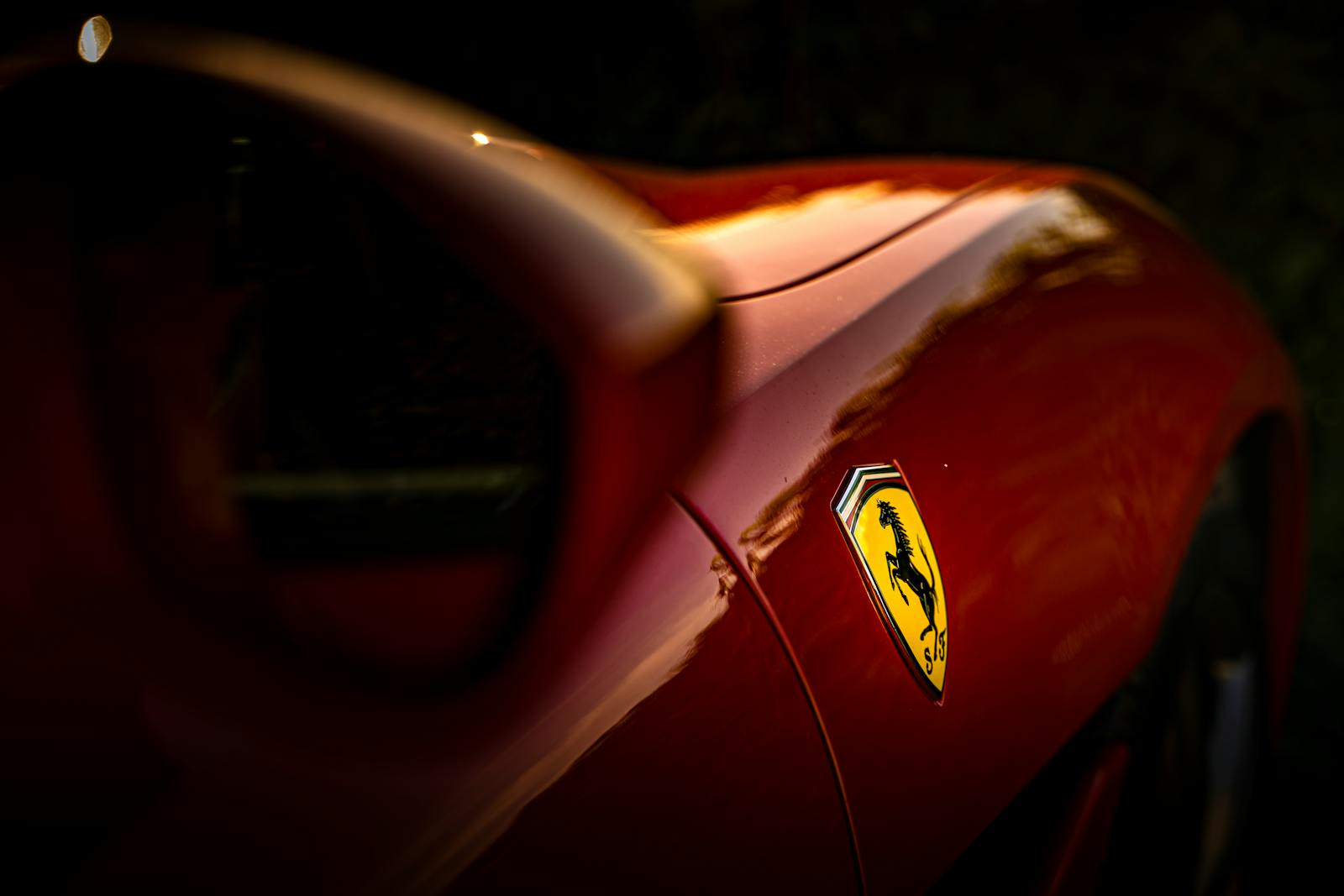

Ferrari’s appetite for ultra-exclusive specials shows no sign of slowing, and the latest trademark chatter suggests another bespoke machine could be lining up behind Maranello’s gates. A new name, HC25, has surfaced in official filings, hinting at a one-off or ultra-limited project that would extend the brand’s recent run of highly personalized commissions. For collectors and fans, it signals that Ferrari is doubling down on a strategy that mixes heritage cues with cutting-edge hybrid technology.
Rather than arriving in isolation, the HC25 idea slots into a broader product surge that includes six new models in a single year, a full-electric debut, and a steady cadence of 20 launches planned through 2030. Against that backdrop, another special Ferrari is less an outlier and more a logical next step in a carefully managed expansion of the Prancing Horse universe.
HC25: The Trademark That Sparked Fresh Speculation
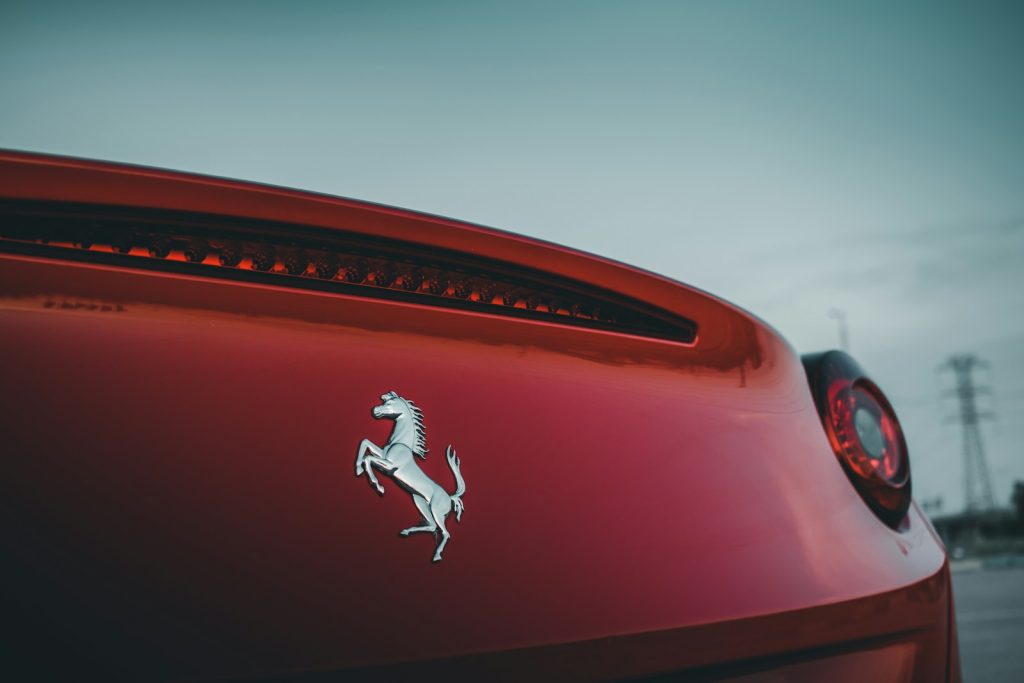
The clearest sign that a new special Ferrari is brewing comes from the HC25 name, which has appeared in trademark records tied to the brand. Reporting on the filing notes that the designation is likely reserved for a bespoke creation, with the “25” element interpreted as a nod to the calendar year and the “HC” tag pointing toward a specific commission rather than a mainstream series model. Analysts reading the paperwork argue that this pattern fits Ferrari’s habit of using coded names for one-off projects before they are publicly revealed, suggesting that HC25 is more than just a placeholder.
Coverage of the filing explains that the HC25 label is expected to sit on a car built for a particular client, with the structure of the name echoing previous bespoke efforts that quietly referenced their commissioning year. The same analysis adds that the HC25 could be configured as a tribute, potentially drawing on iconic shapes or liveries from the past while using a modern hybrid powertrain, a formula that has already proved successful for recent specials. The idea that the HC25 might be a tailored homage is reinforced by commentary that the car would likely be a one-off creation for a specific customer, with the name hinting at a project paying homage to the F40, a possibility highlighted in detailed coverage of the Ferrari HC25.
How “Another Special Ferrari Might Be On the Way” Fits Ferrari’s Playbook
The HC25 story has been framed as part of a broader narrative that “Another Special Ferrari Might Be On the Way,” a phrase that captures how routine these ultra-rare projects have become for Maranello. Rather than being a surprise detour, the potential HC25 aligns with a deliberate strategy in which the company uses its Special Projects arm to deepen relationships with top-tier clients while generating global attention. The reporting that first tied the HC25 trademark to this narrative emphasized that Ferrari has repeatedly used such filings as the first breadcrumb in the trail toward a full reveal.
Analysis of the HC25 filing notes that the name’s structure and timing fit neatly into Ferrari’s established cadence of one-off unveilings, which often arrive after a period of quiet development and private client consultation. The same coverage, presented under the banner Another Special Ferrari Might Be On the Way, underlines that the company’s recent history is full of examples where a seemingly obscure designation later turned into a headline-grabbing special. In that context, the HC25 looks less like a speculative footnote and more like the next logical entry in a growing catalog of bespoke Ferraris.
Ferrari’s Trademark Trail: Two New Names and a Broader Strategy
The HC25 is not the only clue that Ferrari is preparing fresh surprises. Earlier trademark activity highlighted two additional names, registered together and interpreted as signals that two new models are in development. Reporting on these filings explains that the pair of trademarks were lodged in a way that strongly suggests they are destined for production cars, with observers speculating that they could be tied either to limited-run specials or to celebratory editions marking key anniversaries for the brand. The fact that both names appeared in close succession has been read as evidence of a coordinated product plan rather than isolated experiments.
Commentary on these registrations stresses that Ferrari has a history of using such filings to quietly lock down future model names long before any official teaser appears. In this case, the analysis points out that the two registered trademarks are likely connected to surprise models that would sit alongside the existing range, potentially honoring milestones such as the brand’s 40th anniversary of a landmark supercar. The report on two registered trademarks frames them as part of a pattern in which Ferrari seeds the legal groundwork for future specials well before their design details become public.
Special Projects in Action: From SC40 to 296-Based One-Offs
To understand what HC25 might represent, it helps to look at the recent output of Ferrari’s Special Projects Programme, which has turned bespoke commissions into rolling showcases of design and engineering. A standout example is the Ferrari SC40, described as a One Off Inspired by the F40 and unveiled in Maranello as a modern reinterpretation of that legendary model. The SC40 combines styling cues that echo the original F40 with a contemporary V6 turbo-hybrid powertrain, demonstrating how Ferrari can blend nostalgia with the latest technology in a single, highly personalized package.
The SC40 is not alone in this approach. Another recent commission, highlighted as Ferrari’s Latest One Off Is a 296-Based F40 Tribute, shows how the company can take the architecture of a 296 GTB and transform it into a unique car that still clearly references a historic icon. Reporting on this project notes that the 296 GTB-based special, described as a 296-Based one-off, likely commanded a price tag comparable to a full collection of standard supercars, underlining the financial scale of these commissions. Together, the Ferrari SC40 and the 296 GTB-based tribute illustrate the template that an HC25 could follow: a bespoke body and interior, a hybrid powertrain, and a design brief rooted in Ferrari’s own back catalog, as showcased by the official profile of the Ferrari SC40.
Balancing Specials With the Core Range
While the HC25 and similar projects grab headlines, Ferrari’s main business still revolves around a structured lineup of hypercars, supercars, and grand tourers. Reporting on the company’s trademark activity stresses that, for all the attention lavished on one-offs, the bulk of Maranello’s output follows a predictable cycle of core models that are refreshed and replaced on a regular schedule. Analysis of the HC25 filing notes that it sits alongside this main line rather than replacing any existing product, reinforcing the idea that specials are an additive layer rather than a new foundation.
One detailed look at Ferrari’s trademark strategy explains that, While Ferrari’s main line of products has been made up of the same cycles of hypercars, supercars, and GTs for the past several years, the company has increasingly used one-off projects to keep its most loyal clients engaged. The same report, which examines how a new trademark may hint at a new one-off supercar, frames the HC25 as part of this broader pattern, in which bespoke commissions coexist with series-production cars. The analysis of how While Ferrari maintains its core range while expanding its bespoke offerings underscores that the brand is carefully managing both sides of its portfolio.
Six New Cars in a Year and the March Toward Electrification
The HC25 rumor also lands in the middle of an aggressive product offensive that is reshaping Ferrari’s lineup. Earlier guidance from Maranello confirmed that the company plans to reveal six new cars in a single year, including its first full-electric model. This burst of activity is described as a sign that Ferrari is ramping up after a strong prior season, with The Maranello team building on recent successes in both road cars and motorsport. The six-car slate is expected to cover a mix of segments, from high-performance flagships to more accessible GTs, reflecting a strategy that spreads risk across multiple categories.
Within that plan, the full-electric debut stands out as a landmark moment, signaling Ferrari’s entry into a space that rivals have already begun to explore. Reporting on the six-car roadmap notes that the company is preparing its customer base for this shift while still emphasizing the emotional appeal of internal combustion and hybrid powertrains. The same analysis of how Ferrari will reveal six new cars in 2025, including one full electric, positions the HC25 as a potential halo project that could sit alongside this wave of launches, reinforcing the brand’s image even as its technology mix evolves.
Twenty Cars by 2030: Where One-Offs Fit in a Bigger Plan
Beyond the immediate six-car burst, Ferrari has set a longer-term target that further contextualizes the HC25. A widely shared update from Maranello’s enthusiast community states that Ferrari will launch 20 cars between now and 2030, which works out to an average of four new models per year over the next five years. This figure underscores just how busy the company’s product planners will be, and it suggests that there is ample room in the schedule for both mainstream models and highly specialized projects.
The same update frames this 20-car roadmap as a sign of confidence in demand for high-end performance cars, even as regulations tighten and electrification accelerates. It also hints that the mix will include everything from concept-like showpieces to track-focused specials, with one-offs occupying the most exclusive tier. The social media post that spells out how Ferrari will launch 20 cars by 2030 reinforces the idea that an HC25-style project is not an outlier but a planned component of a broader expansion, giving the brand flexibility to respond to client requests while still hitting its volume and technology milestones.
Testarossa, Amalfi and the 849 Connection
Recent unveilings also show how Ferrari is using special names and numbers to build anticipation around its future range. A prominent enthusiast who chronicled a year of Ferrari experiences noted that they Attended the unveiling of 849 Testarossa and Ferrari Amalfi, highlighting two key additions to the lineup. The mention of “849” is particularly significant, as it ties into the naming of the 2027 849 Testarossa, which has been presented as the replacement for the SF90 Stradale. This connection suggests that Ferrari is using numerical designations not only for technical reasons but also as part of a broader storytelling strategy.
Video coverage of the 2027 849 Testarossa emphasizes that Ferrari has just unveiled the replacement for the SF90 Stradale, describing how the new car builds on its predecessor’s hybrid performance while introducing fresh styling and updated technology. The clip notes that, Like its predecessor, the 849 Testarossa is positioned as a flagship plug-in hybrid, reinforcing Ferrari’s commitment to electrified performance at the top of its range. Together, the social media reflection that mentioned the 849 Testarossa and Ferrari Amalfi, and the video that shows how Ferrari has unveiled the 2027 849 Testarossa as the SF90 Stradale’s successor, illustrate how numbered names can carry both technical meaning and emotional weight, a pattern that could easily extend to an HC25 special.
What HC25 Would Signal About Ferrari’s Future
If the HC25 does emerge as a fully realized car, it will say as much about Ferrari’s future direction as it does about one client’s taste. The combination of a coded name, a likely hybrid powertrain, and a design brief that may reference a historic model such as the F40 would encapsulate the brand’s current priorities: honoring its past, embracing new technology, and cultivating deep relationships with its most committed customers. In that sense, the HC25 would be less a standalone curiosity and more a rolling manifesto for how Ferrari intends to navigate the next decade.
Placed alongside the two new trademarks hinting at surprise models, the six-car launch year, the 20-car roadmap to 2030, and the recent wave of specials like the SC40 and the 296 GTB-based tribute, the HC25 would reinforce a clear message. Ferrari is not retreating into nostalgia or resisting change; instead, it is using bespoke projects to bridge the gap between its heritage and an electrified, highly personalized future. The trademark that first linked the HC25 name to a potential one-off, detailed in coverage of how Jan filings pointed to a new special, may turn out to be the first chapter in yet another story of a Ferrari built for one person but watched by the entire automotive world.
More from Wilder Media Group: