
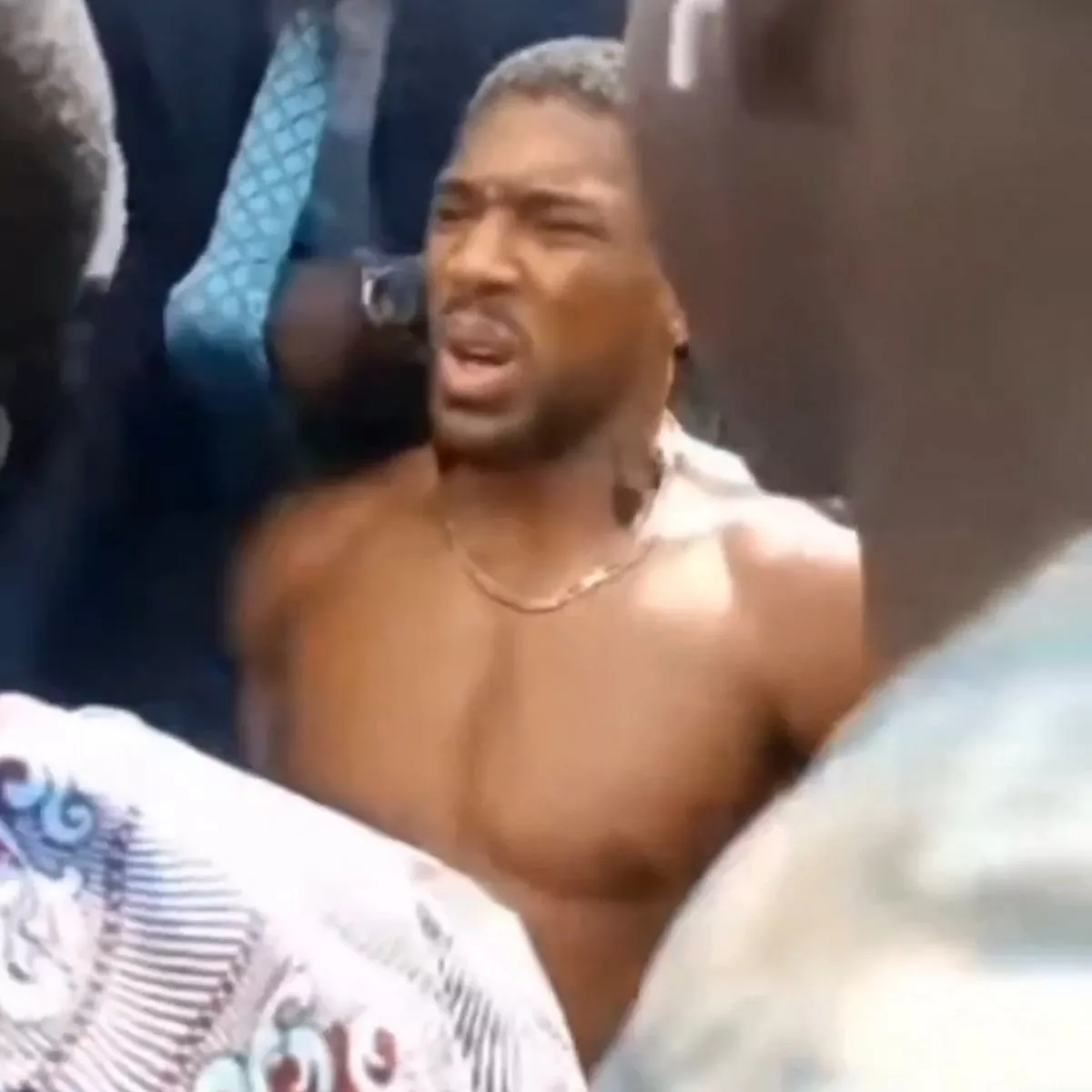

Anthony Joshua has been injured in a car crash in Nigeria that killed two members of his close-knit team, a violent interruption to the carefully managed life of one of boxing’s biggest global stars. The former unified heavyweight champion survived, but the collision near Lagos has left his camp grieving and raised fresh questions about road safety in a country where fatal accidents are a grim routine. Early statements from his representatives and local authorities suggest Joshua’s injuries are not life threatening, yet the emotional and professional impact is already profound.
The crash, which occurred while Joshua was in Nigeria for personal and promotional commitments, has been described by his camp as a devastating loss of “close friends” as well as a serious scare for the fighter himself. As details emerge about how the vehicles collided and how emergency crews responded, the incident is rapidly becoming both a human tragedy for the “Anthony Joshua machine” and a stark reminder of the risks that accompany even routine travel on congested West African roads.
The crash near Lagos and what is known so far
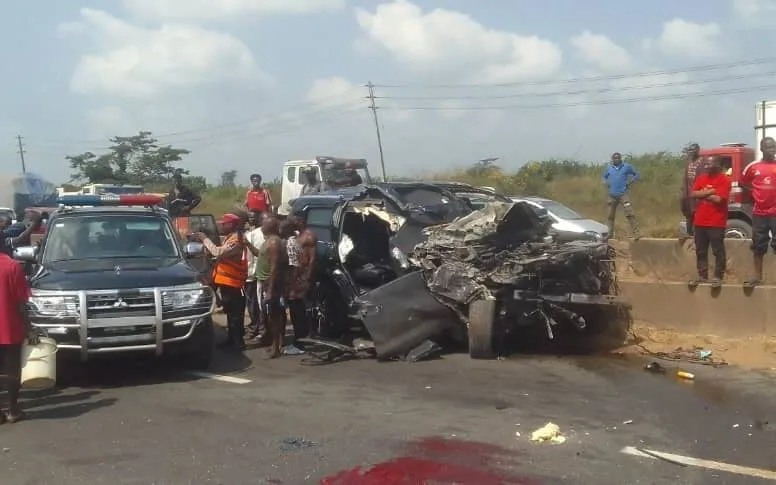
Initial accounts indicate that Anthony Joshua was involved in a road traffic accident in or near Lagos, Nigeria, while traveling with members of his entourage. His promoters confirmed that the vehicle carrying the British heavyweight and Olympic gold medalist was struck in a collision that left two of his team members dead and Joshua himself injured, though he was conscious and able to receive treatment after the impact. The statement described the crash as a “road traffic accident” in Lagos, underscoring that the boxer was not alone but accompanied by staff who form part of his inner circle in Nigeria.
Further updates from his camp stressed that the two people killed were not anonymous passengers but colleagues embedded in the daily operations of the fighter’s brand and training setup. One live update feed reported that British boxer Anthony Joshua had been injured and that two of his team members had died in a car crash near Lagos, with the boxer’s representatives asking for privacy for the families at what they called an incredibly difficult time. That same feed reiterated that Anthony Joshua was in Nigeria when the crash occurred and that his status as a British star did not insulate him from the hazards of local roads, even when traveling with professional security and logistical support.
Injuries to Joshua and the loss of two “close friends”
While the full medical picture has not been disclosed, Joshua’s injuries have been described as significant enough to require attention but not catastrophic, a relief to fans who saw early images of the wreckage circulating on social media. Reports from his promoters and local authorities suggest that he was able to communicate with responders and that his condition was stable after being taken from the scene. For a fighter whose livelihood depends on his physical condition, any injury is serious, but the early indications point to a recovery measured in weeks or months rather than a permanent end to his career.
The emotional toll, however, is far more severe. In a statement carried alongside images credited to Sodiq Ayo via REUTERS, Joshua referred to the two people killed as “close friends,” confirming that they were not just employees but long-standing members of his traveling team in Nigeria. That same report noted that “Anthony Joshu” was involved in what local authorities described as a traffic violation by one of the vehicles, a detail that will likely be central to any formal investigation. Another detailed account of the aftermath emphasized that British boxer Anthony Joshua had been injured and that two of his team members were killed in Nigeria, reinforcing that the losses cut directly into the core of his support network rather than the outer edges of his commercial entourage.
Video evidence, police focus and Nigeria’s deadly roads
Shortly after news of the crash broke, video clips began circulating online showing the twisted remains of vehicles and frantic efforts by bystanders and emergency workers to assist the injured. One widely shared clip, verified by local reporters, showed the immediate aftermath of the fatal crash involving Anthony Joshua, with damaged SUVs and shattered glass scattered across the tarmac. In commentary accompanying the footage, Nigerian road safety officials highlighted that excessive speed and wrongful overtaking are among the leading causes of fatal highway crashes in Niger and neighboring countries, a pattern that appears to align with early suggestions that a traffic violation played a role in this collision.
Police statements cited in international coverage have indicated that investigators are examining whether driver error, poor road conditions or vehicle faults contributed to the crash that injured Joshua and killed two of his companions. One detailed report on the incident, which noted that Anthony Joshua is the boxer who defeated Jake Paul in a high profile bout, quoted authorities as saying that the crash drew immediate attention from local law enforcement and medical services, who rushed to the scene once alerted. Another account from LAGOS, Nigeria, described how ambulances were dispatched to the crash site and referenced a time stamp of 01:54 PM ET in relation to updates on Joshua’s condition, underscoring how quickly the story moved from local incident to global headline.
From global champion to Nigerian homecoming turned tragedy
For Joshua, the crash came at a moment when his career narrative had been shifting back toward resurgence. The British heavyweight and Olympic gold medalist had recently rebuilt momentum with high profile wins, including a widely watched fight in which he defeated social media star turned boxer Jake Paul, restoring some of the aura that surrounded his early title reigns. His trip to Nigeria was framed as both a personal homecoming and a chance to deepen his commercial and philanthropic ties in the country of his heritage, with appearances, meetings and social media engagements planned around Lagos and other hubs.
That context helps explain why the accident has resonated so strongly with fans in both Britain and Nigeria. One feature on the incident described how social media posts had chronicled Joshua’s movements in Nigeria in the days before the crash, portraying a confident former champion reconnecting with local supporters and business partners. The same report referred to the broader “Anthony Joshua machine,” a shorthand for the network of trainers, managers, security staff and commercial advisers who travel with him and help manage his brand. The deaths of two team members in that machine, in a crash on Nigerian roads, have turned what was meant to be a celebratory visit into a period of mourning and uncertainty.
What comes next for Joshua, his team and road safety debates
In the short term, Joshua’s priorities are likely to center on medical recovery and supporting the families of the two team members who died alongside him. His promoters have already issued statements expressing profound sadness and pledging assistance to the bereaved, while also asking for space as the boxer processes the loss of close friends. One live update feed that tracked the story over multiple entries emphasized that Anthony Joshua’s camp is coordinating with authorities in Nigeria and with his British management to manage both the legal and logistical fallout, including potential repatriation of remains and support for memorial services.
Beyond the immediate circle of the fighter and his team, the crash is also feeding into a broader conversation about road safety in Nigeria and across West Africa. The reference by officials to excessive speed and wrongful overtaking as leading causes of fatal crashes in Niger and neighboring states has sharpened calls for stricter enforcement of traffic laws, better driver education and improved road infrastructure. For a global figure like Anthony Joshua to be injured in such a crash, with two deaths in his own vehicle, underscores that the dangers are not confined to anonymous commuters but can reach even the most protected travelers. As more details emerge from Lagos and from the British side of his management, the tragedy is likely to be remembered not only as a personal blow to a former champion but also as a stark illustration of how fragile safety can be on the roads that connect his two worlds.
More from Wilder Media Group: