
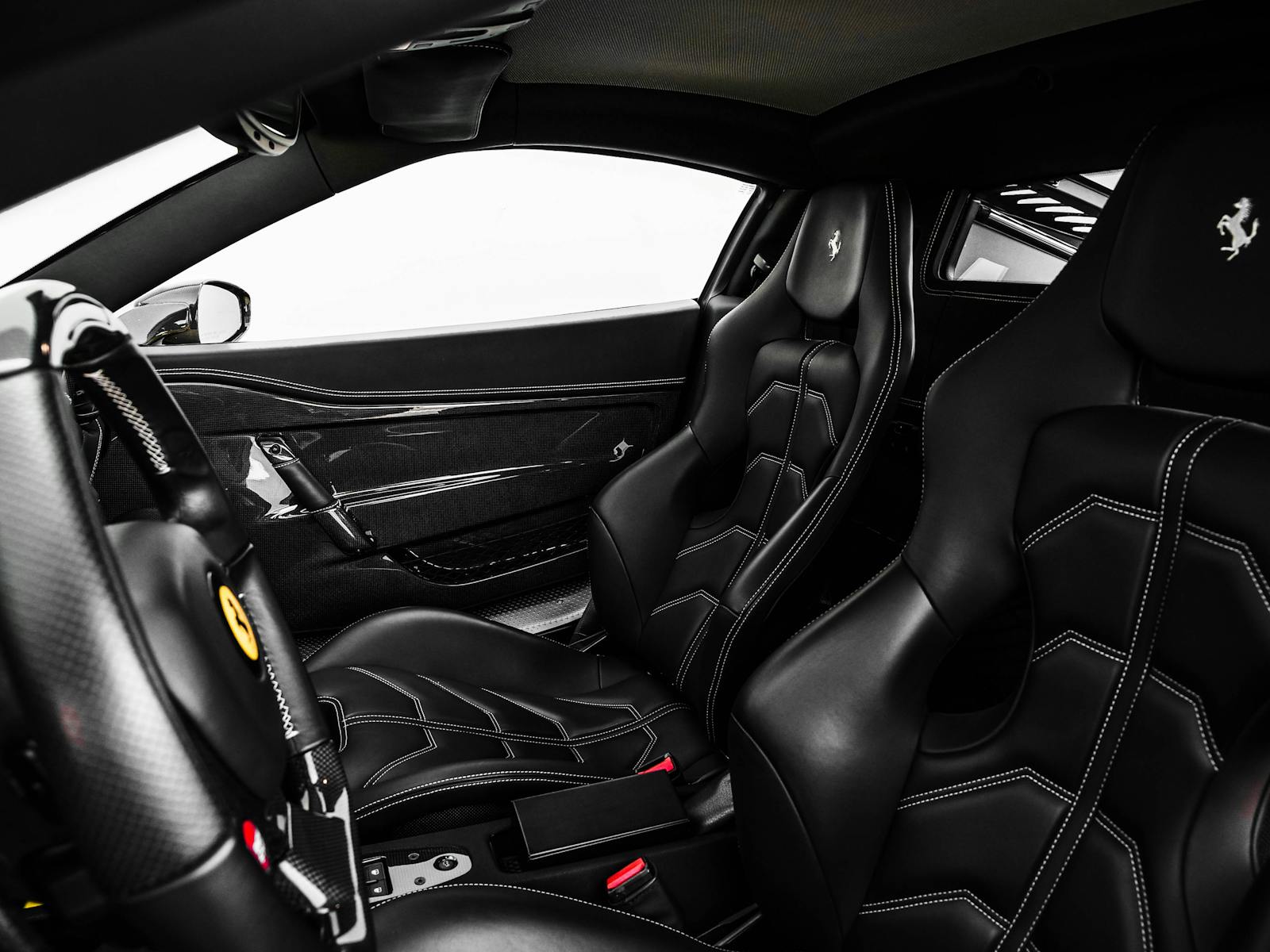

Ferrari’s first electric car arrives with a cabin that looks as if it rolled straight out of a Cupertino sketchbook, yet it still feels unmistakably Maranello. The Ferrari Luce interior, shaped by Apple design veteran Jony Ive and longtime collaborator Marc Newson, trades the usual EV tablet wall for a tactile, driver-first cockpit. The result is a car that treats interface design as seriously as horsepower, and that attention shows in every button, knob and stitched surface.
Rather than chasing tech spectacle, the Luce uses design restraint to create drama. Physical controls, carefully framed screens and a theatrical approach to light and sound turn everyday driving gestures into small rituals. Together, these choices signal that high-end electric performance cars are entering a new phase, where software and hardware are composed with the same care as a mechanical V12.
From iPhone to Luce: how LoveFrom rethought Ferrari luxury
Ferrari positions the Luce as the opening chapter of a new segment, describing the car as the start of a “new chapter in Ferrari’s history” that carries the name into a fresh era of electric performance. In official material on FERRARI LUCE, the brand frames the car as a bridge between its racing heritage and a quieter, battery powered future. That context helps explain why Ferrari turned to LoveFrom, the creative collective led by Jony Ive, to define the interior and interface for Luce rather than simply adapting an existing cabin.
Ferrari credits LoveFrom, a creative by Jony Ive, with leading the interior and interface work, pairing him with Marc Newson in a rare automotive collaboration. The Luce is described as Ferrari’s first all electric car, and the company stresses that the design is not a break with its past but a refinement of it, with the cabin meant to feel like a natural evolution of the brand’s racing inspired cockpits rather than a tech demo on wheels.
Buttons, knobs and a quieter kind of tech theater
The most surprising thing about the Luce interior is not what is new but what is missing. Instead of a wall of glass, the cabin leans heavily on physical buttons and knobs, a decision highlighted in coverage that notes the designer of the iPhone helped shape an interior that is “full of physical buttons and knobs” rather than pure touch. That choice, described in detail in a report on Ferrari’s first EV, is a clear reaction against the swipe heavy dashboards that dominate other premium EVs and signals a belief that high performance driving still benefits from tactile feedback.
Jony Ive and Marc Newson have been explicit about resisting an over reliance on touchscreens in the Luce. Reporting on the project notes that Jony Ive and for the interior of Ferrari’s first electric car, instead drawing inspiration from classic sports cars and Formula One single seaters. Screens are still present, but they are treated as instruments rather than entertainment panels, with one report describing a central tablet mounted on a ball and socket joint that can swivel, confirming that this is still a modern EV with digital displays but one that keeps the driver grounded through analogue controls.
That philosophy extends to smaller details that turn interaction into performance theater. One close look at the cabin describes how a driver can Push the key into a magnetized receiver in the center console, at which point the yellow on the key dims and moves to glow through the dashboard, a tiny choreography of light that echoes the old ritual of twisting a metal key in a Ferrari ignition. In an era when many EVs rely on smartphone proximity and haptic buzzes, that kind of physical ceremony feels intentionally analog, even if it is driven by software.
A human centric cockpit that still feels like a Ferrari
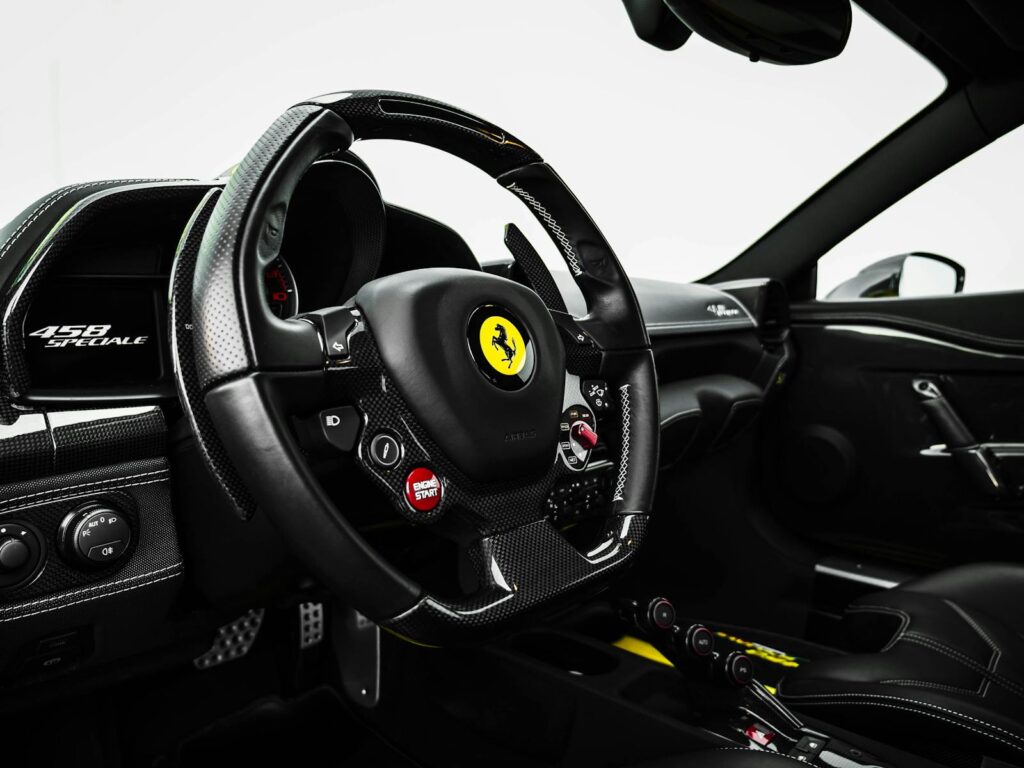
For all the talk of Apple style minimalism, the Luce interior is not a cold white box. The three spoke steering wheel, described in one design breakdown as having carefully arranged controls, is meant to keep the driver’s hands anchored while still offering quick access to key functions. The design team describes the wheel and its controls as part of a layout that keeps the driver “at the center,” a point captured in analysis of three spoke steering and its role in the cockpit. That focus on the driver echoes Ferrari’s long running approach in its combustion cars, even as the powertrain shifts to electric.
The wider interior is framed as a “sensory experience” that refines Ferrari’s heritage rather than replacing it. A detailed look at the project describes how the Luce typography is intentionally Minimalist and how the cabin is designed so that the sensory experience of the car is not a departure from Ferrari’s past but a refinement of it, a point emphasized in coverage of Minimalist Luce typography and the way sound, materials and interface are tuned to keep the driver’s focus on driving. Even social media reactions, such as a clip that asks what viewers think of the design and notes that “everyone else can take notes here” while showing the cabin, highlight how different the Luce feels compared with a typical 2026 Subaru Outback Wil interior, underlining Ferrari’s intent to set a new benchmark for electric performance cockpits.
More from Wilder Media Group: