

Ferrari revealed the interior of the Luce, its first fully electric production car, in March 2026, and the biggest surprise was not the technology. It was who designed it. Jony Ive, the former Apple chief design officer responsible for the look and feel of the iPhone, iPad, and MacBook, shaped the Luce’s cabin through his creative collective LoveFrom, co-founded with industrial designer Marc Newson.
The result is a cockpit that feels unlike anything else in the automotive world: calm, tactile, and obsessively detailed, with physical controls made from glass and aluminum instead of the plastic touchscreens that dominate most new cars. Ferrari chose to show the interior months before the full exterior reveal, scheduled for later in 2026 in Italy, a decision that signals how central the cabin is to the Luce’s identity.
Why Ferrari brought in Jony Ive
Ferrari did not hire a celebrity consultant for a brochure quote. According to the company, LoveFrom has been embedded in the Luce project as a core creative partner, working alongside Ferrari’s own design team in Maranello to rethink how a driver interacts with an electric car. Ferrari CEO Benedetto Vigna has described the Luce as the start of a “new chapter” for the brand, and the interior is where that chapter opens.
Ive left Apple in 2019 after nearly three decades. LoveFrom has since taken on projects with Airbnb, the Terra Carta seal for the King’s Coronation, and now Ferrari. The Luce is the most visible product to emerge from the studio so far, and it carries a design philosophy familiar to anyone who has held an iPhone: strip away everything that does not earn its place.
What the Luce cabin actually looks like
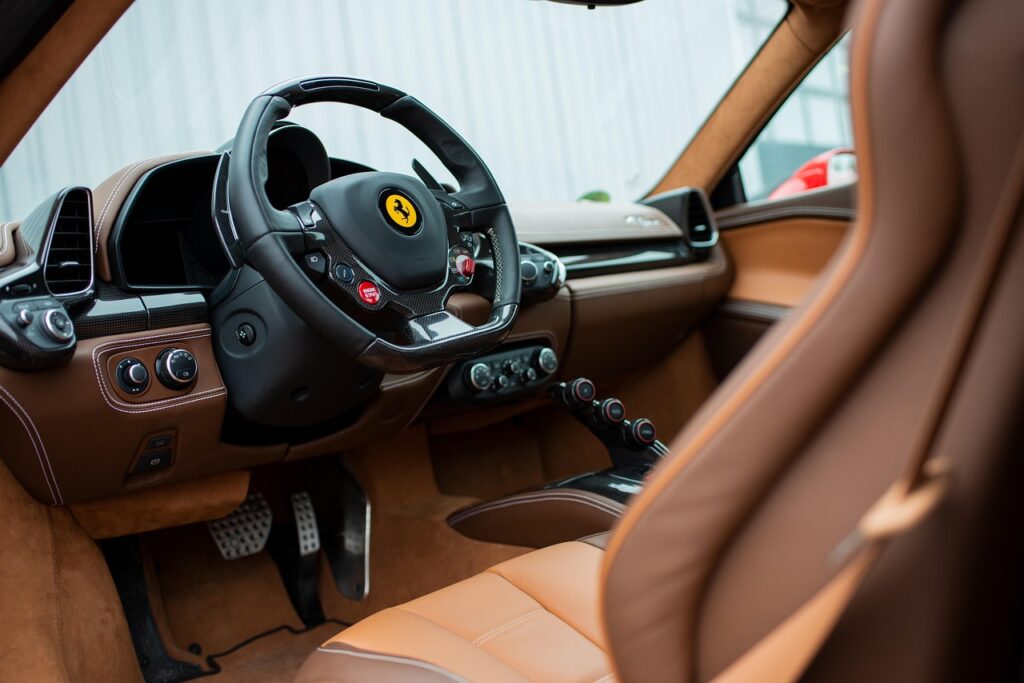
Four slim, leather-wrapped seats sit inside a structure where glass and aluminum extend from the body into the cockpit. Ferrari describes the interior as part of the car’s architecture rather than a separate compartment, and the effect is a sense of openness unusual for a low-slung GT.
The dashboard avoids the single-slab screen layout common in electric vehicles. Instead, layered glass and metal controls are arranged in a hierarchy that gives the driver the most critical information closest to the line of sight. Behind the steering wheel, floating digital gauges are stacked with a sense of depth that recalls analog instruments, even though the displays themselves are digital. Ferrari has confirmed the use of Samsung OLED panels for the screens, chosen for contrast and color accuracy.
The boldest choice in the Luce is what Ferrari and LoveFrom left out. There is no giant central touchscreen running every climate, audio, and driving function. Instead, mechanical buttons, dials, toggles, and switches handle most everyday tasks. The design team has said the goal is to let drivers operate the car by feel, keeping eyes on the road rather than hunting through software menus.
That decision runs against the industry trend set by Tesla and adopted by nearly every major automaker over the past decade. Ferrari is betting that physical controls are not a step backward but a deliberate refinement, the same argument that led some smartphone makers to reintroduce tactile feedback after years of flat glass. In a car capable of 309 km/h (192 mph), the ability to adjust settings without a glance matters more than minimalist aesthetics.
Materials that recall Apple’s hardware playbook
The control surfaces in the Luce are made from glass and aluminum rather than the molded plastic found in most car interiors, including many six-figure ones. Ferrari says the glass used for touch-sensitive elements is engineered for durability in the same category as smartphone display glass, designed to resist scratches, temperature swings, and the oils from human skin over years of use.
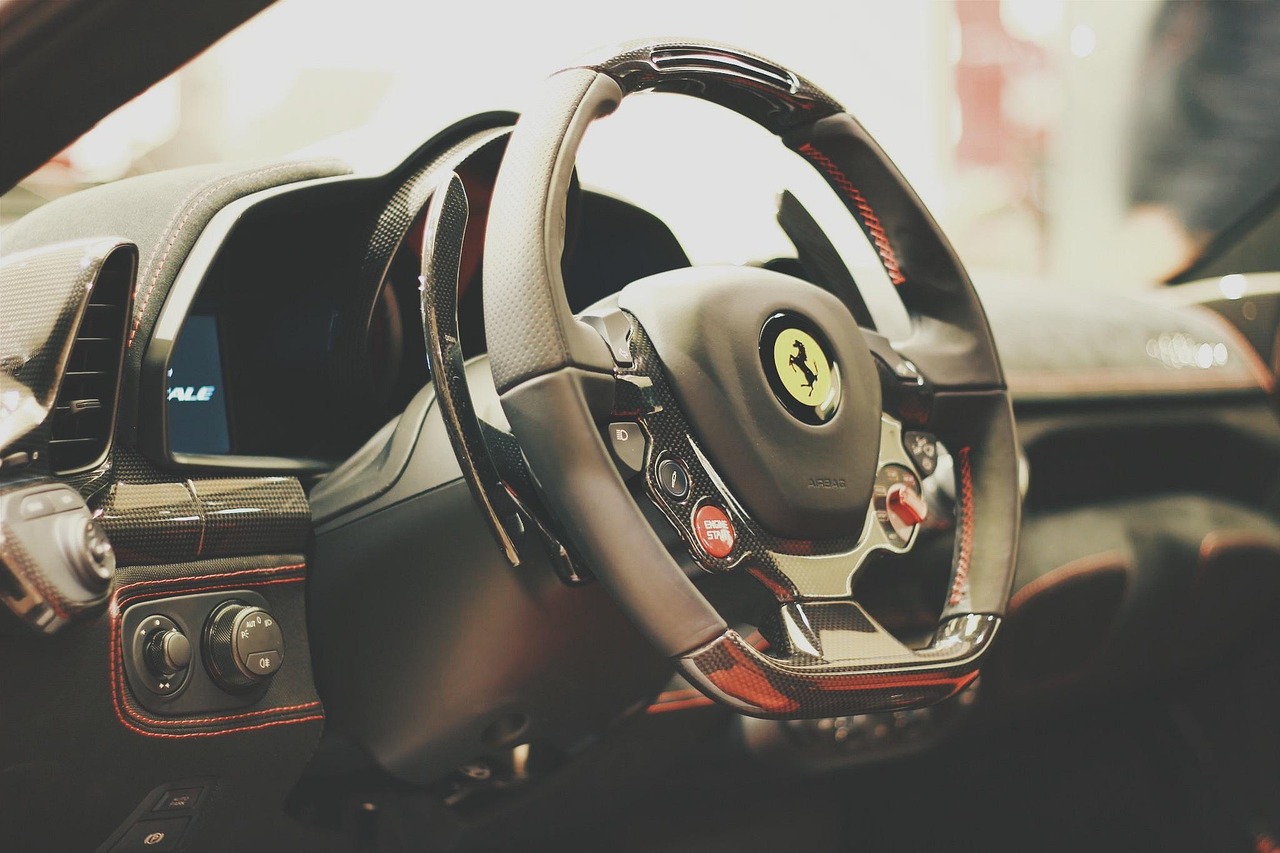
The steering wheel is the clearest example. Its structure is exposed aluminum, with individual buttons shaped and textured so each one feels distinct under a fingertip. The effect is closer to a precision tool than a conventional steering wheel, and it is the single element in the cabin most likely to remind people of Apple’s hardware design ethos: the idea that how something feels in your hand is as important as how it looks.
A color-shifting key and rotating displays
Ferrari has added a few theatrical details that go beyond pure function. The Luce comes with a color-shifting digital key that looks more like a design object than a traditional fob. Inside, one of the central displays can rotate and swivel on its mount, responding to the driver’s approach and startup sequence. Ferrari describes the cabin as choreographed: it wakes up, orients, and presents information in a sequence rather than simply turning on.
These touches are not strictly necessary, but they serve the same purpose as the startup chime on a Mac or the haptic click of an Apple Watch crown. They create a sense of occasion, something Ferrari has always understood in its combustion cars through exhaust note and throttle response, and now has to translate into an electric context.
The performance underneath
Beneath the design story, the Luce is still built to be fast. Ferrari has confirmed four electric motors producing a combined 1,000 CV (approximately 986 bhp) in Boost mode. The company claims a 0-to-100 km/h time of 2.5 seconds and a top speed of 309 km/h. Reports ahead of the reveal have cited an expected range of roughly 480 km (about 300 miles), though Ferrari has not published a final WLTP figure as of March 2026.
Those numbers place the Luce in direct competition with the Rimac Nevera and the Porsche Taycan Turbo GT, though Ferrari is positioning the car as a four-seat grand tourer rather than a pure track weapon. Pricing has not been officially confirmed, but multiple outlets have reported an expected figure north of €500,000.
There is an unavoidable footnote to this story. In 2024, Apple officially abandoned its own car project, known internally as Project Titan, after more than a decade of development and billions of dollars in investment. The Apple Car never reached production. Instead, the closest thing to an Apple-designed vehicle interior now sits inside a Ferrari.
Ive was not directly involved in Project Titan during its later years, but the parallel is hard to ignore. Both Apple and Ferrari prize obsessive material choices and the belief that how a product feels in daily use defines its quality. The Luce is not the Apple Car, but it carries some of the same DNA, filtered through a company that has been building objects of desire since 1947.
What this means for Ferrari’s electric future
The Luce is a test case. Ferrari has staked its reputation on the idea that an electric car can still feel like a Ferrari, not just in straight-line speed but in the way a driver touches the steering wheel, reads the gauges, and reaches for a climate control. Bringing in Jony Ive and LoveFrom was a bet that the interior experience could carry that identity forward even without a V12’s soundtrack.
Whether the bet pays off will depend on how the car feels on the road, something no interior reveal can answer. But as a statement of intent, the Luce cabin is the most ambitious interior design project in the automotive industry right now, and the most direct evidence yet that the design thinking behind Apple’s best hardware can translate to a world measured in horsepower and lap times.
More from Wilder Media Group: