

Police in North Yorkshire have seized a heavily modified electric bike that officers say could top 100 miles per hour, turning a niche corner of the e-mobility world into a flashpoint over safety, legality, and hype. The machine, presented as an ordinary bicycle at first glance, has become a test case for how far enthusiasts can push electric power before it stops being a bike and starts looking like an unregistered motorcycle. The incident has also exposed how bold performance claims, including talk of “103 M” capability, collide with the realities of engineering and the limits of the law.
The seizure arrives as cities across the United Kingdom grapple with a surge in illegal e-bikes and home-built conversions that far exceed the modest speeds allowed for road-legal models. While most riders will never approach triple-digit figures, the York case has sharpened questions about how police verify such claims, what risks these machines pose to the public, and whether current regulations are equipped to handle a fast-evolving technology.
The York seizure that ignited the 100 mph debate
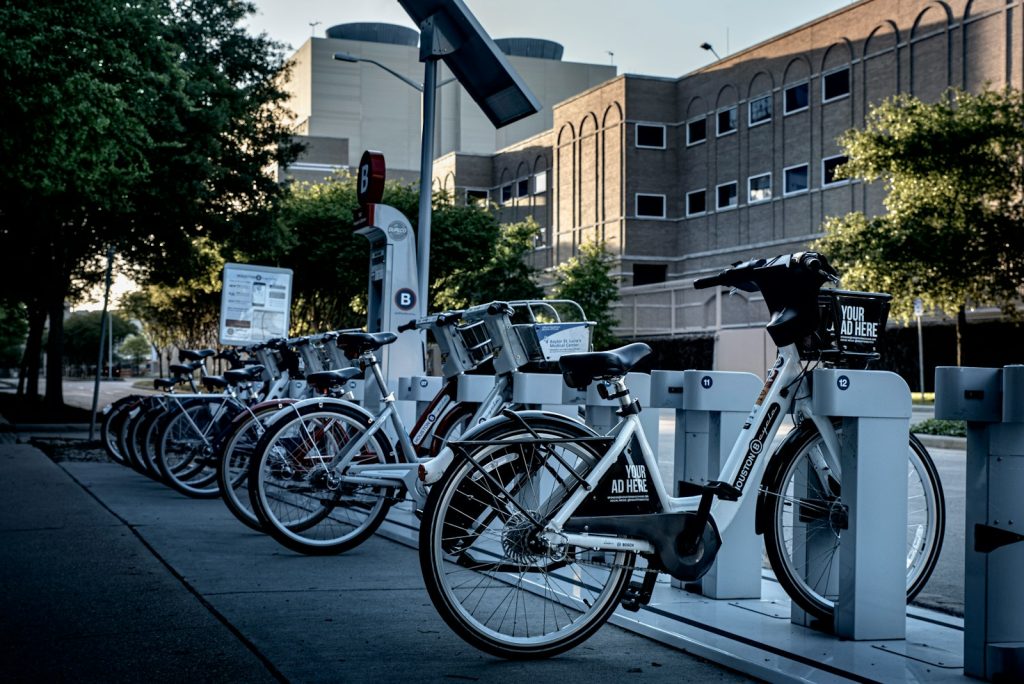
North Yorkshire officers moved in over the Christmas period after spotting an adapted electric bike that, in their view, no longer resembled a standard pedal-assist machine. The bike, seized in York, was described as capable of “over 100 mph,” a figure that immediately raised eyebrows among engineers and riders alike. Reporting on the case has highlighted that the claim of “103 M” top speed, attached to what still looked like a bicycle frame, sits at the extreme edge of what is plausible for a two-wheeler that is not purpose built as a motorcycle, especially when weight, aerodynamics, and battery capacity are taken into account.
Coverage of the York incident has stressed that the police narrative and the physical clues on the machine do not fully align, with some analysts pointing out that the components visible on the seized bike appear more consistent with a powerful but sub-100 mph build. One detailed breakdown of the photos argues that while the bike was clearly illegal for public roads, the specific “103 M” boast may owe more to marketing bravado or misinterpretation than to verified testing, a tension that has fueled skepticism about whether the headline speed figure would stand up to independent scrutiny, as explored in a technical review of the Police Seized This Bike Over MPH Claim, But Something Doesn.
How police framed the bike as “capable of 100mph”
When North Yorkshire officers publicised the York seizure, they framed the machine as an “Electric bike capable of 100mph,” a phrase that instantly set it apart from the typical commuter e-bike limited to modest assistance speeds. The description, shared alongside images of the stripped down frame and battery pack, suggested that the bike’s motor and controller had been tuned far beyond legal thresholds, turning it into a de facto motorcycle that lacked registration, insurance, or type approval. By presenting the machine as a 100 mph threat, police sought to underline the potential danger of such conversions on public roads, particularly in dense urban environments.
The language used by officers also served a broader communications purpose, signalling to local riders that enforcement would not be limited to minor infractions like missing lights or helmets. Instead, the York case was held up as an example of what happens when a builder crosses the line from creative tinkering into constructing an unlicensed high performance vehicle. The emphasis on a triple digit figure echoed earlier warnings that some modified bikes can rival small motorbikes in acceleration and speed, a point reinforced when the York seizure was described as an Electric bike capable of 100mph in official messaging.
Conflicting accounts and the “something doesn’t add up” skepticism
As images and claims about the York bike circulated, technical observers began to question whether the numbers stacked up. Over the Christmas period, commentators noted that while police in North Yorkshire, England, were adamant the adapted electric bike could exceed 100 mph, the hardware on display did not obviously match the sort of high end components typically required for such performance. The battery enclosure, wiring, and visible drivetrain looked more like those found on powerful off road e-bikes than on machines engineered for sustained triple digit speeds, prompting some to argue that “something doesn’t add up” in the official description.
This skepticism has focused on the gap between what is theoretically possible and what is likely in a real world build. To reach and maintain speeds above 100 mph, an electric bike would normally need a substantial motor, robust cooling, and a frame designed to handle the stresses of high velocity riding, as well as tyres and brakes rated for motorcycle level loads. Analysts reviewing the York case have suggested that while the bike was clearly illegal and potentially very fast, the specific claim of “over 100mph” may be more of an unverified assertion than a measured fact, a concern captured in coverage that described the seizure as an Over the Christmas North Yorkshire, England incident where the headline claim warrants closer scrutiny.
What UK law actually allows an e-bike to do
The legal backdrop to the York seizure is clear and far less glamorous than the 100 mph headlines. Under UK rules, an electrically assisted pedal cycle is only treated as a bicycle if it meets strict criteria on power and speed. Its motor must cut assistance once the bike reaches 15.5 miles per hour, and the machine must be designed so that it can be propelled up to that limit without pedalling only if it has been formally approved. Anything that delivers power beyond those thresholds, or that uses a throttle to drive the bike at higher speeds without pedal input, is treated in law as a different class of vehicle, with all the licensing, insurance, and registration requirements that follow.
This framework means that a machine genuinely capable of 100 mph is far outside the scope of what regulators consider an e-bike. Instead, it would be classified closer to a motorcycle, regardless of whether it retains pedals or a bicycle style frame. Riders who use such machines on public roads without the appropriate paperwork risk prosecution, seizure, and potentially crushing of the vehicle. The York case has therefore become a vivid illustration of how a bike that looks like a toy can, in legal terms, be an unregistered high performance motor vehicle, a distinction spelled out in official guidance that notes that an approved model and Its motor must stop assisting at 15.5 miles per hour (Its speed cap is central to the definition).
Other extreme-speed e-bike cases and the 100 m benchmark
The York seizure is not an isolated story of police confronting machines that blur the line between bicycle and motorcycle. In another widely discussed case, officers confiscated an e-bike described as able to go faster than 100 mph, with the performance figure framed around a “100 m” benchmark that again pushed the limits of what most people associate with pedal based transport. That machine, like the York bike, was presented as a cautionary example of what happens when high power motors and modified controllers are grafted onto frames that were never designed for such speeds, raising questions about structural integrity and braking performance.
Accounts of that confiscation emphasised that the bike’s motor was rated far above the modest outputs seen on legal commuter models, and that the builder had effectively created a lightweight electric motorcycle without the safety features or regulatory oversight that would normally apply. Police messaging in that case echoed the York narrative, stressing that the rider was operating a vehicle that should have been registered and insured, and that the public road is not a test track for experimental builds. The story was widely shared after officers highlighted that Cops had to step in when an e-bike was reported to go faster than 100 mph, a case reported By Talker News with the 100 m figure used as a shorthand for its extreme capability.
Cardiff’s crackdown and the rise of urban enforcement operations
While the York case has grabbed attention because of its triple digit claim, other UK cities have been quietly running systematic crackdowns on illegal e-bikes that may not hit 100 mph but still pose serious risks. In Cardiff, a joint operation between local government and law enforcement has targeted unregistered and dangerously modified machines, resulting in the seizure of multiple bikes with a combined estimated value of over £22,000. Officials there have framed the effort as a response to community complaints about antisocial riding, near misses with pedestrians, and the use of high powered e-bikes in low level crime, from couriering drugs to quick getaways.
The Cardiff initiative has been notable for its partnership approach, with Cardiff Council and South Wales Polices working together to identify hotspots, run roadside checks, and educate riders about the legal limits on power and speed. Rather than waiting for a headline grabbing 100 mph case, the operation has focused on the everyday reality of bikes that may “only” reach 40 or 50 mph but are being ridden on pavements, through parks, and in pedestrianised zones. The scale of the problem was underlined when a clamp down on illegal e-bikes involving Cardiff Council and South Wales Polices led to dozens of seizures and a renewed debate about how to balance innovation with public safety.
Inside an illegal e-bike raid: what officers actually find
Accounts from inside enforcement operations show that the York bike is just one extreme example in a much broader spectrum of illegal machines. In Cardiff, reporters who accompanied officers on an illegal e-bike raid described a scene that was less about sleek, futuristic prototypes and more about rough, improvised builds. Many of the seized bikes were cobbled together from mismatched frames, oversized motors, and budget battery packs, with wiring that would alarm any professional mechanic. The common thread was not cutting edge engineering but a willingness to bypass safety norms in pursuit of raw speed and quick acceleration.
Officers involved in these raids have spoken about the difficulty of explaining to riders that their pride and joy is, in legal terms, an unregistered motor vehicle that can be taken off the road on the spot. In Cardiff, these seizures and the subsequent dismantling of the bikes were carried out under a joint scheme that aimed to remove the most dangerous machines while also sending a message to would be builders. The operation, described in detail in coverage that began with the phrase In Cardiff, revealed bikes with stripped out safety features, tampered controllers, and performance levels that far exceeded what their frames and brakes were designed to handle.
Speed records and the 84mph benchmark in Cardiff Police cases
Not every illegal e-bike hits the 100 mph mark claimed in York, but some come surprisingly close. In one Cardiff Police crackdown, officers reported seizing machines that had been clocked at 84 mph, a speed that would be remarkable even for many small motorcycles. These bikes, often built around lightweight frames with powerful hub or mid drive motors, can accelerate rapidly and cover ground at a pace that leaves conventional cyclists and pedestrians with little time to react. The 84 mph figure has become a reference point in discussions about how far the illegal e-bike scene has drifted from the original concept of modest pedal assistance.
The Cardiff cases show that even without reaching triple digits, illegal e-bikes can operate at velocities that dramatically increase stopping distances and crash severity. At 84 mph, a rider who loses control on a pothole or wet surface is exposed to forces that typical bicycle helmets and clothing are not designed to withstand. Police have argued that these speeds, combined with the lack of registration plates or insurance, make enforcement and accountability extremely difficult when collisions occur. The scale of the issue was highlighted in reports of Illegal Cardiff Police seizures, where officers stressed that such machines have no place on shared paths or city streets.
Injury patterns and why pediatric doctors are worried
Behind the enforcement statistics lies a growing body of medical evidence about what happens when high speed e-bikes and e-scooters collide with the real world. Pediatric specialists have reported a rise in serious injuries among children and teenagers using these devices, with patterns that differ from traditional bicycle crashes. Common injuries include life threatening head trauma, such as brain bleeding or skull fractures, along with broken ribs, limb fractures, and internal organ damage. Doctors have linked these outcomes to higher impact speeds, heavier vehicles, and the tendency of some riders to forgo helmets and protective gear.
Medical professionals warn that the combination of powerful motors, inexperienced riders, and urban obstacles like curbs, parked cars, and uneven surfaces creates a perfect storm for severe accidents. They note that many young riders treat e-bikes and e-scooters as toys rather than motorised vehicles, underestimating the stopping distances and the consequences of a fall at 25 or 30 mph, let alone at the extreme speeds claimed in cases like York. Health guidance aimed at parents has stressed that these devices require the same level of supervision and safety planning as small motorcycles, with one advisory highlighting that Oct data show that Common injuries now include head trauma and fractures linked to crashes over potholes or rocky surfaces (Oct Common patterns that mirror the rise in high speed riding).
Balancing innovation, enforcement, and the road ahead
The York seizure of a bike touted as capable of more than 100 mph has crystallised a broader tension in the e-mobility landscape. On one side are enthusiasts and innovators who see electric power as a way to push the boundaries of what a bicycle can do, experimenting with new drivetrains, batteries, and control systems. On the other are regulators, police, and medical professionals who must deal with the consequences when those experiments spill onto public roads without the safeguards that apply to conventional motor vehicles. The clash is not simply about speed, but about where society draws the line between personal freedom and collective safety.
For now, the law in the UK leaves little ambiguity: if a machine can propel itself far beyond 15.5 miles per hour without pedalling, it is no longer treated as a bicycle, regardless of how it looks. Cases like York, Cardiff, and the 100 m confiscation elsewhere suggest that enforcement is catching up with a subculture that has grown rapidly in recent years. The challenge ahead will be to maintain space for legitimate, road legal e-bikes that help cut congestion and emissions, while clamping down on the small but high impact minority of machines that chase 84 mph or 103 M bragging rights on streets never designed for that kind of speed.
More from Wilder Media Group: