
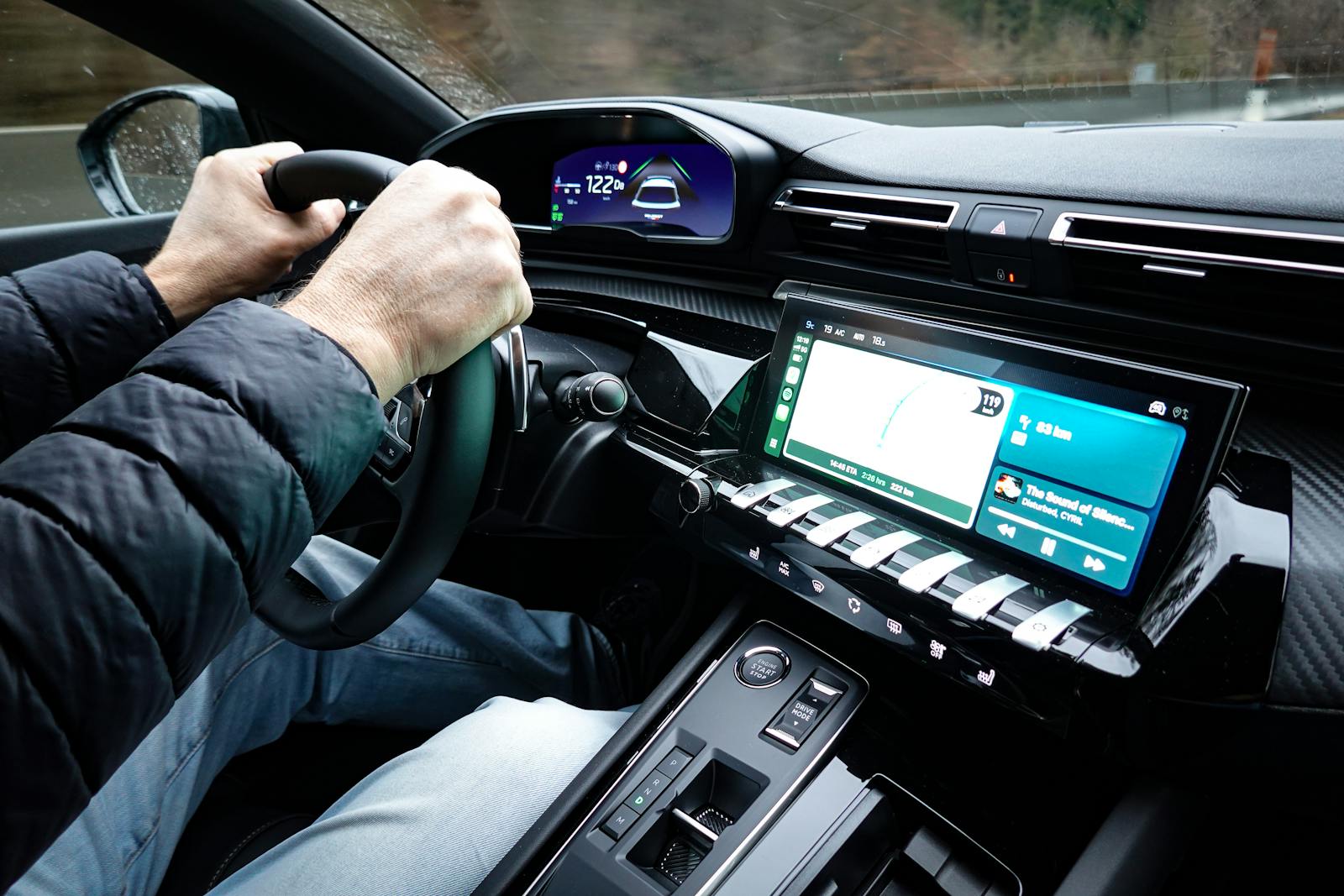

Your car is no longer just a machine that gets you from A to B. It is a rolling sensor rig that quietly builds a detailed profile of how, when, and where you drive, then ships that information off to corporate servers. As automakers race to bolt artificial intelligence onto dashboards and driver-assistance systems, that data stream is getting richer, more personal, and far more valuable to everyone from insurers to marketers.
Most drivers never see the contracts that turn their daily commute into a product. Buried in app permissions and infotainment menus, companies reserve the right to harvest and sell driving behavior, location history, and even in-car habits. The result is a booming side business in automotive surveillance that most people are funding simply by turning the key.
From “connected car” to behavioral dossier

Modern vehicles are packed with sensors that track far more than engine temperature and fuel levels. Telematics systems routinely log speed, acceleration, braking, time of day, location, and specific driver behaviors such as sudden stops and sharp turns, creating a minute by minute record of how a person actually drives, as detailed in one telematics overview. AI systems then sift through this firehose to flag patterns, score risk, and predict what a driver might do next, turning raw sensor readings into a behavioral dossier that can be sliced and sold.
That analysis is not limited to how hard someone hits the brakes. Companies that specialize in vehicle analytics describe how different behaviors of people using the same car can be detected from constantly received data specific to that vehicle, a capability highlighted by Uptecra. Combined with always connected infotainment systems and driver assistance suites, the car effectively becomes a behavioral lab on wheels, with AI quietly labeling each trip as cautious, distracted, aggressive, or something in between.
Insurers, automakers, and the pennies-per-driver economy
Once that behavioral profile exists, it does not just sit on a server. General Motors, Honda, and Hyundai have been identified as selling driver data to insurers for pennies per person, turning detailed logs of everyday trips into a low margin, high volume product, according to reporting on Honda and Hyundai. Earlier coverage described how Last week, the New York Times and others reported that certain General Motors vehicles were collecting driver data that insurers use to adjust, that is, raise, premiums, a practice laid out in detail in an analysis of General Motors. Drivers often discover this only after a renewal notice arrives with a higher bill and a vague reference to “driving behavior.”
Privacy advocates argue that this is not just a pricing tweak but a structural shift in how risk is calculated and who gets to challenge it. When New York Times and other reporting surfaced the General Motors data pipeline, critics warned that opaque scoring systems could punish drivers for context free metrics like late night trips or quick lane changes. One left wing analysis noted that Last week, the New York Times and others reported that certain General Motors vehicles were collecting driver data that insurers use to adjust, that is, raise, premiums, underscoring how little recourse drivers have once their habits are turned into a proprietary risk index for insurance companies.
Regulators wake up, while cars get even smarter
Lawmakers are starting to notice that the same connectivity that lets drivers stream music and over the air updates also lets automakers nickel and dime them for features and data. A bill introduced in Nov is designed to protect car buyers from being charged subscription fees for functions like heated seats that are already built into the vehicle, a move described as a pushback against automakers’ subscription greed in one bill. While that proposal focuses on fees, it reflects a broader discomfort with cars that feel more like locked down smartphones, where every feature and every data point can be monetized.
At the same time, consumer advocates are pressing regulators to treat car data as a serious privacy and security issue. Jan reporting quoted critics who told Autoweek that GM’s actions were “an outrageous violation of consumer data privacy, egregious enough to force the FTC to take action,” language that appears in coverage linked through Autoweek. The Center for Auto Safety has amplified those concerns, pointing to how Jan comments to Autoweek framed the same General Motors practices as a wake up call for the FTC and other agencies.
More from Wilder Media Group: