

The Runabout name is back, and it is a lot more serious than the playful 1960s concept that inspired it. Bertone has turned the idea into a low, sharp, Lotus Exige–based supercar that blends retro wedge drama with modern carbon fiber and serious performance. Instead of a museum piece, the revived Runabout is headed for ultra‑limited production as a road‑legal toy for people who think a track day should feel like a vintage boat show crossed with a time attack session.
At a glance, the car looks like a love letter to Marcello Gandini’s 1969 vision, but the details show a clean-sheet rethink rather than a cosplay recreation. The new shape keeps the original’s nautical cues and open-air attitude, then layers in contemporary aero, a mid‑mounted V6, and the kind of bespoke craftsmanship that lets owners treat it as rolling sculpture as much as a weekend weapon.
The 1969 dream, rebuilt on Lotus bones
To understand why this car matters, it helps to go back to the original Autobianchi showpiece that Marcello Gandini sketched in the late 1960s. That tiny Autobianchi Runabout floated a wild idea: a wedge-shaped speedboat for the road, complete with open cockpit and playful detailing, all powered by a modest Fiat 1.1-liter engine. It was presented under the Autobianchi marque as a design manifesto more than a production candidate, and for decades it stayed locked in concept-car folklore. The new project picks up that thread 55 years later, with 55 years after the iconic concept explicitly called out in the launch material.
Instead of a humble city-car platform, the modern Runabout rides on a bonded and extruded aluminum structure that shares its basic layout with a Lotus Exige. That arrangement, built from lightweight sections in the Lotus style, keeps mass to a claimed 1,057-kilogram curb weight, or 2,330-l pounds. The chassis gives the car the same intimate, mid‑engined stance that made the Exige a cult favorite, but everything the eye falls on is pure Bertone fantasy, from the carbon bodywork to the open cockpit and boat-inspired tail.
Retro wedge, modern muscle
Lead designer Andrea Mocellin set out to create a modern take on Marcello Gandini’s 1969 Runabout concept, and the result is a car that looks like it drove straight out of a period poster, then spent a decade in a wind tunnel. Both body styles, the roofless Barchetta and the more sheltered Targa, share the same impossibly low nose and jutting wheelarches that visually separate the fenders from the main fuselage. Reports describe how Both versions keep the same dramatic wedge profile, with a tail that stacks lamps and vents like art pieces. The whole thing is wrapped in carbon fiber, with a wedge-shaped, carbon body that is more reinterpretation than replica, as detailed in coverage of the new Roundabout.
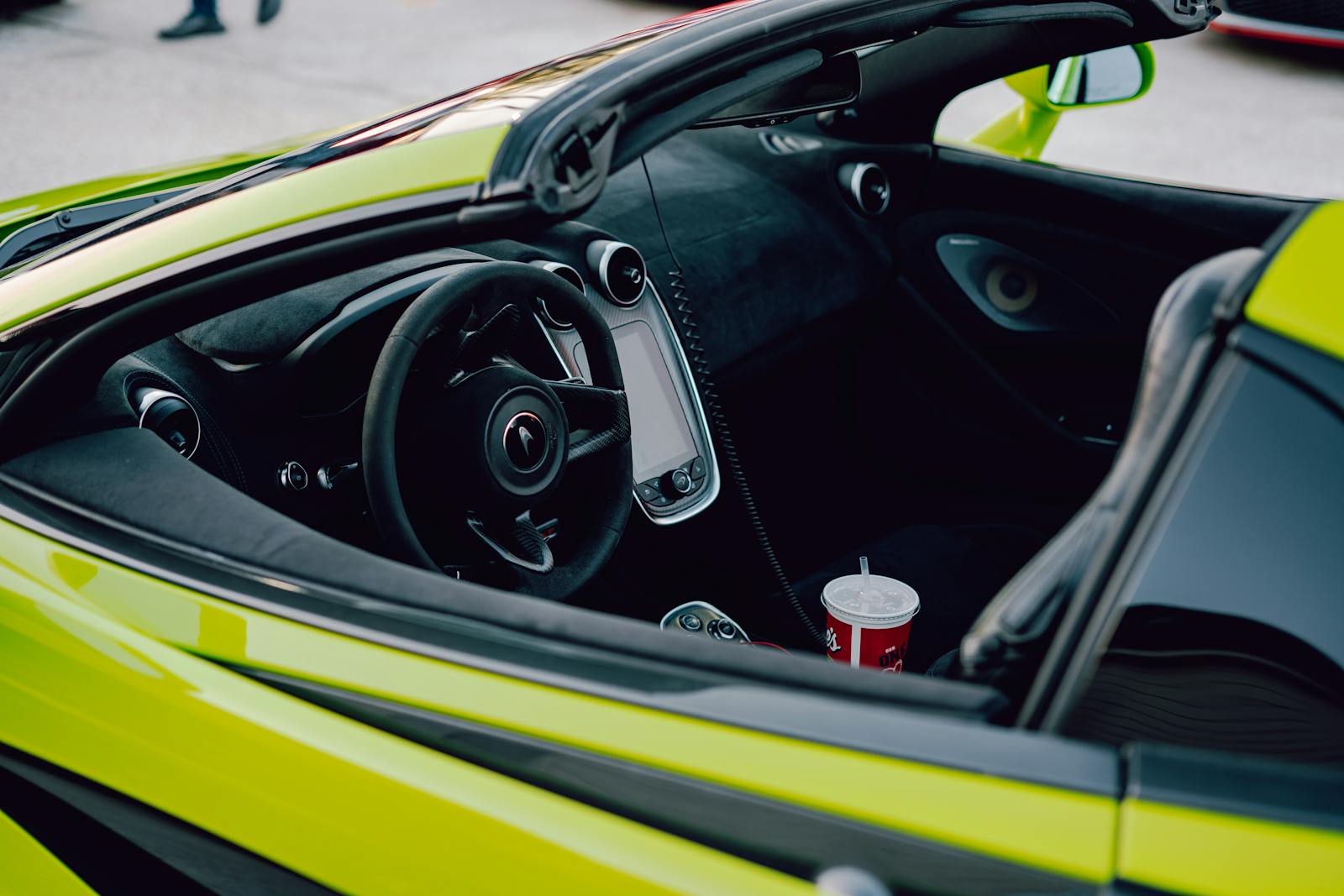
Inside, the cabin leans into the analog fantasy. A gated manual gear stick sits proudly in the open, surrounded by exposed mechanical elements and a minimalist digital dashboard that nods to classic Lotus simplicity. The brand is positioning the car as a way to, in its own words, Celebrate the Good, with marketing that opens by Introducing the Runabout as a kind of aquatic-themed super toy. One social post even suggests it looks more at home in a marina than on a racetrack, a nod to the way Bertone itself leans into its 1960s and 1970s design legacy.
From concept folklore to ultra‑limited reality
Under the engine cover, the nostalgia stops and the numbers start. The mid‑mounted Engine is a supercharged 3.5L supercharged V6 sourced from Toyota and tuned specifically for this car. The official Spec Sheet lists output at 475 horsepower and 361 lb‑ft of torque, figures that comfortably eclipse the 430 bhp factory tune of the hottest Exige variants. Another breakdown of the project describes the car as a Lotus-based, carbon-bodied sports car with a supercharged 3.5-liter Toyota V6, tying the mechanical story directly back to the brand’s lightweight sports-car roots.
Performance claims are suitably punchy. The modern Runabout is said to sprint from rest to highway speeds in around 4.1 seconds, a figure highlighted in an interview with Andrea Mocellin, with top speed stated at 270 km/h, or 168 miles per hour, in coverage of the Modern Limited Production. The car is available as a roofless Barchetta and Targa, with each example personalized through Bertone’s Centro Stile and pricing hovering around €390,000 according to Pricing that analysis. For a design house that, as one summary notes, had After disappeared for a while, the Runabout is a loud way of saying it is back in the game.
For Bertone, the project is as much about brand resurrection as it is about lap times. The company is explicitly described as a legendary Italian design house in coverage of the Italian sports car, and the Runabout leans hard into that heritage. Another report frames the car as a way that Bertone Runabout revives a 1969 icon as a 475 hp V6 classic, while a separate breakdown notes how Bertone revives the a Lotus-based, carbon-bodied sports car. In other words, the car is not just a nostalgia trip. It is a statement that the name on the nose still has something sharp and slightly weird to say about how a supercar should look and feel.
More from Wilder Media Group: