
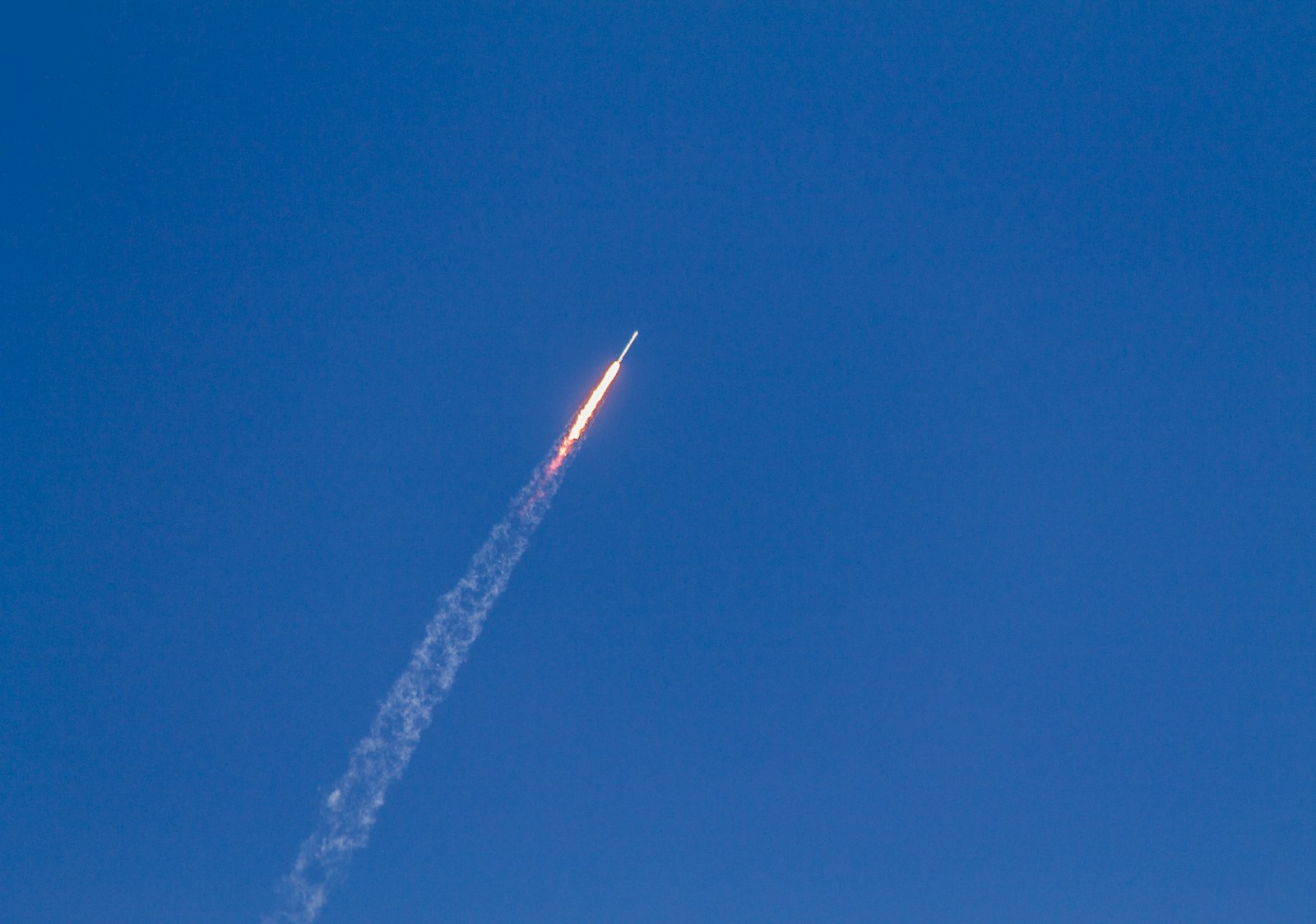

Brazil has taken a significant step in maturing its new generation of combat aviation, completing the first firing test of the MBDA Meteor beyond-visual-range air-to-air missile from a locally operated Saab F-39E Gripen. The event marks a practical milestone in the country’s effort to pair an advanced European fighter with one of the world’s most capable long-range air combat weapons.
The successful launch is more than a technical footnote, signaling that Brazil is moving from acquisition to operational integration of a system designed to reshape its air defense posture across the vast South American airspace.
Gripen E’s expanding role in Brazil’s air power
Brazil’s F-39E Gripen program has steadily shifted from test and evaluation toward frontline service, and the Meteor firing is a clear indicator that the aircraft is being readied for full-spectrum air combat duties. The Brazilian Air Force selected the Gripen E/F under the F-X2 program to replace aging Mirage 2000 and F-5EM fighters, aiming for a multirole platform that could handle air defense, strike, and advanced training in a single fleet. The first aircraft were delivered to Brazil after initial assembly and testing in Sweden, with subsequent units entering service at Anápolis Air Base as the core of the country’s modern fighter wing, a progression detailed in program updates on the Gripen E introduction.
From the outset, Brazilian planners sought not only a new airframe but also deep industrial participation and technology transfer, positioning local industry to assemble and support the jets over their life cycle. Saab and Embraer have cooperated on a final assembly line in Brazil, while Brazilian engineers have been embedded in development work in Sweden, a structure described in coverage of the industrial cooperation framework. This approach means that integrating complex weapons like the Meteor is not just a foreign plug-in but part of a broader strategy to give Brazil long-term control over upgrades, mission systems, and future weapons choices.
Meteor integration and what the first firing proves
The first live firing of the Meteor from a Brazilian Gripen E demonstrates that the aircraft’s radar, mission computer, and weapons management systems are now working in concert with the missile’s advanced guidance and datalink architecture. Meteor is built around a ramjet propulsion system that maintains high energy throughout its flight, giving it a large no-escape zone compared with traditional solid-rocket designs. Reports on the Brazilian test note that the launch involved a production-standard F-39E, validating the operational configuration that will be used by frontline squadrons, as highlighted in technical summaries of the Meteor missile and its integration path.
For Brazil, proving that its Gripen can employ Meteor is central to the aircraft’s value as an air defense asset across the Amazon, the Atlantic approaches, and the country’s offshore energy infrastructure. The combination of the Gripen E’s AESA radar and the missile’s long-range engagement envelope is intended to allow Brazilian pilots to detect and engage hostile aircraft at distances that complicate any adversary’s ability to respond or disengage. Program reporting on the firing test underscores that the event was part of a broader qualification campaign that also includes captive-carry flights, separation trials, and software validation, a sequence described in updates on Meteor test campaigns for the Gripen family.
Regional implications and Brazil’s strategic calculus
Equipping Brazilian Gripens with Meteor changes the balance of air combat capabilities in South America, where most air forces still rely on medium-range missiles derived from older AIM-7, AIM-120, or R-77 families. With Meteor, Brazil gains a standoff engagement option that can deter incursions long before unidentified aircraft approach critical infrastructure or densely populated areas. Analysts tracking regional inventories have noted that no neighboring air arm currently fields an equivalent ramjet-powered beyond-visual-range missile, a gap highlighted in comparative assessments of Latin American air combat capabilities.
The test also reinforces Brazil’s intent to maintain strategic autonomy in defense procurement by diversifying away from a single supplier and combining Swedish platforms with European weapons. This mix reduces vulnerability to export restrictions and gives Brasília more flexibility in future upgrades, whether that involves new datalink standards, electronic warfare pods, or additional precision weapons. Coverage of Brazil’s long-term force planning notes that the Gripen E, armed with Meteor and other advanced munitions, is expected to remain the backbone of the country’s fighter fleet for decades, a trajectory outlined in forward-looking analyses of Brazil’s future fleet structure.
More from Steel Horse Rides: