


Cadillac and Chevy slashed advertised lease prices on key electric models in December, turning what had been premium-priced entries into some of the most aggressively discounted EVs on the market. The Cadillac Lyriq and Chevy Blazer EV, in particular, saw some of the steepest monthly payment cuts, signaling how quickly pricing strategies are shifting as competition intensifies. Those moves arrive just as federal incentives change shape, forcing automakers to lean harder on their own discounts to keep electric momentum going.
December’s sharp EV lease cuts from Cadillac and Chevy
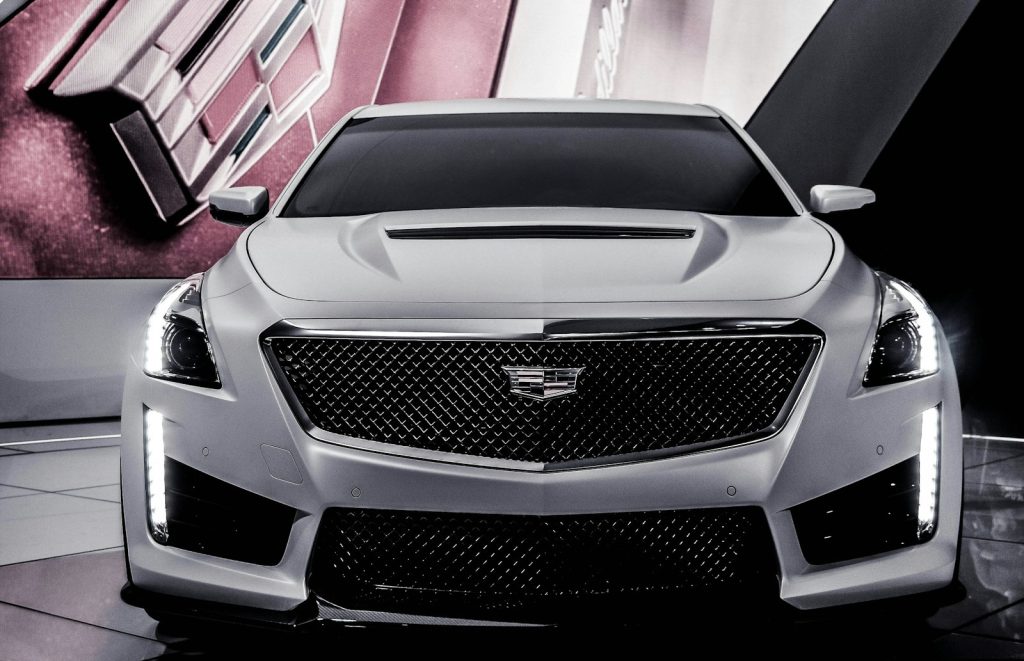
General Motors used December to reset the value proposition on several of its electric vehicles, with Cadillac and Chevy rolling out some of the biggest lease payment reductions of the month. The Cadillac Lyriq and Chevy Blazer EV were singled out as among the largest movers, with advertised monthly costs dropping far more sharply than typical end-of-year tweaks. For shoppers who had written off these models as out of reach, the new offers suddenly pushed them into the same payment territory as well-equipped gasoline SUVs, reframing the conversation around luxury EV affordability.
The scale of the adjustment matters because it shows GM is willing to sacrifice near term margin to defend share in a cooling but still strategically vital EV segment. Reporting on December deals highlighted that Cadillac and Chevy EVs saw some of the biggest price drops, with the Cadillac Lyriq and Chevy Blazer EV standing out as headline examples of how aggressively GM is now discounting to move inventory and attract fence sitters who might otherwise drift to rival brands or back to internal combustion options, a shift detailed in coverage of how Cadillac and Chevy EVs undercut prior lease levels.
Cadillac Lyriq’s repositioning in the luxury EV space
The Cadillac Lyriq has been central to GM’s effort to reintroduce Cadillac as a modern electric luxury brand, and the December lease cuts show how far the company is prepared to go to seed that image on American roads. By turning the Lyriq into one of the steepest discounted EV leases of the month, Cadillac effectively lowered the barrier to entry for buyers who want a high-end electric SUV but are wary of paying a premium over established German and American gasoline rivals. The move also helps Cadillac populate neighborhoods and office parks with its new design language, a crucial form of rolling advertising for a brand in transition.
Cadillac has been promoting the Lyriq as a showcase for its next-generation styling, technology and electric performance, positioning it as the spearhead of a broader EV portfolio that is prominently featured on the brand’s own Cadillac Lyriq product pages. December’s lease repricing, which placed the Cadillac Lyriq among the biggest payment drops of any EV, underscores how the company is using financial levers as much as design and engineering to win over luxury shoppers, a strategy reinforced by reporting that identified the Cadillac Lyriq and Chevy Blazer EV as standout examples of aggressive discounting.
Chevy Blazer EV’s push into mainstream family garages
While Cadillac targets the luxury end of the spectrum, the Chevy Blazer EV is GM’s bid to capture families and commuters who want a practical electric crossover with a familiar badge. December’s sharp lease reductions on the Blazer EV were not just about clearing stock, they were about proving that a mid-size electric SUV can compete on monthly cost with popular gasoline crossovers that dominate suburban driveways. By pulling the Blazer EV’s payments down so dramatically, Chevy narrowed the psychological gap between “experimental EV” and “normal family car” for a wide swath of buyers.
The Blazer EV’s inclusion alongside the Lyriq as one of the biggest lease price movers in December shows how GM is using both ends of its portfolio to build scale. Coverage of the December deals emphasized that the Cadillac Lyriq and Chevy Blazer EV had some of the biggest lease price drops, highlighting how the Blazer EV is being repositioned as a value-forward choice rather than a niche tech product, a shift that aligns with earlier reporting that the Cadillac Lyriq and Chevy models were central to GM’s push to make its electric lineup more financially accessible, as detailed in analysis of how the Cadillac Lyriq, Chevy Blazer EV were repriced.
GM’s broader EV sales momentum and why pricing matters now
The December discounts did not come out of nowhere, they followed a period in which GM had already proven it could generate strong electric demand when the price and product mix were right. Earlier in the year GM reported record U.S. EV sales in August, marking its best month ever for electric vehicle sales and underscoring that there is substantial appetite for its battery-powered lineup when shoppers see compelling value. That performance, described as a period of strong demand, gave GM confidence that it could use pricing as a lever to sustain momentum even as federal incentives shifted and competitors piled into the same segments.
Those record results, captured in reporting that GM Reports Record U.S. EV Sales in August with strong demand, also raised expectations among investors and dealers that GM would not allow its EV program to stall as tax credits evolved. By cutting lease prices on high profile models like the Cadillac Lyriq and Chevy Blazer EV in December, GM signaled that it intends to defend that record-setting trajectory, even if it means absorbing more of the cost that federal programs had previously shouldered.
Life after federal tax credits and the rise of lease-based incentives
The backdrop to December’s price cuts is a federal landscape where traditional purchase tax credits have faded, forcing automakers to find new ways to keep EVs financially attractive. With federal tax credits gone for many buyers, GM and Ford introduced programs to effectively extend the $7,500 benefit on EV leases, using captive finance arms and dealer incentives to replicate the value that shoppers had grown accustomed to. That shift made leasing, rather than buying, the most efficient way for many households to capture the equivalent of a federal subsidy on an electric vehicle.
Reporting on the changing incentive environment noted that GM and Ford structured these programs so that the $7,500 figure could be baked into monthly payments, turning what had been a tax season windfall into an immediate discount at signing. The same coverage explained that these lease-based benefits were paired with additional cash incentives for 2025 model year EVs, illustrating how automakers are layering their own discounts on top of the reconfigured federal framework, a strategy described in detail in analysis of how GM and Ford introduced programs to effectively extend the $7,500 credit on EV leases.
How Cadillac and Chevy are using leases to offset higher sticker prices
For many shoppers, the headline sticker price on a new EV still looks intimidating, even when lifetime fuel and maintenance savings are factored in. Cadillac and Chevy have responded by leaning on leases as the primary tool to make their electric models feel attainable, using December’s steep payment cuts to showcase how much flexibility they have in structuring deals. By compressing more of the incentive value into the lease, they can keep official MSRPs high enough to protect residual values while still delivering monthly costs that undercut expectations.
The December offers on the Cadillac Lyriq and Chevy Blazer EV illustrate this strategy in action, with both models highlighted as among the biggest lease price drops of the month. That approach allows Cadillac and Chevy to present their EVs as premium products on paper while quietly using finance programs to absorb the impact of lost federal credits and rising competition, a balancing act that was evident in reporting that Cadillac and Chevy EVs saw some of the biggest price drops as GM worked to keep its electric lineup moving despite a tougher macro environment.
Competitive pressure from Ford and other legacy rivals
GM’s decision to cut lease prices so aggressively in December also reflects the pressure it faces from other legacy automakers that are racing to lock in EV share. Ford, which has its own electric portfolio anchored by models like the Mustang Mach-E and F-150 Lightning, has been using similar tactics to keep its vehicles attractive in the absence of straightforward purchase credits. By participating in the same lease-based extension of federal-style benefits, Ford signaled that it is willing to match GM’s financial creativity to keep its EVs in the consideration set for mainstream buyers.
The reporting that GM and Ford introduced programs to effectively extend the $7,500 credit on EV leases shows how closely the two Detroit rivals are tracking each other’s moves, with both using their finance arms to bridge the gap left by changing federal policy. That same analysis noted that these programs were part of a broader wave of cash incentives for 2025 model year EVs, underscoring that GM’s December cuts on Cadillac and Chevy models are not happening in isolation but are part of a wider competitive cycle in which Ford and other established players are pushing hard to avoid ceding ground to newer entrants.
What the December discounts mean for EV shoppers in 2026
For consumers looking at EVs in early 2026, the December lease cuts from Cadillac and Chevy are a clear signal that patience and flexibility can pay off. Shoppers who are open to leasing rather than buying outright, and who are willing to cross-shop luxury and mainstream brands within the same corporate family, now have a better chance of landing a high-spec electric SUV at a monthly cost that would have seemed unrealistic a year earlier. The Cadillac Lyriq and Chevy Blazer EV, once positioned as aspirational purchases, are now within reach for households that previously assumed they would be priced out of the EV transition.
The key for buyers is to understand that these deals are shaped by a mix of corporate strategy and shifting federal policy, not just seasonal generosity. GM’s record U.S. EV sales in August, its strong demand earlier in the year, and its decision to use lease structures to replicate the $7,500 benefit all feed into the December pricing that put Cadillac and Chevy EVs among the steepest discounted models. As more automakers follow GM and Ford into lease-based incentives and cash offers on 2025 model year EVs, shoppers can expect a market where advertised monthly payments, rather than sticker prices alone, become the most important number in the EV buying decision.
The road ahead for GM’s electric strategy
The December price cuts on Cadillac and Chevy EVs are best understood as a tactical move within a longer strategic arc for GM, which is betting heavily that electric vehicles will define its future product mix. By using the Cadillac Lyriq to reset expectations in the luxury segment and the Chevy Blazer EV to anchor its mainstream crossover push, GM is building a two-pronged approach that relies on both brand prestige and mass appeal. The willingness to deliver some of the biggest lease price drops of the month suggests that GM sees near term profitability as less important than establishing a large, loyal base of EV drivers who will return for future models and upgrades.
At the same time, GM’s record EV sales performance, its strong demand earlier in the year, and its collaboration with evolving federal incentive structures show that the company is learning to navigate a more complex policy and competitive landscape. The December discounts on Cadillac and Chevy EVs, framed by programs that effectively extend the $7,500 benefit on leases and supplemented by cash incentives for 2025 model year EVs, indicate that GM is prepared to keep adjusting its pricing playbook as conditions change. For now, that means shoppers benefit from unusually generous lease offers on high profile models, while the broader industry watches to see whether this aggressive stance becomes the new normal for electric vehicle pricing.
More from Wilder Media Group: