
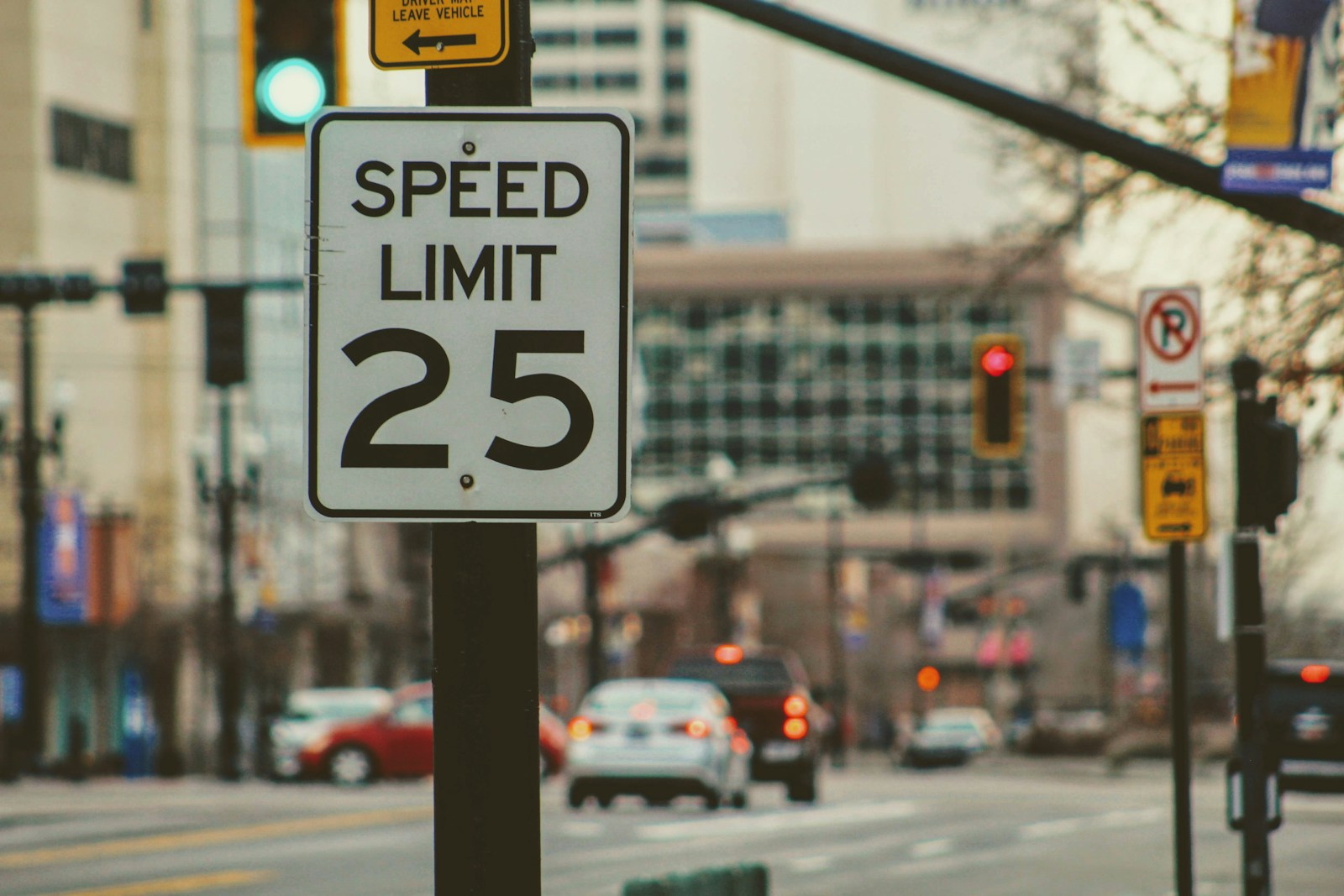

You’ll notice more streets posted at 25 mph because officials aim to lower crash severity and protect people walking and biking. These changes shorten stopping distances and cut the risk of fatal injuries, so slower limits can directly save lives on busy neighborhood streets.
They’ll explain why jurisdictions adopt 25 mph, how cities combine signage with design changes, and what enforcement or pilot programs look like. Expect practical details on who decides the limits, how they roll out, and what drivers can do to adapt.
Why Are Speed Limits Dropping to 25 MPH?
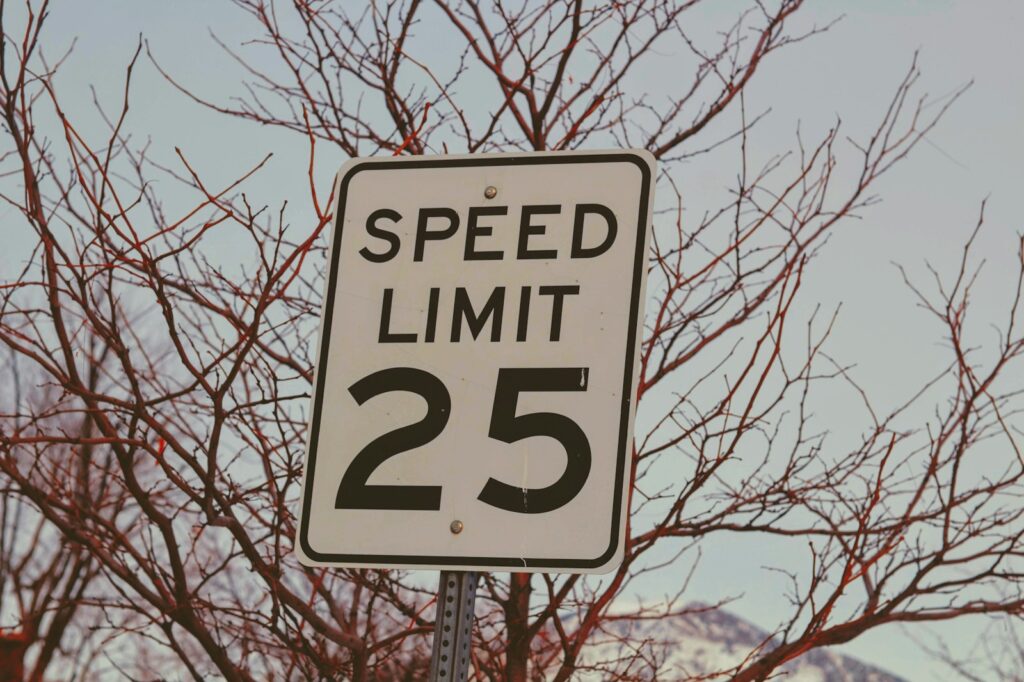
Cities and states lower speed limits to cut crash frequency, reduce injury severity, and protect people walking and biking. The changes pair posted limits with signs, enforcement, and some street redesigns to improve compliance and safety.
Crash and Injury Reduction Goals
Officials set 25 mph limits where collisions with pedestrians or cyclists are common. Data shows lower posted speeds aim to reduce both the number of crashes and the force involved when they occur. Municipalities target corridors with high crash counts, school zones, and commercial corridors to lower pedestrian and bicyclist injuries.
Implementation usually combines new signage with enforcement increases, automated camera programs, or targeted police patrols. Some places also monitor before-and-after speeds to evaluate if the posted change actually reduces vehicle speeds and injuries.
Vision Zero and Safe Systems Approach
Many jurisdictions adopt 25 mph limits as part of Vision Zero or a Safe Systems strategy that accepts human error but designs roads to prevent fatalities. Vision Zero shifts responsibility from road users alone to system designers, so reducing the maximum speed becomes a predictable, low-cost intervention.
This approach pairs lower speed limits with engineering changes—narrowed lanes, curb extensions, raised crossings—to make the safer speed the natural choice. Policy, enforcement, and design work together so a 25 mph cap has a realistic chance to lower serious crash outcomes.
Protecting Vulnerable Road Users
Lower speed limits target the safety of people who lack vehicle protection: pedestrians, bicyclists, older adults, and children. At slower vehicle speeds, drivers have more time to see and react to someone crossing, and the risk of a fatal outcome drops sharply.
Cities often prioritize 25 mph on residential streets and areas with heavy foot traffic, near transit stops, and around schools. Combining reduced speeds with visible crosswalks and curb improvements increases the protective effect for vulnerable road users.
How Speed Impacts Crash Severity
Crash energy rises with the square of speed, so even small increases in speed produce much higher impact forces. A pedestrian struck at 30 mph faces substantially higher fatality risk than one struck at 25 mph, which is why policymakers emphasize modest reductions in posted limits.
Lowering the maximum speed reduces stopping distance and braking time, which lowers the chance of a collision and decreases injury severity when collisions still occur. Engineering, enforcement, and context-sensitive speed setting help turn a 25 mph limit into real reductions in crash severity.
How Are New 25 MPH Speed Limits Set and Enforced?
Cities set limits through a mix of legal defaults, engineering studies, design changes, and technology. Officials balance measured vehicle speeds, collision history, land use, and enforcement tools when deciding whether a street becomes a 25 mph zone.
The Role of Default Speed Limits and Speed Zones
Many municipalities adopt a default speed limit that applies where no sign says otherwise. That default often becomes 25 mph for residential and business streets under recent state laws. Changing a street’s posted speed can be as simple as installing signs where the local code lets the default apply immediately.
A separate process creates a formal speed zone when engineering or crash data show the need for a different limit. Speed zones require documented findings and official orders; they make enforcement and automated ticketing straightforward. States differ on whether school zones, work zones, or special corridors need special signage or time-of-day controls.
Engineering Studies and the 85th Percentile
Engineers often collect vehicle speeds and use the 85th percentile speed—the speed at or below 85% of drivers travel—to recommend limits. This method appears in many manuals and traffic-engineering practices because it reflects actual driver behavior and tends to improve compliance.
Studies also include roadway features, sight distance, crash history, pedestrian activity, and land use. When measured travel speeds exceed a safe threshold, engineers recommend lowering the posted speed. Agencies may follow the Manual on Uniform Traffic Control Devices (MUTCD) and local policies when documenting the technical basis for a new speed limit.
Traffic Calming and Roadway Design
Design changes often accompany lower limits to improve compliance. Cities use traffic calming such as lane narrowing, curb extensions, raised crosswalks, and curb bulbs to reduce operating speed and perceived lane width. These measures change driver behavior without relying solely on fines.
The National Association of City Transportation Officials and agencies like the Seattle Department of Transportation promote street redesigns that prioritize pedestrians and cyclists. Physical changes also support air quality and safety goals by smoothing vehicle flow and reducing harsh braking. Implementation plans usually map locations, estimated cost, and expected speed reductions.
Technology and Speed Enforcement
Automated enforcement tools like speed cameras and red-light cameras enforce posted speed limits continuously. Some states now allow cameras in school zones and high-risk corridors; cameras issue citations without an officer present and increase detection of speed limit violations.
Agencies combine cameras with targeted patrols, variable speed signs, and speed feedback signs that show a driver’s current speed. Enforcement strategies often include graduated fines and warnings, and they factor into insurance and compliance outcomes. Work zones typically use temporary posted speeds and mobile enforcement to protect workers and maintain legal clarity.
More from Steel Horse Rides: