
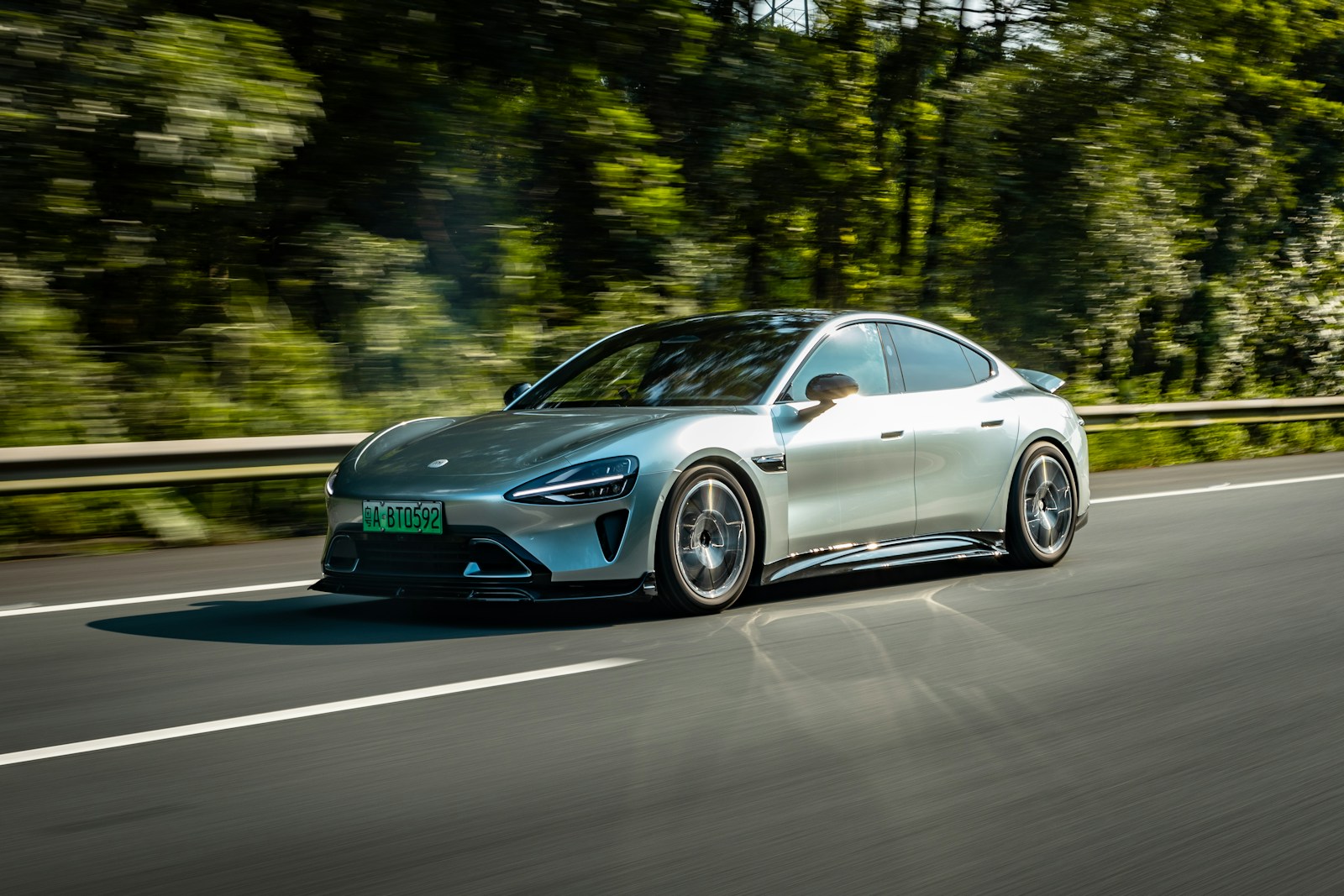

For years, car enthusiasts in Europe and North America treated Chinese badges as background noise, something that showed up in sales charts rather than on bucket lists. That attitude is getting harder to sustain now that Chinese brands are winning global market share, drawing headline comparisons with Tesla, and earning glowing reviews from people who live for a good back road. The surge is no longer just a trade story; it is starting to shape what drivers actually want to park in their garages.
Behind the shift sits a simple equation: China built a huge electric vehicle industry at home, then pointed it outward just as the rest of the world finally got serious about ditching combustion. As those exports spread, enthusiasts are discovering that the new wave of Chinese cars is not only cheaper and more efficient, but also quick, stylish and genuinely interesting to drive.
From trade charts to track days
Analysts describe China’s rapid climb, powered by electric vehicles, as a structural change rather than a blip, with projections that Chinese automakers could move around 27 million vehicles globally according to one According report. That kind of volume is not coming just from budget city cars; it reflects a broad push into crossovers, family EVs and performance models that can compete with long-established European and Japanese players. A detailed look at how Europe, once the heart of the car world for more than a century, is now seeing Chinese brands fill showrooms and streets makes clear that this is a story of scale, battery know-how and aggressive pricing rather than a passing curiosity, as seen in one widely shared Europe video.
The numbers inside China are just as telling. The China Electric Vehicle Market Summary describes how the China electric vehicle market size stood at USD 413.4 billion in 2024, which gives local brands the cash flow and production experience to chase volume abroad while still experimenting with new segments at home. That domestic strength is one reason China is perceived by many as an unstoppable force of cutting-edge technology, unbeatable cost and relentless overseas conquest, even as some analysts warn that China is dialing down growth expectations for 2026 and, considering the mounting challenges, predict that China’s 2026 vehicle sales could even drop 2.1 percent this year.
Why legacy CEOs are spooked
For traditional automakers, what once looked like a distant competitive threat has become an immediate boardroom headache. Auto executives in Europe now talk about Chinese brands in terms that range from a “slippery slope” to an “existential threat,” and with reason, since Chinese automakers captured approximately 6.1% European of the European auto market last year, a 99% jump from 2024 despite tariffs and political scrutiny. Such a leap cuts straight into the volumes that fund European research and development, and it helps explain why executives are suddenly talking less about niche sports cars and more about battery deals and software partnerships with their new rivals.
The pressure is not only about market share; it is also about who sets the pace in electric technology. After years on top of the global electric vehicle market, Tesla has lost the title of the world’s leading EV brand to a Chinese powerhouse, with BYD surging past its American rival in global volume according to data that tracks how BYD expanded beyond its home market and how After Tesla adjusted to the new reality. Separate reporting spells out how China’s BYD tops Tesla for global EV sales in 2025, how China’s BYD has overtaken Tesla as the world’s top-selling EV automaker, and how Chinese automakers were regularly increasing their global market share while Tesla’s sales were around 4.6 million, which helps explain why European incumbents find themselves squeezed between a Chinese cost base and Tesla’s software-led brand, as detailed in one China BYD analysis.
Those same executives are also watching the tech stack inside Chinese cars evolve fast. With hardware features increasingly commoditized, Chinese carmakers are turning to software capable of anticipating user intent and coordinating actions in the physical world to stand out, building AI agents that promise more intuitive driving and ownership experiences, according to reporting on how Chinese carmakers are pivoting. That combination of lower cost, rapid software development and scale in batteries is exactly what keeps European and American CEOs awake at night, because it points to a future where the most desirable EVs might not come from the brands that dominated the last century.
More from Wilder Media Group: