
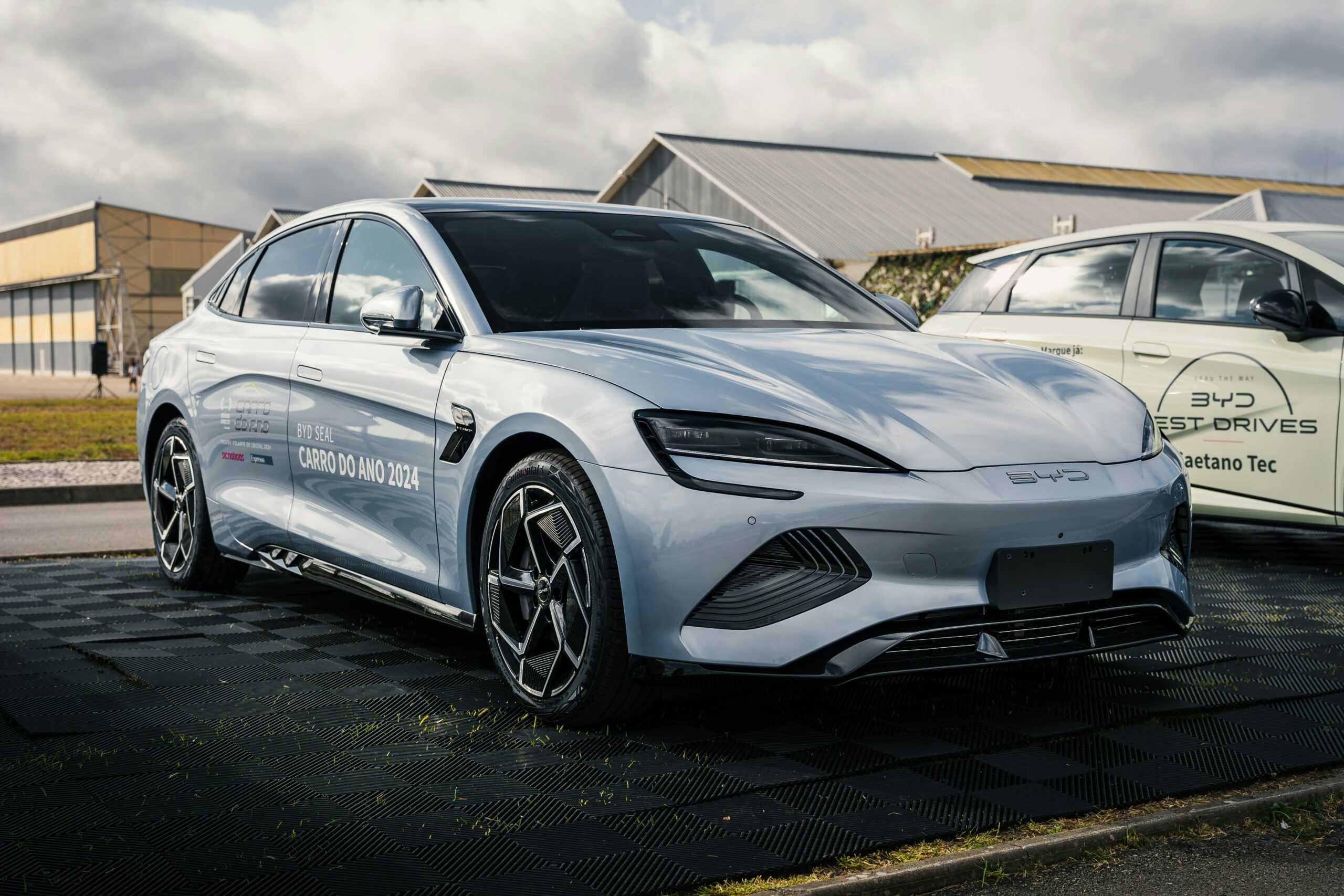

Chinese automakers are no longer just a distant competitive threat for Detroit and Tokyo. They are already reshaping showrooms in Mexico and Canada, and the way those markets are shifting offers a pretty clear preview of what is coming next for the United States. The question is not whether Chinese brands will reach American buyers, but how they will get there and who will pay the price when they do.
From budget gasoline sedans to aggressively priced electric crossovers, Chinese companies are using North America’s flanks to test products, build brand recognition, and quietly map out a path into the world’s most profitable car market. Their strategy blends low prices, tight control over battery technology, and savvy use of trade rules, and it is already forcing traditional automakers and policymakers to rethink the map.
Mexico and Canada become the test track for Chinese brands

Start in Mexico, where Chinese-made vehicles have gone from curiosity to mainstream in just a few model years. Chinese-made vehicles now make up nearly 1 in 5 cars sold in the country, with Chinese-made vehicles accounting for 20 percent of Mexican car sales and almost 1 million units according to AMDA, a shift that would have sounded far-fetched only a short time ago in Mexico. Earlier, vehicles made in China did not even reach 5 percent of domestic sales, and now they represent more than 25 percent of the market, a surge that has pushed aside rivals from the US and Japan as well in Mexico share. That kind of growth is not happening by accident.
Chinese automakers have quietly gained ground across North America, with 30 brands now on sale in Mexico, turning the country into a live-fire experiment for pricing, design, and dealer networks. Led by BYD, Chinese electric vehicles and low-cost cars are flooding Mexican streets, helped by the fact that, as Eugenio Grandio put it, non-Chinese manufacturers have invested very little in bringing these technologies to Mexico, leaving a wide open lane for newcomers in Mexico EVs. Cheap prices, government subsidies and a growing charging network all point to continued sales growth for China’s automakers in the country, reinforcing the sense that this is a long-term beachhead rather than a short-lived bargain hunt inroads.
North of the border, the story looks different but points in the same direction. Canada is allowing limited imports of Chinese vehicles, a decision that critics say has the potential to undermine Canada’s auto sector and presents risks to the future of the industry and its ability to compete with the U.S. in electric vehicle manufacturing in Canada. That tension is playing out as Chinese automakers establish a foothold in Mexico and Canada while eyeing the U.S., a pattern that analysts say is less about if they arrive in force and more about when and how they do it in key takeaways. For now, Canadian showrooms are a controlled experiment, but they are also a signal that the wall around the American market is already starting to crack.
Tariffs, trade rules and a back door into the U.S. market
On paper, the United States looks like a fortress. Steep tariffs make it expensive to ship Chinese-built vehicles directly into U.S. ports, and the politics around Chinese manufacturing are only getting hotter. Yet the same trade rules that knit North America together also create a side entrance. Chinese automakers can build cars in Mexico and export them to the U.S. without having to pay the high tariffs that would apply if they shipped straight from China, a structural advantage that has not been lost on either industry strategists or lawmakers under trade rules. That is why the Mexican surge matters so much in Washington.
Chinese automakers have already established a foothold in Mexico and Canada while eyeing the U.S., and steep tariffs mean local production is the logical next step if they want to scale up across North America. President Donald Trump has said Chinese automakers are welcome to build in the U.S. while criticizing Canada’s decision to allow rival imports, a stance that mixes industrial policy with political theater President Donald Trump. At the same time, Chinese automakers view the U.S. as the most attractive market because of pricing power, as Bill Russo, chairman of Automobility, has argued, noting that the ability to charge higher prices in America makes the market uniquely tempting even if the politics are messy according to Bill.
That political risk is real. U.S. entry for Chinese brands is often described as “politically untenable,” a phrase that captures how toxic the optics can be even as market logic keeps pulling both sides closer together for U.S. entry. Yet the same dynamic has not stopped other sectors from integrating across borders. In agriculture, for example, the autonomous farm equipment market is expanding, but the market is restrained by challenges associated with infrastructure, economic factors like access to financing, and the adoption of technologies in a huge agriculture sector, a reminder that cross-border technology adoption rarely follows a straight political line in farm equipment. For Chinese automakers, the path into the U.S. is likely to be just as uneven, but the incentives are too strong for them to walk away.
More from Wilder Media Group: