
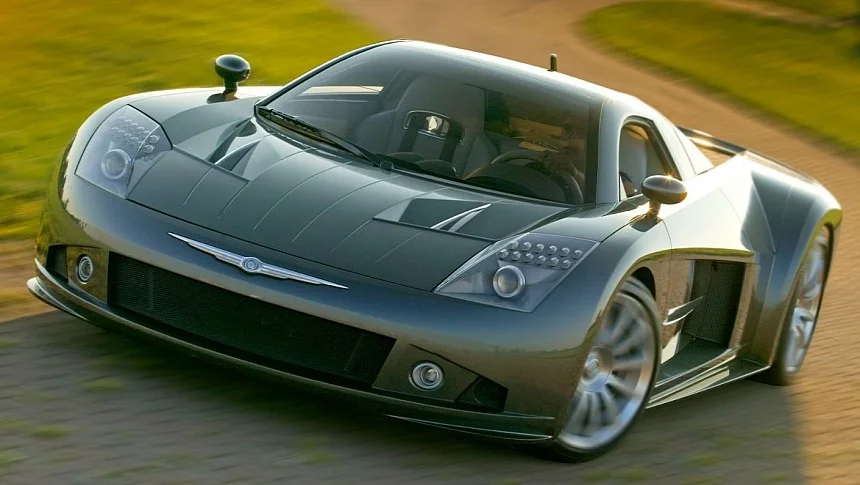

Two decades ago, Chrysler quietly built a car that could have rewritten the supercar rulebook, then walked away just as it was about to cross the finish line. The Chrysler ME Four-Twelve packed a quad‑turbo V12, headline-grabbing numbers, and real engineering behind the show-stand shine, yet it never made it past the prototype stage. The story of how the company created what looked like the ultimate American V12 supercar, then killed it, still stings for enthusiasts because it shows how close the brand came to challenging Europe at its own game.
Today, the ME Four-Twelve lives on as a kind of alternate-history thought experiment: proof that Chrysler could dream big, execute fast, and build something that scared the established exotics. It was not a sketch or a clay model, but a running, track-tested machine that insiders say was within sight of production before corporate politics and cold math shut it down. That mix of audacity and retreat is exactly what makes the car so fascinating now.
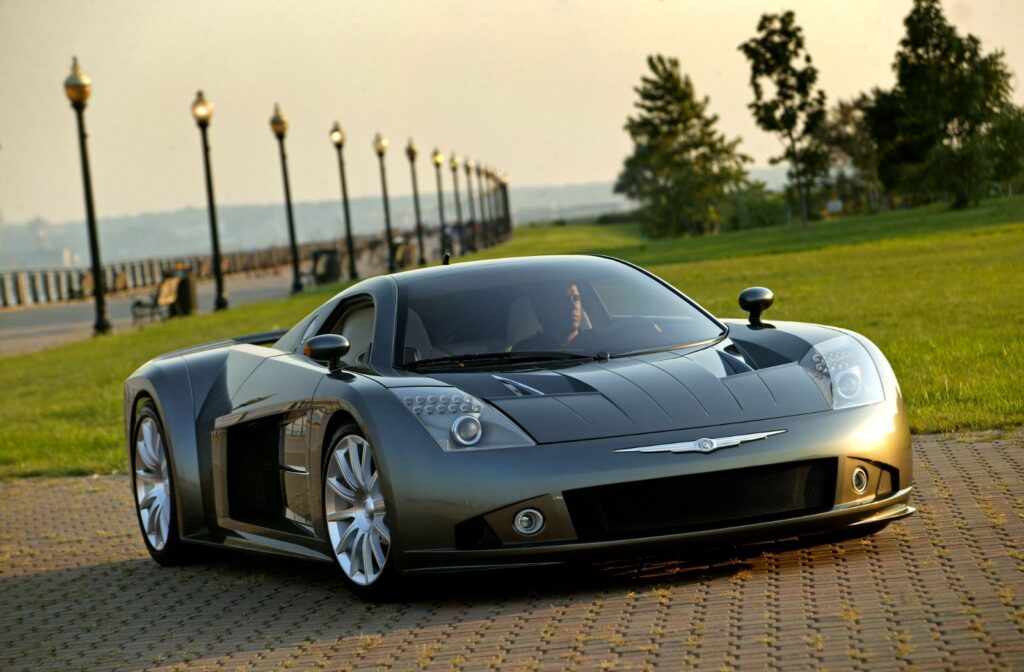
Detroit’s wild card: how the ME Four-Twelve crashed the supercar party
When Chrysler rolled the Chrysler ME Four, Twelve onto the stand at the Detroit Motor Show, it was not playing the usual concept-car game. The company presented it as a fully thought-out supercar, with a name that spelled out its layout and ambition: mid‑engine, four turbos, twelve cylinders. Contemporary accounts of the Detroit Motor Show describe a crowd that did a double take at the Chrysler badge on something that looked more like a European exotic than a rental counter special. The surprise was not just the styling, but the message from engineers that this was conceived as a real car, not a design exercise.
That intent shows up in how the project was developed. The Chrysler ME Four, Twelve was engineered as an American high‑performance concept car with a serious chassis tub and proper development work rather than a show-only shell. Reporting on the program notes that there were two ME Four, Twelve prototypes built, and that the team had them running and testing by the summer of 2004, a pace that underlined how aggressively Chrysler was chasing the idea of a homegrown supercar. The fact that the company got that far, that fast, is documented in technical write‑ups of the American concept and still feels almost out of character for a brand better known for minivans.
The heart of the beast: a German V12 turned up to eleven
Under the carbon bodywork, the ME Four-Twelve was built around a serious piece of hardware: a 6.0 L Mercedes-Benz M120 V12 that Chrysler engineers did not leave alone. They bolted on four turbochargers, creating what period descriptions call a Quad Turbocharged 6.0‑liter V12, and tuned it to deliver outrageous numbers. Museum documentation lists the Quick Specs for the Engine at 850 hp, with a Top Speed of 248 m, figures that put the car in the same conversation as the most extreme European exotics of its era. Those numbers are preserved in the Quick Specs for the surviving prototype and underline how serious the powertrain really was.
Digging into enthusiast technical breakdowns shows how far Chrysler and its partners pushed the Mercedes, Benz hardware. One detailed spec sheet describes a 6.0 L Quad Turbocharged V12 (Mercedes-AMG M120) rated at 850 hp, 634 k and 848 lbf⋅ft, all sent through a 7‑speed Ricardo gearbox to the rear wheels. That combination of a German V12 and American packaging led some to call the car a German‑American masterpiece, a label that fits when looking at how the quad‑turbo layout, compact mid‑engine installation, and lightweight chassis tub were integrated. The mix of Chassis and Drivetrain details in sources like the Chassis / Drivetrain breakdown and later retrospectives on its Corporate Rivalry and Demise show that this was not a parts‑bin lash‑up but a carefully engineered package.
From show stand to track: proving it was more than vaporware
Plenty of concepts claim big numbers, but Chrysler actually put the ME Four-Twelve on a circuit to prove it could deliver. Accounts from the time describe how the company invited American journalists to Laguna Seca to experience the car, a rare move for something still officially labeled a concept. One detailed feature recalls that disgruntled American car fans later blamed internal politics for the project being Dead on Arrival, precisely because the Laguna test showed the car was already shockingly capable. That track outing, captured in coverage of Laguna, cemented the idea that Chrysler had built a genuine supercar, not a fragile showpiece.
Video explainers and short retrospectives have since walked through how close the car came to reality. One longform breakdown notes that Daimler Chrysler executives ultimately worried it would be too hard to sell a Chrysler for several hundred,000 dollars, even as the engineering team had a running prototype and a clear performance target. Another short clip about the Detroit Motor Show debut emphasizes that Chrysler made it clear the ME412 car was not just a concept, it was a real project with production intent. Those details, preserved in enthusiast videos on Daimler Chrysler and quick-hit shorts about the Detroit Motor Show, reinforce the sense that the company had already crossed the line from dream to development mule.
Corporate cold feet: why Chrysler walked away
So why did Chrysler kill a car that looked ready to give Europe a serious headache? Reporting on the internal debate points to a mix of cost, brand image, and corporate rivalry inside the Daimler Chrysler structure. Analyses of the program explain that the company had even started mulling production numbers, with figures between a few hundred and a thousand units being discussed, before executives decided that finding buyers for a Chrysler at that price would be a tough one. One detailed account of Why Chrysler, Greatest Concept Never Made Production lists several factors contributing to its cancelation, including worries about profitability and the optics of a mass‑market brand suddenly selling a hypercar. Those concerns are laid out in depth in coverage of Why Chrysler pulled back and in follow‑up analysis of the factors behind the decision.
There was also a sense that the ME Four-Twelve had become a victim of its own success inside the corporate hierarchy. Some retrospectives describe Corporate Rivalry and Demise dynamics, with the German side of the partnership wary of a Chrysler‑badged car that could outshine established European flagships. That tension echoes an earlier chapter in the company’s history, when the Chrysler Turbine Car program was ultimately shelved because the whole car was too expensive to build and hardly anything in the drive train could be shared with existing models. The Turbine experiment, remembered in a detailed post that notes how Hardly anything carried over from what Chrysler already had in their lineup, set a precedent for bold engineering projects being cut when they did not fit the business case. The ME Four-Twelve’s fate, described in pieces on its Corporate Rivalry and in reflections on the Chrysler Turbine Car, fits that pattern almost too neatly.
The legend that lingers, and why fans still want it back
Even without a production run, the ME Four-Twelve has grown into a cult icon. Enthusiast write‑ups argue that The Chrysler ME Four, Twelve Almost Became The Greatest American Supercar, pointing to its top speed of 248 mph and its status as arguably the wildest machine ever to wear a Chrysler badge. Others frame it as the moment Chrysler once built an American supercar so good it gave Europe a run for its money, a rare case where an American brand matched European exotica on design, performance, and engineering swagger. That sentiment runs through modern features on Chrysler ME Four and in pieces that flatly state that Chrysler once built an American supercar that could hang with Europe.
More from Wilder Media Group: