

In March 2026, more than 6,000 intersections across the United States use signal hardware that looks nothing like the three-color stack most drivers learned on. Pedestrian hybrid beacons, adaptive smart signals and experimental turn-phase displays have quietly spread from pilot corridors to everyday commutes, and the result is a growing gap between what a green light used to mean and what it actually requires today.
The issue is not that motorists have forgotten basic traffic law. It is that the green light itself now carries conditions that vary by intersection, by state and sometimes by time of day. When those conditions are not immediately obvious, hesitation and risky snap decisions follow.
When “Green” Comes With Fine Print
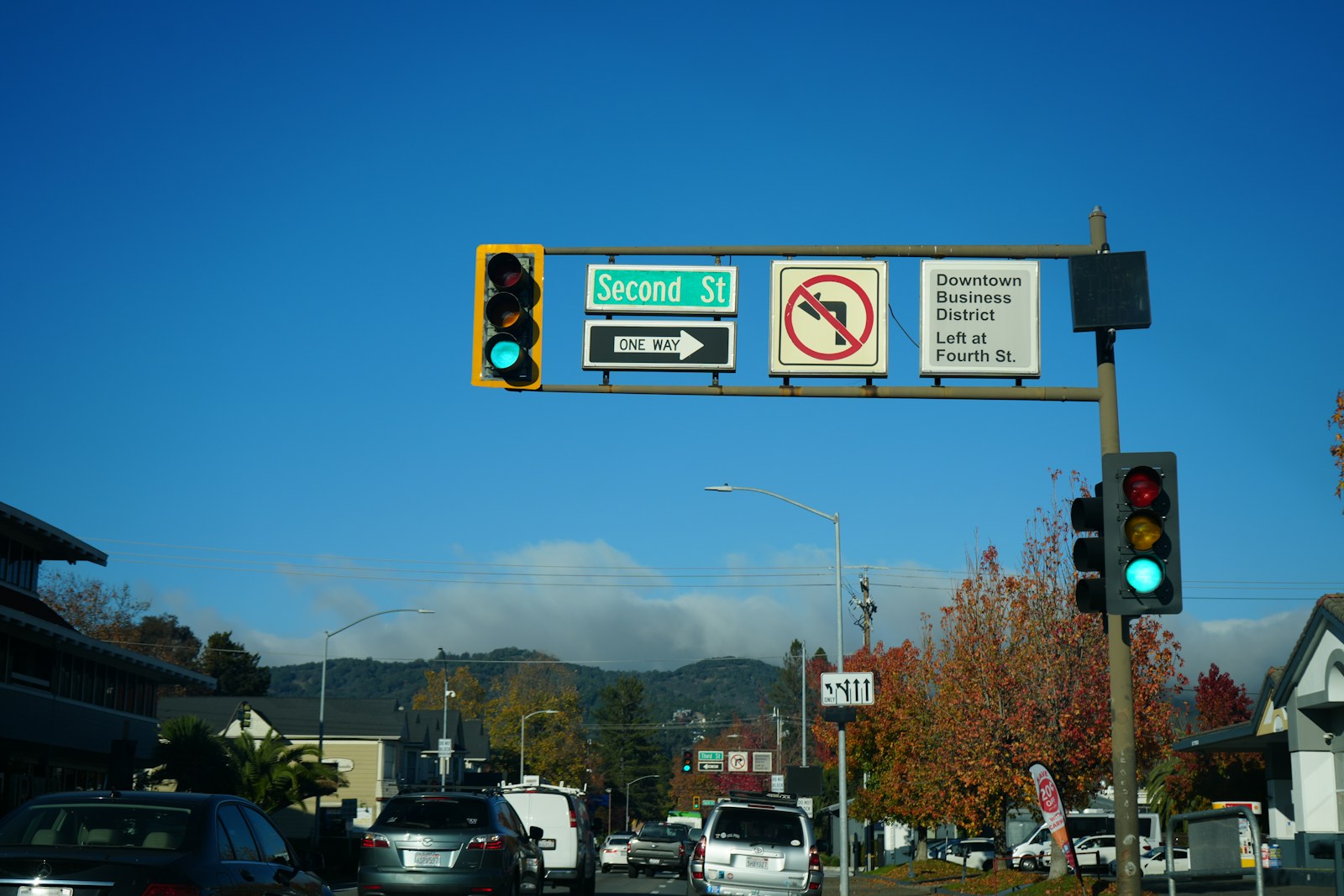
At dozens of intersections nationwide, a solid green circle shares signal-head space with a sign instructing left-turning drivers to yield to oncoming traffic. The color says go; the sign says wait. For out-of-town drivers who have never encountered the pairing, the contradiction can freeze decision-making at exactly the moment a busy intersection demands quick, confident action.
State driver manuals do explain the distinction, but the language rarely sticks past the licensing exam. The Wisconsin Department of Transportation, for example, specifies that a green arrow permits entry into the intersection only after the driver yields to pedestrians, bicyclists and vehicles already lawfully in the crossroad. That is a meaningful step beyond “green means go,” yet most drivers encounter the rule once in a handbook and never revisit it.
The 2023 edition of the Manual on Uniform Traffic Control Devices (MUTCD), published by the Federal Highway Administration, updated national standards for signal displays and sign placement partly to address inconsistencies like these. But adoption by state and local agencies is gradual, and in the meantime, drivers crossing state lines can face signal setups that differ sharply from what they see at home.
Hybrid Beacons and the Compliance Problem
Pedestrian hybrid beacons, sometimes called HAWK signals, represent one of the starkest departures from the traditional signal. The devices stay dark until a pedestrian activates them, then cycle through flashing yellow, solid red and alternating flashing red before going dark again. The sequence is unlike anything in a standard traffic light, and research suggests many drivers do not fully understand it.
A University of Massachusetts Amherst study covered by CBS Boston examined 10 hybrid-beacon sites in Massachusetts and found that roughly 23 percent of drivers proceeded through a red indication when no pedestrian was visibly in the crosswalk. The researchers flagged the behavior as a serious safety concern: the red phase exists precisely because a pedestrian may still be crossing outside the driver’s sightline. When the signal design does not match the mental model drivers carry from years of standard-light experience, a significant minority simply defaults to personal judgment.
Smart Signals Change the Rhythm
Adaptive signal technology adds another layer of unpredictability, even though its goal is the opposite. In Nashville, the Department of Transportation has been installing sensor-driven smart signals along Lebanon Pike, a corridor known for heavy commuter congestion. Local outlet WKRN reported that the system adjusts green-phase duration in real time based on traffic volume, replacing the fixed cycles drivers on that road had relied on for years.
The lights still look identical to any other signal head. But because the timing shifts from cycle to cycle, drivers lose the informal rhythm they had learned through repetition. Cautious motorists may brake early, worried a “stale” green is about to flip. Aggressive ones may push harder to beat a phase they cannot predict. Both reactions introduce risk, particularly in mixed traffic where following distances are already tight.
Nashville is far from alone. The FHWA’s Arterial Management Program lists adaptive signal control as a priority strategy for urban corridors nationwide, meaning the unpredictable-feeling green phase is likely to become more common, not less.
A Fourth Color on the Horizon
If today’s signals already strain driver comprehension, a proposal from North Carolina State University raises the stakes further. In a 2024 paper, transportation engineer Ali Hajbabaie and colleagues outlined a concept for a white signal phase that would activate when a critical mass of connected autonomous vehicles is present at an intersection. During the white phase, human drivers would simply follow the vehicle ahead; the network of self-driving cars would coordinate movement for everyone.
The idea remains theoretical. No city has approved a pilot, and the concept depends on autonomous-vehicle adoption rates that do not yet exist on public roads. But the proposal has drawn attention precisely because it forces a practical question: if roughly one in four drivers already misreads an unfamiliar beacon, what happens when the signal head displays a color that was never part of anyone’s driving education?
For now, the most actionable takeaway is simpler than any future technology. A green light is permission to proceed, not a guarantee of right of way. Every state manual says so. The challenge is making sure that message survives the moment a driver looks up, sees green and has half a second to decide what it really means.
More from Wilder Media Group: