
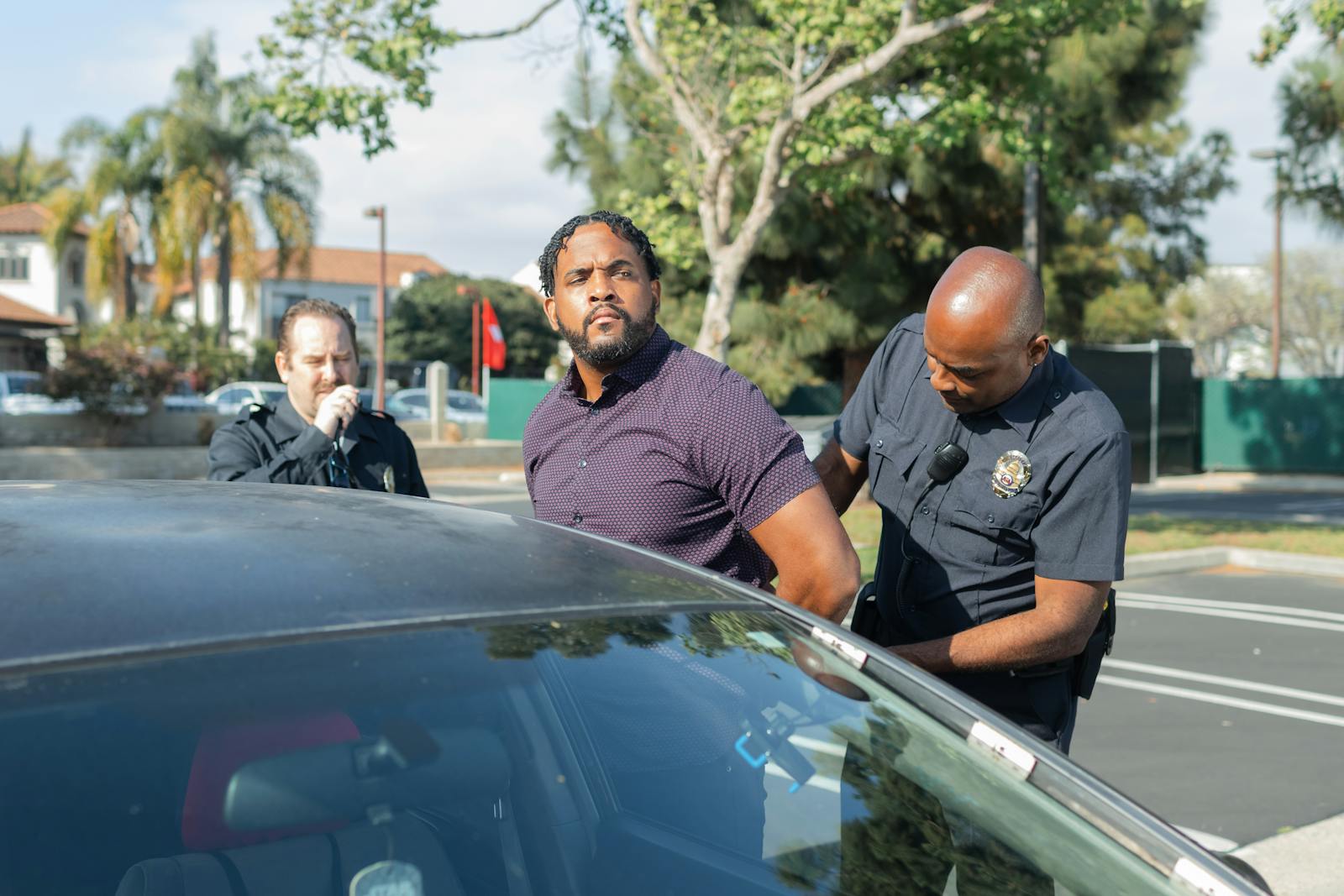

A routine patrol turned into a major break in a criminal case when an officer spotted a tiny inconsistency on what looked like a standard law enforcement vehicle. That small detail, easy to miss at highway speed, set off a chain of checks that exposed a sophisticated ruse and ended with a high‑stakes arrest. The incident shows how much modern policing still depends on human observation, even in an era of license plate readers and dashboard cameras.
From the first glance at the suspicious car to the moment officers confirmed it was a fake, the story illustrates how training, pattern recognition, and a willingness to question appearances can stop a dangerous situation before it escalates. It also highlights a growing concern for agencies nationwide: criminals who copy the look and feel of official vehicles to gain trust, evade scrutiny, or intimidate others.

The Moment Something Looked Off
The encounter began like countless others, with officers watching traffic and scanning for anything that did not quite fit. Among the flow of vehicles, one car stood out, not because it was speeding or weaving, but because its markings and equipment seemed almost too perfect. The paint scheme, light bar, and decals mimicked a California Highway Patrol cruiser closely enough that most drivers would never question it.
What caught the officer’s eye was a small mismatch in that illusion, a detail in the way the insignia and hardware were arranged that did not line up with standard patrol fleet specifications. That subtle discrepancy was enough to prompt a closer look, and when the vehicle was stopped in San Rafael on a Wednesday morning around 10:40 a.m., the inspection quickly revealed that the supposed patrol car was in fact a privately owned vehicle dressed up to look official, according to San Rafael police.
A Fake Patrol Car Hiding in Plain Sight
Once the stop was made, the scale of the deception became clear. The vehicle was not a surplus government car or a retired unit with markings removed, but a civilian automobile that had been carefully outfitted to resemble a California Highway Patrol unit. From the color pattern to the placement of emergency lights, the setup was designed to pass a quick glance on the road and to project the authority of a real officer.
Investigators determined that the driver had gone to significant lengths to complete the illusion, installing equipment and decals that would be familiar to anyone who has seen a CHP cruiser on the freeway. The ruse almost worked, but the small inconsistency that drew the officer’s attention ultimately led to the discovery that the car was unauthorized and the entire presentation was a fabrication, a finding that prompted the vehicle to be impounded and the suspect taken into custody for further investigation.
How Officers Are Trained to Spot Tiny Inconsistencies
Cases like this underscore why agencies invest so much time teaching officers to notice what most people overlook. Training academies emphasize pattern recognition, from the exact placement of license plates and registration stickers to the way official decals are aligned on doors and fenders. Recruits are taught that even a few centimeters of misalignment or an incorrect font can signal a counterfeit or altered vehicle.
Beyond visual details, officers are trained to cross‑check what they see with what they know about their own fleets. They memorize common models, trim levels, and equipment packages used by their departments and neighboring agencies. When a car claims to be a patrol unit but carries the wrong wheel design, antenna setup, or push bumper style, that knowledge becomes a powerful tool. In this case, the officer’s familiarity with authentic CHP configurations turned a fleeting sense that something was “off” into a justified stop that exposed a larger problem.
Why Impersonating Law Enforcement Is So Dangerous
Impersonating a police officer is not a harmless prank, it is a serious offense because it exploits public trust. When someone outfits a car to look like a patrol vehicle, they gain the power to pull drivers over, intimidate neighbors, or insert themselves into emergencies where people assume they are dealing with legitimate authority. That creates obvious risks for victims who may comply with unlawful orders or share sensitive information with someone who has no right to demand it.
There is also a broader public safety cost. Every successful impersonation erodes confidence in real officers, especially when word spreads that a fake patrol car was operating on local roads. People who hear about such incidents may hesitate the next time they see flashing lights in the rearview mirror, wondering if the stop is genuine. That hesitation can escalate routine encounters and make it harder for legitimate officers to do their jobs safely and efficiently.
The Legal Stakes When a Ruse “Almost Works”
When authorities uncover a fake patrol car, they are not just writing a ticket for improper equipment. Depending on the jurisdiction and the suspect’s actions, charges can include impersonating a peace officer, unlawful use of emergency lights or insignia, and related offenses tied to any traffic stops or confrontations the impersonator initiated. Each of those counts can carry significant penalties, especially if prosecutors can show that the suspect used the fake authority to detain, search, or threaten others.
The phrase that the ruse “almost worked” captures how close such schemes can come to blending into everyday enforcement activity. If the small detail that triggered suspicion had gone unnoticed, the driver could have continued operating the vehicle and potentially escalating their behavior. By intervening when they did, officers not only removed an unauthorized car from the road but also cut off any future misuse of that false authority before it could lead to more serious harm.
Public Safety Risks When Criminals Copy Patrol Cars
Copycat patrol vehicles create a layered threat that extends beyond a single suspect. For drivers, the immediate risk is being pulled over by someone who has no accountability, no body camera, and no obligation to follow department policy. A fake officer can choose isolated locations, target vulnerable people, and disappear before anyone realizes what happened, leaving victims reluctant to report an encounter they are not sure was real.
For communities, the presence of a counterfeit cruiser can distort crime patterns and emergency responses. Residents may call in sightings of a “patrol car” in unusual places, assuming officers are already on scene when in fact no legitimate unit has been dispatched. That confusion can delay real help or mask suspicious activity behind the reassuring silhouette of a law enforcement vehicle, giving criminals cover they would not otherwise have.
How Real Officers Verify Each Other on the Road
Incidents involving fake patrol cars have pushed agencies to refine how officers verify one another in the field. Many departments now rely on radio checks, internal vehicle numbers, and computer‑aided dispatch logs to confirm that a unit seen on the road is actually assigned and active. When an officer spots a car with unfamiliar markings or an unrecognized unit number, a quick call to dispatch can confirm whether it belongs to a neighboring agency or warrants a closer look.
Some agencies also standardize their fleet appearance to make counterfeiting more difficult. That can include unique reflective patterns, specific combinations of light colors, or department‑only decals that are not sold to the public. While no design is impossible to copy, the more distinctive and tightly controlled the markings, the easier it is for trained officers to spot a forgery and the harder it is for impersonators to blend in for long.
What Drivers Can Do If a “Police Car” Seems Suspicious
Members of the public are not expected to memorize fleet specifications, but they can take practical steps if a supposed patrol car raises doubts. Safety experts often recommend slowing down, turning on hazard lights, and driving to a well‑lit, populated area before stopping if something feels wrong. Calling 911 while en route and asking the dispatcher to confirm whether an officer is attempting a stop can provide reassurance and create a record of the encounter.
Drivers can also look for basic cues, such as whether the vehicle has visible unit numbers, a standard license plate, and a uniformed officer with a clearly displayed badge. If any of those elements are missing or inconsistent, it is reasonable to ask the officer to present identification and to keep windows mostly closed while communicating. Reporting suspicious encounters afterward, even if nothing overtly criminal occurred, helps agencies track patterns and identify potential impersonators before they escalate.
Why Small Details Still Matter in a High‑Tech Era
The San Rafael case is a reminder that even as law enforcement adopts more technology, the sharp eye of an individual officer remains a critical line of defense. Automated systems can flag expired registrations or stolen plates, but they are not designed to notice that a decal is slightly misaligned or that a light bar does not match department specifications. Those judgments depend on human experience and the willingness to act on a hunch when something does not look quite right.
In this instance, a single observation about a small inconsistency led to a traffic stop, the discovery of a fake patrol car, and a major arrest that removed a potential threat from the road. It is a case study in how attention to detail, backed by training and clear procedures, can turn an ordinary moment on patrol into a decisive intervention that protects both individual drivers and the broader community.
More from Wilder Media Group: