

When a driver swings into a lane and deliberately slows or stops to “teach someone a lesson,” the fallout rarely goes the way they expect. What feels like a moment of righteous payback can quickly spiral into collisions, criminal charges, and even the loss of a license. The pattern is clear across recent road rage cases: the person who blocks traffic on purpose often ends up facing the most serious and unexpected consequences.
From truckers using their rigs as rolling barricades to sports car owners staging confrontations in busy intersections, the temptation to police other motorists is growing. Yet traffic law, crash data, and a string of viral incidents all point in the same direction, showing that self-appointed enforcers are not only on shaky legal ground but are also making the roads more dangerous for everyone around them.
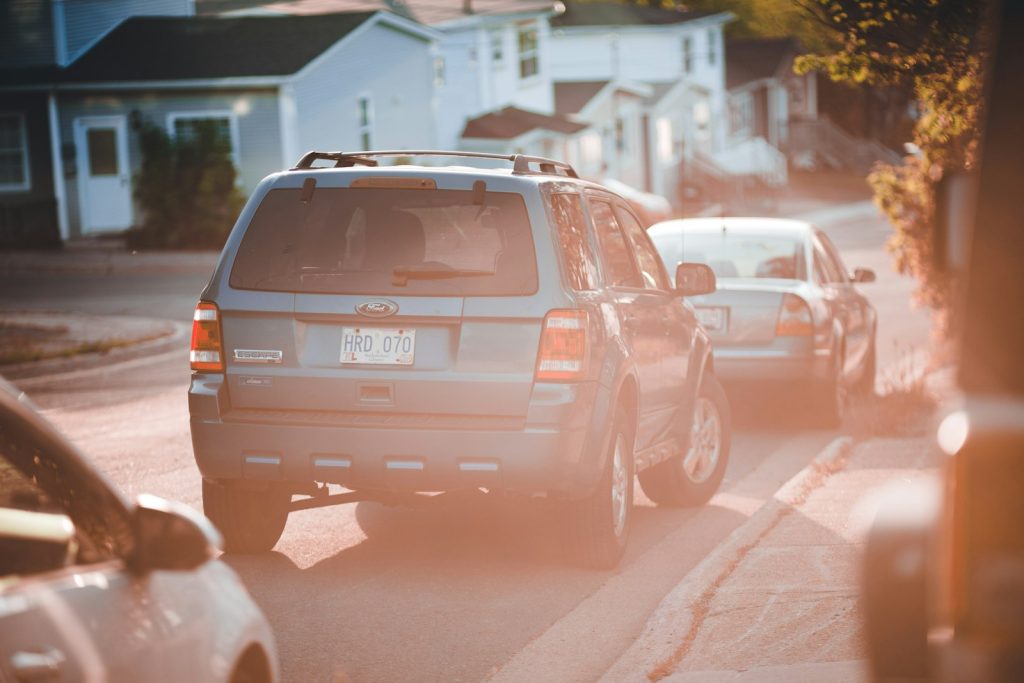
The viral lane-blocker and the split-second decision to intervene
One of the clearest illustrations of this tension comes from a widely shared clip of a commercial truck moving into a lane that drivers knew would close ahead. In the video, the trucker edges over early, then holds position to stop late-merging “cutters” from racing to the front of the queue. Supporters argue that this kind of maneuver keeps traffic flowing and discourages selfish behavior, but safety officials warn that when a commercial vehicle blocks a lane that is still technically open, it can confuse other motorists and create sudden braking, the exact scenario that can trigger a chain-reaction crash according to guidance on what happens when a large vehicle moves into a lane that is closing up ahead, as described in these situations.
That single choice, to occupy a lane not for travel but as a barrier, turns a professional driver into an ad hoc traffic cop. It also raises a basic question of authority: no matter how frustrating it is to watch others speed toward a merge point, the law does not deputize individual motorists to enforce courtesy. When a trucker or any driver decides to block, they are assuming risks that range from rear-end collisions to accusations of reckless driving, and as more cameras roll on dashboards and overpasses, those decisions are increasingly preserved as evidence.
Why some drivers feel justified in blocking a lane
Psychology and frustration sit just beneath the surface of many of these incidents. On crowded highways, some motorists see themselves as guardians of fairness, convinced that stopping “cheaters” from cutting in will reward the patient majority. Online discussions of lane-blocking behavior often echo the same themes, with one explanation noting that there are Several reasons people block faster lanes, including a belief that they are preventing dangerous passing.
In that same discussion, the behavior is often chalked up to obliviousness or a lack of awareness of what is happening behind the blocking vehicle. Often, drivers who sit in a passing lane or drift over to block are described as simply not realizing they are building a rolling roadblock. Others, however, are fully aware and see their actions as a form of vigilante justice, even as they increase the odds of a major wreck by forcing faster traffic to brake or weave around them.
When a lane-block turns into a crash on camera
The dangers become stark when a deliberate obstruction ends in a collision. In one widely circulated training clip, a truck driver pulls into an intersection and stops, effectively sealing it off while cross traffic waits. As the rig holds its ground, a Buick barrels forward and slams into the trailer, turning a moment of poor judgment into a violent impact. The scenario is used in a series that invites viewers to Sign up for more “Preventable or Not” accident breakdowns, underscoring how a single decision to block can be scrutinized frame by frame.
The framing of that video, explicitly labeled as a Preventable or Not scenario, is telling. Safety educators use it to challenge professional drivers to think beyond who had the right of way and instead ask whether occupying the intersection in that manner was necessary at all. The unexpected consequence for the trucker is not only the crash itself but also the professional scrutiny that follows, as insurers, employers, and regulators review whether the obstruction violated company policy or traffic law.
Road rage on Route 201 and the cost of turning a highway into a stage
Lane-blocking can also be the climax of a longer road rage sequence, as seen in a high-speed confrontation that unfolded on Route 201 near Johnson City. Investigators reported that aggressive driving escalated until vehicles were effectively blocking lanes, turning a busy corridor into a standstill. In the aftermath, Two drivers were ticketed and one was criminally charged, a reminder that what begins as a rolling argument can end with officers sorting out culpability on the shoulder.
Authorities in Johnson City emphasized that blocking a state route as part of a personal dispute is not treated as a minor etiquette issue but as a public safety threat. The unexpected consequence for the participants was not only the embarrassment of seeing their behavior described in police reports but also the financial and legal burden of citations and charges that can follow them for years, especially if prosecutors decide that the obstruction contributed to a dangerous environment for uninvolved drivers.
Luxury car, blocked lane, and a 33-year-old driver facing backlash
Social media has amplified the reputational stakes of lane-blocking, particularly when high-end vehicles are involved. In one case that drew intense attention, a Ferrari driver was filmed in a road rage confrontation that included obstructing traffic at a busy junction. The clip, shared widely, showed the sports car positioned in a way that prevented other vehicles from moving freely, turning a personal dispute into a public spectacle.
According to a detailed account, the 33-year-old owner later surrendered to police and apologized to the victim after the incident drew widespread criticism. The driver also faced action under a provision cited as section 1959 for obstructing traffic, illustrating how quickly a moment of bravado can translate into legal exposure. For motorists who imagine that blocking a lane will win them respect or deference, the Ferrari episode shows a different reality: viral outrage, formal charges, and a permanent digital record of their worst driving decision.
What the law actually says about “Unlawful” obstruction
Beyond individual stories, traffic codes are explicit that using a vehicle to block others is not a gray area. One municipal rule, shared in a community discussion about drivers blocking a new road, quotes language taken Straight from JPD‘s website. It cites Sec. 28.35. 140, titled Unlawful obstruction or blocking of traffic, which also imposes a duty to yield to following vehicles and warns of a fine of at least $100 for violators. The wording leaves little room for interpretation: intentionally blocking traffic is a punishable offense, not a clever tactic.
At the state level, some jurisdictions go further by tying aggressive driving and road rage to licensing consequences. Under California Vehicle Code 13210 CVC, courts are allowed to suspend a driver’s license for engaging in road rage behaviors, with harsher penalties for a second or subsequent offense. That means a motorist who uses a lane block as part of an angry confrontation is not only risking a ticket but could also be putting their ability to drive at all in jeopardy if a judge views the obstruction as part of a broader pattern of aggressive conduct.
Fines, “stuckages,” and the growing crackdown on gridlock
Financial penalties are also rising for drivers who create deliberate gridlock. In one jurisdiction, authorities have warned that Drivers risk $1,000 fines for so-called “stuckages,” situations where vehicles block intersections or lanes and trap cross traffic. A second violation can cost $4,000, a steep escalation that reflects how seriously officials view intentional or careless obstruction.
These penalties are not aimed only at drivers who misjudge a yellow light. They are also a response to motorists who treat intersections as staging grounds for confrontations or who pull across lanes to block others from merging. By attaching four-figure fines to the behavior, lawmakers are signaling that the cost of turning a lane into a personal protest will be felt in courtrooms and bank accounts, not just in honks and glares from other road users.
Public opinion: praise, complaints, and the etiquette backlash
Even as laws tighten, public opinion on lane-blocking remains divided, especially when the blocker claims to be protecting everyone else. A widely shared video of a trucker using a rig to hold back late mergers sparked a heated response, with some viewers applauding the move and others condemning it as dangerous. The debate grew intense enough that one outlet invited readers to Take Our Poll L Corwin, capturing how Everyone seemed to have a strong view on whether the driver was a hero or a hazard.
Critics of the trucker’s move pointed to established guidance on efficient merging, which favors using all available lanes up to the merge point and then alternating vehicles in a zipper pattern. From that perspective, a driver who blocks a lane early is not enforcing etiquette but disrupting it, forcing abrupt lane changes and braking that can ripple backward for miles. The backlash illustrates a broader shift: as more people learn about best practices for merging, the social license for self-appointed enforcers is shrinking, even among fellow motorists who share their frustration with “cutters.”
From frustration to safer choices: how to avoid becoming the next case study
All of these episodes, from the Route 201 confrontation to the 33-year-old Ferrari owner’s apology, point to the same lesson. The moment a driver uses their vehicle to block, rather than to travel, they step into a legal and ethical minefield. Under rules like Sec. 28.35.140 and frameworks such as California Vehicle Code 13210 CVC, that choice can trigger fines, license suspensions, and, in the worst cases, criminal charges that linger long after the traffic jam clears.
For drivers stuck in slow traffic or watching others merge aggressively, the safer alternative is to focus on their own lane discipline and leave enforcement to police and courts. Professional training programs that dissect “Preventable or Not” crashes, along with community reminders from agencies like JPD and legal analyses of statutes such as California Vehicle Code 13210 CVC, all converge on a simple principle: resisting the urge to weaponize a lane is not a sign of weakness, it is a recognition that the most unexpected consequence of blocking traffic on purpose is how quickly the blocker can become the one held responsible.
More from Wilder Media Group: