

Security cameras have turned anonymous parking lots into some of the most closely watched spaces in daily life, and few drivers think about that until something goes wrong. When a motorist clips a parked car and drives off, the real judgment often arrives later, in grainy but unforgiving footage that can follow them from the insurance office to a courtroom.
The viral appeal of these clips hides a serious reality: a hit on a stationary vehicle can trigger criminal charges, civil liability, and long-term financial fallout. As more lots add cameras and more neighbors share video, the odds that a quiet escape will be exposed keep rising, and the law is increasingly treating these incidents as part of a broader pattern of reckless behavior on American roads.
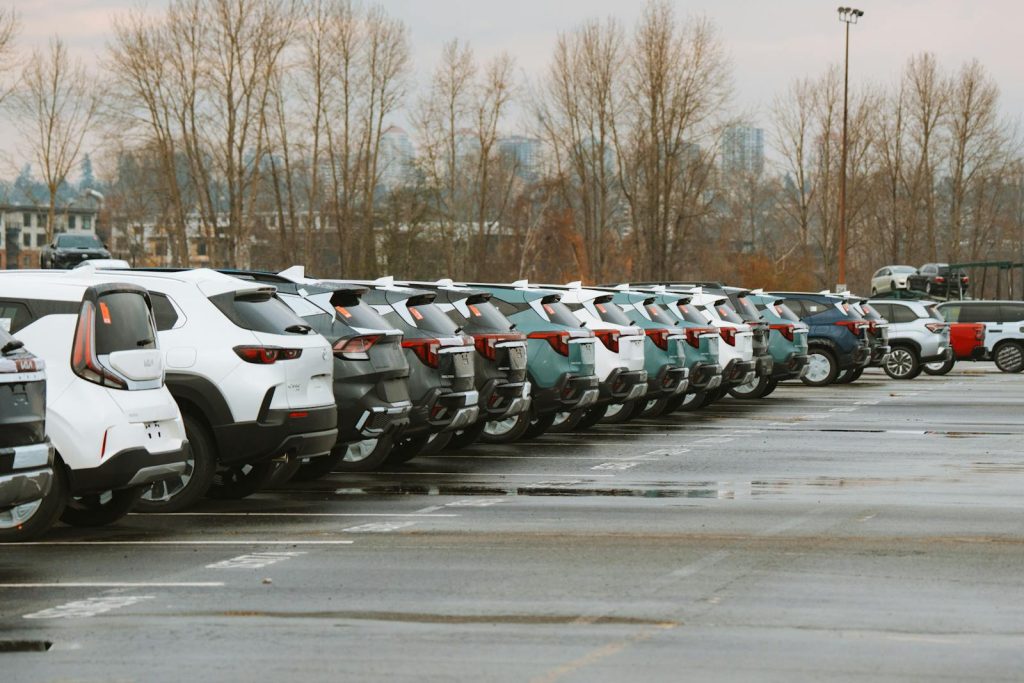
The hit, the scrape, and the instant replay
In the classic scenario, a driver misjudges a turn, sideswipes a parked car, pauses for a heartbeat, then decides to leave. For years, that might have been the end of it, with the victim returning to a crushed bumper and no witnesses. Today, the more likely outcome is a manager or property owner pulling up a camera feed that shows the entire sequence in unforgiving detail, from the first impact to the license plate leaving the frame.
Big-box parking lots are especially saturated with surveillance, both for loss prevention and liability, which means a driver who hits a car outside a warehouse club or supermarket is often recorded from multiple angles. A national retailer such as Costco invests heavily in cameras that cover entrances, loading zones, and long rows of parking, and those systems do not distinguish between shoplifters and careless motorists. Once footage exists, it can be preserved, copied, and shared with insurers or police, turning a split-second decision to flee into a slow-motion replay of every mistake.
How parking lot cameras quietly build the case
What makes these cameras “brutal” is not just that they capture the moment of impact, but that they document everything that follows. Investigators can see whether the driver stopped to inspect the Damage, whether anyone else was in the vehicle, and how quickly they left, all of which can influence how prosecutors and insurers interpret intent. A slow walk around the car followed by a deliberate exit looks very different from a panicked tap of the brakes and a hasty retreat.
Online communities have learned how powerful this evidence can be. In one discussion about a collision in a California lot, commenters urged the victim to File an insurance claim and push the store to pull its footage, noting that the cameras at that specific Costco location had helped in similar cases. Once a plate number is visible, police can match it to a registered owner, and insurers can compare the video with the damage pattern on both vehicles, leaving little room for creative storytelling.
From fender-bender to crime scene
Legally, leaving after hitting a parked car is rarely treated as a harmless lapse. Guidance for drivers emphasizes that walking away can turn a minor collision into a hit-and-run, exposing the motorist to criminal penalties on top of civil liability. Consumer-facing advice explains that when someone strikes a stationary vehicle and disappears, the incident is often categorized as a hit-and-run for insurance purposes, which can affect how a claim is processed and whether the victim’s coverage applies under collision or uninsured motorist provisions, a point underscored in detailed explanations of What happens when a parked car is hit and the other driver leaves.
Law firms that specialize in traffic injuries stress that parking lots are not legal gray zones. They describe how a driver who hits a car in a private lot is still expected to stop, exchange information, and document the scene, and they outline steps victims can take, from photographing the damage to tracking down witnesses, to protect their rights. One such firm notes that if a driver in a parking lot struck you or your car, gathering evidence, including any available video, can be crucial for an insurance claim or lawsuit, advice that appears in its overview of parking lot accidents and legal help.
Insurance: when the camera becomes your best witness
For the owner of the parked car, the most immediate question is who pays. Insurers explain that when an unknown driver hits a stationary vehicle and vanishes, the victim’s own collision coverage typically steps in, treating the incident as if the policyholder had been in a crash on the road. That means the owner must pay the deductible before the insurer covers the rest, a structure that is spelled out in consumer guidance on how a policy responds when Damage to a parked car comes from a hit-and-run.
Video can shift that equation. If a camera captures the license plate or a clear view of the driver, the victim’s insurer has a target for subrogation, the process of recovering money from the at-fault party or their carrier. That can eventually reimburse the deductible and reduce the long-term cost of the claim. Legal guides on parking lot crashes highlight how photos, witness statements, and especially surveillance footage can strengthen a case, making it harder for a fleeing driver to argue that the damage was preexisting or caused by someone else.
Victims are learning to chase the footage
As cameras proliferate, drivers who come back to a dented car are increasingly acting like investigators. In one widely shared account of a hit-and-run at a suburban shopping center, the owner of a white 2022 Honda Civic described returning to find fresh damage in the lot of Pleasant Hill Target. Commenters pointed out that Burlington coat factory and Target had cameras that might have captured the collision, and others shared that similar footage had helped identify a previous driver who fled, turning a frustrating mystery into a solvable case.
That crowdsourced advice mirrors what attorneys and insurers recommend: document the scene, then start knocking on doors, both literal and digital. In another online thread about a collision at a busy warehouse club, users urged the victim to File a claim and press the store to pull its video, noting that the cameras at that Costco location had a clear view of the rows where the crash occurred. The pattern is clear: victims are no longer accepting “no witnesses” as the end of the story, and they are increasingly fluent in the language of surveillance.
When parking lot chaos turns violent
Hit-and-runs in parking lots sit on a spectrum of risky behavior that ranges from careless to outright violent, and cameras are documenting that escalation as well. In San Antonio, federal immigration officers reported that a driver identified as an immigrant rammed into ICE vehicles, injuring an officer, in a confrontation that unfolded in a parking area. The agency’s account describes how personnel moved to take the person to the ground, illustrating how quickly a space designed for shopping or transit can become the backdrop for a high-stakes enforcement encounter.
Elsewhere, parking lots have become stages for road rage that spills over from nearby streets. In Orlando, police records describe a delivery driver accused of hitting and dragging a woman in a lot after a dispute that began when one motorist allegedly cut the other off. The incident, which unfolded near a Dollar General and was linked to a second confrontation in Marion County, underscores how quickly tempers can flare when drivers feel wronged in tight, congested spaces. In these cases, cameras do more than capture property damage; they record potential felonies.
Doorbell and CCTV clips are rewriting expectations
The cultural shift around cameras is not limited to commercial lots. Residential doorbell systems and small-business CCTV rigs are now catching crashes that once would have been chalked up to bad luck. In one widely shared clip, a Driver described as “Out of” control is thrown from a vehicle in a dramatic crash captured on a doorbell camera, a reminder that the same technology that records package thieves is now documenting extreme driving and its consequences.
Another video from Everett, Massachusetts, shows a car slamming into a home with such force that a neighbor, Prasit Gurung, said he woke up with the “most violent noise” he could hear and that the impact “Shook” the whole house. In that case, the driver walked away from the wreck, but the footage left little doubt about the severity of the crash. These clips shape public expectations: if a car can be seen cartwheeling into a building from a doorbell camera, then a driver who nudges a bumper in a store lot and leaves should assume that someone, somewhere, has the receipts.
Global CCTV shocks and the psychology of being watched
Internationally, viral clips show how even routine maneuvers can turn dangerous under the unblinking eye of CCTV. In one Shocking incident shared from India, a parked car suddenly shoots backward moments after being started while the driver is standing outside, with the entire sequence captured on CCTV. The clip notes that no loss of life was reported, but the near miss illustrates how even a stationary vehicle can become a projectile, and how cameras now routinely document those split seconds between safety and disaster.
Another reel from the same account shows a scooter rider being struck by an autorickshaw and thrown into the air, with the caption noting that the scooter rider was hit and that the post had 33 likes and invited viewers to Follow the page. These clips, stitched together in endless feeds, reinforce a sense that every misstep behind the wheel is potentially public. For drivers in a crowded American parking lot, that awareness can cut both ways, deterring some from fleeing while pushing others into denial, hoping that their particular scrape will be the rare one that no camera caught.
Why the “brutal” camera era should change driver behavior
All of this adds up to a simple reality: the odds of getting away with hitting a parked car and leaving are shrinking fast. Between corporate surveillance systems at places like Costco, community tips about where to find footage at chains such as Pleasant Hill Target and Burlington coat factory, and the spread of doorbell and dashboard cameras, the modern driver is surrounded by lenses. Legal guides on parking lot crashes and insurance explainers on hit-and-run What to do after a parked car accident now assume that video will be part of the evidence, not a lucky bonus.
For drivers, the safest assumption is that every misjudged turn is being recorded, and that the real judgment will come later, when an adjuster, lawyer, or officer watches the replay. The law already treats leaving the scene as a serious offense, and the cultural shift driven by viral clips of “Out of” control crashes, “Shocking” CCTV near misses, and neighbors like Prasit Gurung describing the “most violent noise” they have heard is only making that expectation stronger. In the era of brutal parking lot cameras, the smartest move after a scrape is still the oldest one: stop, own it, and let the footage show that you did the right thing.
More from Wilder Media Group: