
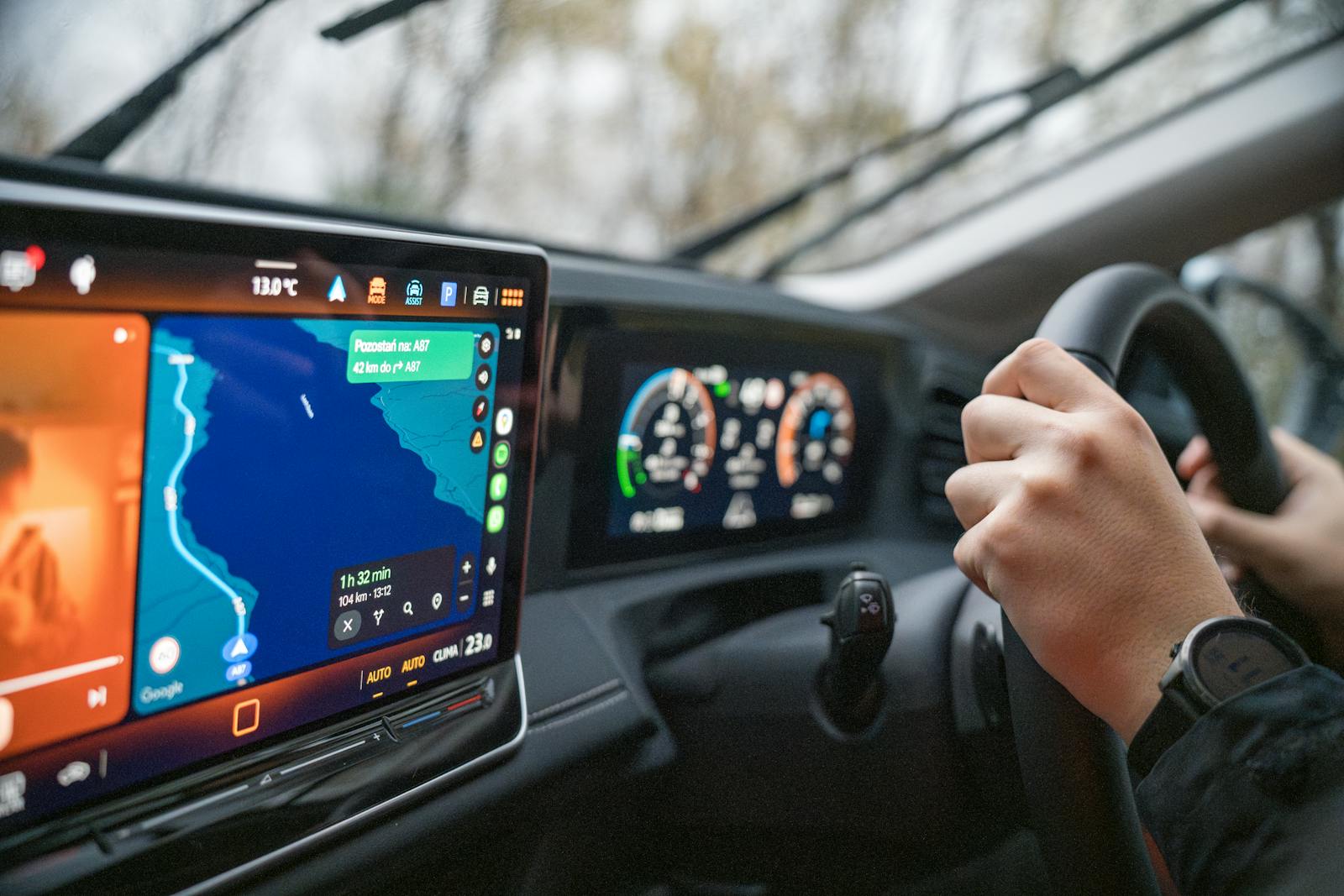

A driver’s new vehicle suddenly slammed on the brakes while cruising down the highway, with no obstacle in sight and traffic close behind. This wasn’t a one-time glitch or driver error. Automatic emergency braking systems in vehicles from multiple manufacturers are activating unexpectedly, causing hundreds of drivers to experience sudden stops on highways and surface streets when no hazard is present.
The technology was designed to prevent front-end collisions by detecting obstacles and applying the brakes when drivers don’t react quickly enough. Instead, owners report their vehicles brake suddenly without warning, leaving them vulnerable to rear-end crashes from vehicles following behind. What began as isolated complaints has grown into a pattern affecting popular models across different brands, from Nissan Rogues to Ford F-150s.
The incidents share disturbing similarities. Drivers describe their cars coming to hard stops at highway speeds, dashboard warning lights flashing, and the terrifying realization that they’ve lost control of their vehicle in heavy traffic. Federal investigators have taken notice, and manufacturers have launched service campaigns to address the problem, yet complaints continue to mount.

Understanding Unexpected Highway Braking Events
Modern vehicles equipped with advanced safety technology can suddenly apply brakes without driver input, creating dangerous situations on highways. These systems rely on sensors and radar to detect obstacles, but malfunctions and false readings have led to numerous complaints from drivers experiencing unexpected stops at high speeds.
What Is Phantom Braking?
Phantom braking describes when a vehicle suddenly decelerates or stops without any apparent obstacle or danger ahead. This phenomenon occurs in cars equipped with automatic emergency braking and other collision avoidance systems that misinterpret road conditions.
Drivers report their vehicles slamming on brakes without warning while traveling at highway speeds, sometimes with no cars nearby. The braking events happen suddenly and without driver control, often resulting in rear-end collisions when following vehicles can’t stop in time. Federal investigators have received over 1,400 complaints about certain vehicles experiencing these false activations, with incidents occurring at both low speeds in parking garages and at 60-70 mph on interstates.
How Automatic Emergency Braking Works
AEB systems continuously monitor the road ahead to detect potential collisions and intervene when drivers don’t react quickly enough. The technology follows a specific sequence when it identifies what it perceives as danger.
The system first scans for vehicles, pedestrians, or obstacles in the vehicle’s path. When a potential collision is detected, visual or audible warnings alert the driver to take action. If the driver doesn’t respond to these warnings, the AEB automatically applies the brakes to prevent or reduce crash severity.
Crash test videos demonstrate how effective these systems can be in preventing accidents under controlled conditions. However, real-world performance has proven less reliable than testing scenarios suggest.
Sensors and Technology Behind Safety Systems
Automatic emergency braking relies on cameras, radar sensors, and sometimes lidar to create a picture of the vehicle’s surroundings. These components work together to measure distance, speed, and identify objects in the vehicle’s path.
Radar sensors emit radio waves that bounce off objects and return to the vehicle, calculating how far away potential obstacles are. Cameras provide visual information to distinguish between different types of objects like cars, pedestrians, or road signs. Some advanced systems incorporate lidar technology, which uses laser pulses to create detailed 3D maps of the environment.
The problem occurs when these sensors misread their surroundings. Dirt, snow, or debris can interfere with sensor function, causing the system to react to things that aren’t actually there. Weather conditions like heavy rain or fog can also confuse the technology, as can shadows, reflective surfaces, or overhead objects like bridges and signs.
Common Issues, Real-World Experiences, and Industry Response
Drivers across the country report similar incidents where advanced safety features activate without apparent cause, creating dangerous situations on busy roads. These phantom braking events have drawn attention from regulators and prompted manufacturers to investigate technical limitations in their systems.
Drivers’ Experiences With Unexpected Braking
Motorists describe alarming scenarios where their vehicles suddenly decelerate without warning while traveling at highway speeds. The complaints often involve adaptive cruise control systems that mistakenly interpret shadows, overpasses, or objects in adjacent lanes as immediate threats.
One common pattern involves vehicles equipped with automatic braking systems that react to non-existent obstacles. These false activations can drop speeds by 20 or 30 miles per hour in seconds, leaving drivers scrambling to regain control. The incidents aren’t isolated to one brand or model, with reports spanning multiple manufacturers.
Many drivers report feeling unsafe after experiencing phantom braking multiple times. Some have attempted to disable the safety features entirely, though this isn’t always possible with newer vehicles where these systems are permanently active.
Safety Risks of Sudden Braking on Highways
Unexpected deceleration on highways creates serious collision risks for vehicles traveling behind. When a car suddenly slows from 70 mph to 40 mph without visible cause, following drivers have minimal time to react. Rear-end collisions become increasingly likely in heavy traffic conditions.
The situation becomes particularly dangerous in the left lane where speed differentials are greatest. A vehicle that abruptly brakes can trigger chain reactions involving multiple cars. Highway speeds leave little margin for error when technology malfunctions.
Manufacturers’ Reactions and Solutions
Automakers have issued software updates to address false activation complaints in certain models. These patches attempt to refine sensor algorithms and reduce sensitivity to environmental factors that trigger false positives. Tesla vehicles operate at Level 2 automation according to current automated driving standards, requiring continuous driver supervision.
Some manufacturers acknowledge the challenge of balancing system sensitivity with reliability. Engineers work to distinguish genuine threats from benign road conditions, but the technology remains imperfect. Companies have recalled vehicles when the National Highway Traffic Safety Administration determines a safety defect exists.
Updates don’t always eliminate the problem completely. Drivers continue reporting phantom braking even after installing manufacturer-recommended fixes, suggesting the underlying sensor technology has inherent limitations.
The Role of Regulatory Agencies
The National Highway Traffic Safety Administration monitors complaints about automatic braking systems through its consumer complaint database. When reports reach certain thresholds, the agency can launch formal investigations into potential safety defects.
In 2025, USDOT released new frameworks for automated vehicle oversight, including amendments to standing orders for advanced driver assistance systems. These regulations aim to improve testing and validation before systems reach consumers.
The agency has authority to mandate recalls when safety defects are identified. However, regulators face challenges distinguishing between system limitations and actual defects requiring corrective action.
More from Steel Horse Rides: