
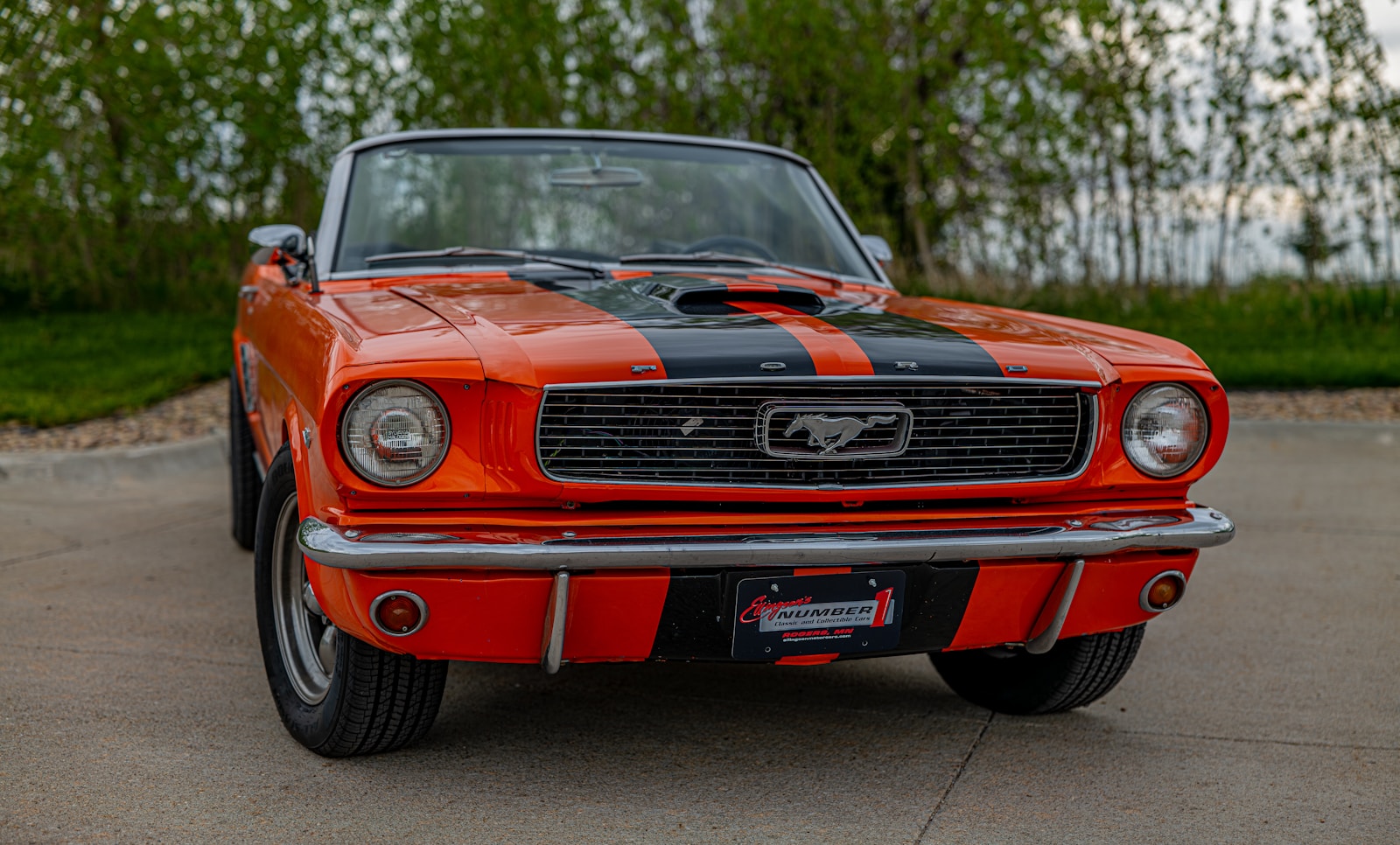

A classic Mustang owner recently posted online that his neighbor has been calling 911 every time he starts his car in the early morning, turning a routine engine warmup into a recurring police matter. The driver says the car is stock and legally parked, but the calls keep coming. He wants to know: can this actually land him in trouble, or is his neighbor wasting the department’s time?
It is not an unusual question. Disputes over loud vehicles in residential neighborhoods have led to HOA fines, civil lawsuits, and in at least one documented case, someone filling a Mustang’s exhaust pipes with expanding foam. For owners of older V8s that lack modern exhaust management, the conflict between enjoying a car and keeping the peace next door is real and, increasingly, has legal consequences.
Why Classic Car Warmups Draw So Many Complaints

Carbureted and early fuel-injected engines need a brief idle period before driving, especially in cold weather. That idle is louder than a modern car’s startup because older exhaust systems lack the catalytic converters, resonators, and electronically controlled valves that muffle sound on newer vehicles. A stock 1960s or 1970s Mustang with factory dual exhaust can register north of 80 decibels at idle, according to sound-level measurements shared across enthusiast forums. For comparison, most residential noise ordinances set daytime limits between 55 and 65 decibels, with nighttime thresholds often 10 decibels lower, per guidelines published by the National Bureau of Standards and adopted in various forms by local municipalities.
That gap between what a classic V8 produces and what an ordinance allows is where neighbors find leverage. Even if the car is unmodified and the owner is not revving the engine, a sustained idle above the local threshold can technically qualify as a violation. In one r/legaladvice thread, commenters noted that officers often treat a single noise call as low priority, but that a documented pattern of complaints “can spark some action” once it crosses a department’s internal threshold for follow-up.
When Frustration Turns Into Sabotage
Not every neighbor sticks to phone calls. In a widely reported 2020 incident, a Ford Mustang owner in Ohio discovered that someone had packed his exhaust tips with expanding construction foam overnight. Driving.ca covered the story, noting that the owner suspected a neighbor who had previously complained about the car’s sound. The foam hardened inside the pipes, risking backpressure damage to the engine and catalytic converters, a repair bill that could easily reach several thousand dollars.
A similar clip circulated in Mustang Facebook groups showing another foam-filled exhaust, this time caught on a doorbell camera. Whether or not these acts lead to criminal charges (they would typically qualify as criminal mischief or vandalism under most state statutes), they illustrate how quickly a noise disagreement can escalate beyond words. For the owner in the original post, the pattern is worth taking seriously: repeated 911 calls that go nowhere can breed the kind of resentment that leads a frustrated neighbor to take matters into their own hands.
How Police and HOAs Actually Handle Repeated Calls
Police departments generally do not cite a driver based solely on a neighbor’s complaint. In most jurisdictions, an officer must personally witness the noise violation or measure it with a calibrated decibel meter to write a ticket. California’s Vehicle Code Section 27150, for example, requires that a vehicle’s exhaust system meet specific sound standards, but enforcement depends on an officer hearing the car in operation, a point attorneys raised in a MotorTrend analysis of a 2014 lawsuit in which homeowners sued a BMW owner for “loss of quiet enjoyment.”
That said, serial 911 calls create a paper trail. Departments log every call, and if a pattern emerges, some will escalate the matter to code enforcement or a community mediation program rather than keep dispatching patrol officers. On the flip side, a caller who repeatedly reports a non-emergency situation through 911 can face consequences of their own. Many states have statutes against misuse of emergency services. If the car is not violating any ordinance and the neighbor continues calling, the owner may have grounds to ask the department to flag the calls or, in extreme cases, pursue a harassment complaint.
HOAs operate differently. They are not bound by criminal standards of proof. One Reddit post in r/fuckHOA described a board invoking a “nuisance vehicle” clause after just three logged complaints, regardless of whether the car violated any municipal law. HOA covenants often give boards broad discretion to define what constitutes a nuisance, and fines can accumulate quickly. Owners in HOA-governed communities should review their CC&Rs carefully and, if possible, get a written opinion from the board before a dispute escalates.
Ford Built a Feature for Exactly This Problem
The tension between loud exhaust and residential quiet is mainstream enough that Ford engineered a solution into the car itself. Starting with the 2018 Mustang GT equipped with the optional active valve performance exhaust, Ford introduced a feature called “Good Neighbor Mode.” The system lets owners program a time window, typically early morning and late night, during which the exhaust valves stay partially closed, reducing startup volume significantly.
The idea came from personal experience. Ford powertrain engineer Steve Von Foerster told MLive in August 2017 that a neighbor had once called the police over his own loud startup, which got him thinking about a programmable quiet mode. “I love the sound of the V8, but I don’t want to be ‘that guy’ in the neighborhood,” Von Foerster said in Ford’s announcement.
The feature does not help owners of classic Mustangs, which lack electronically controlled exhaust valves. For those cars, the closest equivalent is an aftermarket electric exhaust cutout with a bypass valve, or simply swapping to a quieter muffler for daily driving. Neither option is free, and neither fully replicates what Ford can do with factory electronics, but both can meaningfully reduce idle noise and take the edge off a neighbor’s complaint.
What Actually Works: Practical Steps for Both Sides
Enthusiast forums are full of hard-won advice from owners who have navigated this exact situation. The most commonly recommended steps, distilled from threads on r/Mustang and r/legaladvice, include:
- Push the car out of the driveway before starting it. Rolling the car to the street or around a corner puts distance between the exhaust and the neighbor’s bedroom window. It is inconvenient, but multiple owners say it eliminated complaints entirely.
- Shorten the warmup. Modern oils and fuels do not require the long idle periods that were standard decades ago. Most mechanics say 30 to 60 seconds is sufficient for a carbureted engine in moderate weather, and driving gently for the first few minutes does the rest.
- Shift departure times when possible. Even 15 minutes later in the morning can make a difference if the neighbor’s complaint is specifically about being woken up.
- Document everything. Keep a log of start times, idle durations, and any interactions with the neighbor or police. If the dispute escalates to a citation, an HOA hearing, or a civil claim, a written record of reasonable behavior is the strongest defense.
- Know your local ordinance. Look up the specific decibel limits and “quiet hours” for your municipality. If the car falls within legal limits, a printout of the ordinance can be useful when an officer arrives.
- Talk to the neighbor directly. This is listed last because it is the hardest, but several owners reported that a calm, face-to-face conversation (not a text or a note) defused the situation when nothing else had. Acknowledging the noise and explaining what steps you have taken goes further than most people expect.
For the Mustang owner whose neighbor keeps calling 911, the path forward probably involves some combination of all of the above. The calls may not stop entirely, but building a record of good-faith effort changes the calculus for every authority who might eventually weigh in, whether that is a responding officer, an HOA board, or a judge. Showing that you took the problem seriously, even when you believe the complaint is excessive, is the single most effective thing you can do to protect both your car and your standing in the neighborhood.
More from Wilder Media Group: