
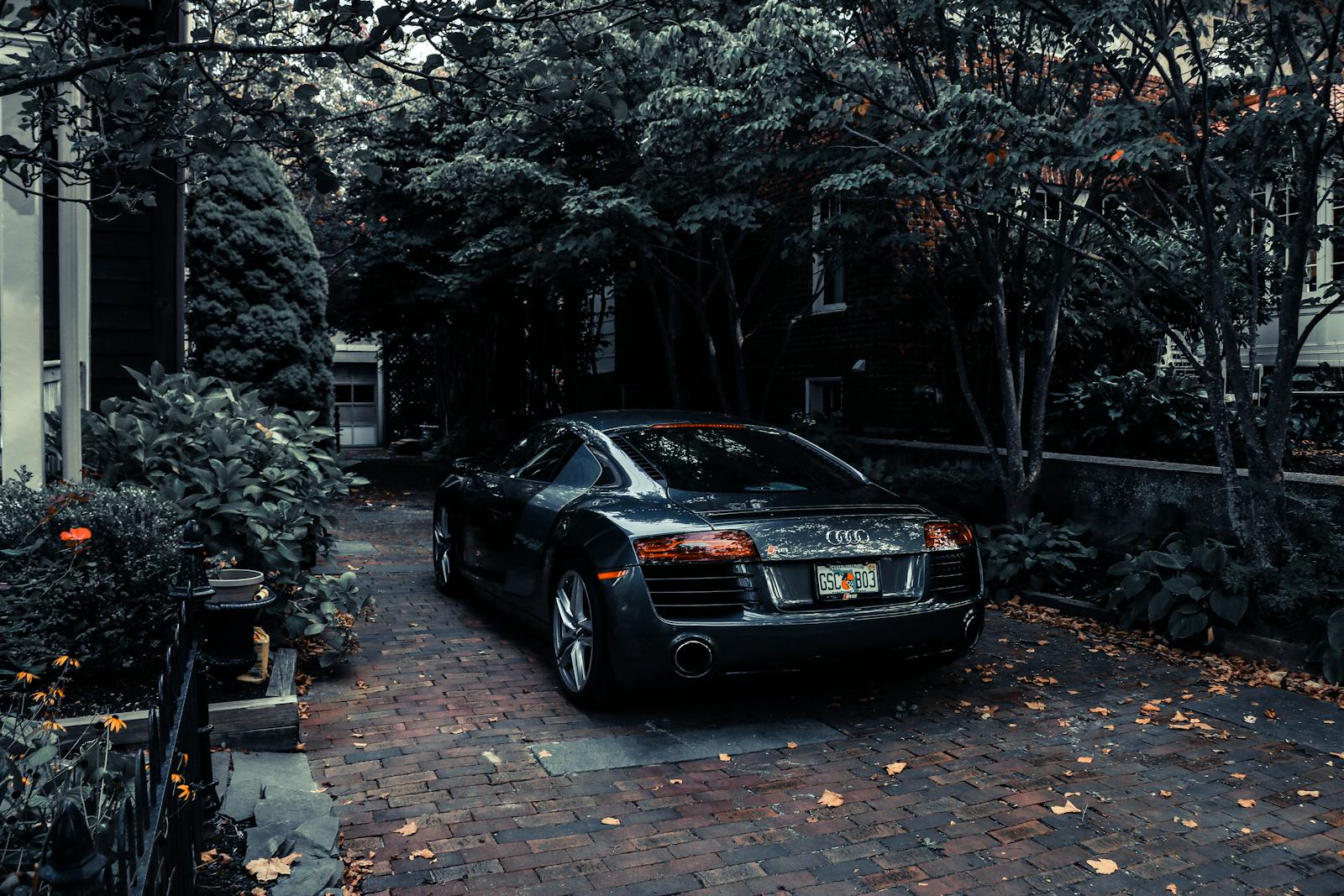

It starts around 11 p.m. and keeps going: a teenager in the driveway, foot on the gas of a straight-piped Honda Civic, sending a ragged, unmuffled scream across a residential block where most people are trying to sleep. The scenario is specific to one neighborhood complaint circulating online, but the pattern is everywhere. Across Reddit, Facebook groups, and municipal complaint portals, residents describe the same standoff: a young car enthusiast chasing a louder exhaust note, and neighbors reaching for noise ordinance codes, decibel meter apps, and the non-emergency police line. Behind these individual disputes is a growing legal and public health reckoning with aftermarket exhaust noise.

What a straight pipe actually does, and why it is usually illegal
A straight-pipe exhaust removes or bypasses the factory muffler and resonator, allowing exhaust gases to exit with minimal restriction. The result is a louder, raspier sound and, in some configurations, a modest improvement in exhaust flow. It also eliminates the catalytic converter in many setups, which violates the federal Clean Air Act. Under Section 203(a)(3) of the Act, it is illegal to tamper with, remove, or render inoperative any emission control device on a motor vehicle. That federal prohibition applies nationwide, regardless of state law.
On the noise side, a stock Honda Civic typically produces around 70 to 75 decibels at idle. A straight-piped version revved to high RPM can exceed 100 decibels, roughly the volume of a chainsaw at close range. Most state vehicle codes set a maximum of 95 decibels measured at a specific distance, though the exact standard varies. California’s limit under Vehicle Code §27150 is among the most cited; New York’s Vehicle and Traffic Law §386 requires every vehicle to have “an adequate muffler” and prohibits exhaust cutouts or bypasses. In practical terms, a straight-piped car driven or revved on a public street or residential driveway is operating outside the law in most U.S. jurisdictions.
New York’s crackdown set the template
In October 2022, New York Governor Kathy Hochul signed a package of bills, including S.784-A, that increased penalties for installing or operating illegally modified mufflers and exhaust systems. Under the legislation, repair shops caught installing non-compliant exhausts face fines up to $1,000 per violation, and drivers can be fined for failing vehicle inspections related to exhaust tampering. The governor’s office described the move as a direct response to community complaints about excessively loud cars and motorcycles, framing it as both a quality-of-life and public health measure.
New York is not alone. California’s AB-1824, enacted in 2019, eliminated the option of a “fix-it ticket” for loud exhaust violations, making every citation an immediate fine. Colorado, Virginia, and several other states have tightened inspection requirements for aftermarket exhaust systems in recent years. At the municipal level, cities from Allentown, Pennsylvania, to Los Angeles have grouped loud vehicles with fireworks and amplified music under quiet-hour ordinances, typically covering 10 p.m. to 7 or 8 a.m., with escalating fines for repeat offenders.
How neighbors actually file complaints
When a resident decides to act, the process usually starts with a local noise complaint. In New York City, the 311 system has a dedicated “vehicle noise” category that routes reports to the appropriate enforcement agency. Other cities offer non-emergency police lines or online forms where residents can log the date, time, duration, and nature of the disturbance.
Enforcement, however, is inconsistent. Officers generally need to witness the violation or measure the noise level themselves to issue a citation, which means a car that was screaming at midnight may be silent by the time a patrol unit arrives. Some residents have taken to documenting noise with smartphone decibel meter apps and timestamped video, building a paper trail that can support a formal nuisance complaint or, in persistent cases, a civil action. Legal guidance from attorneys who handle neighbor disputes confirms that repeated, documented noise violations can form the basis of a private nuisance claim in most states, potentially resulting in a court order to stop the behavior.
The health toll is not trivial
The frustration in these complaints is not just about lost sleep on a single night. The World Health Organization’s Night Noise Guidelines for Europe, one of the most comprehensive reviews of the subject, found that sustained nighttime noise above 40 decibels begins to affect sleep quality, and levels above 55 decibels are associated with increased risk of cardiovascular disease. A 2019 meta-analysis published in the European Heart Journal reinforced those findings, linking chronic environmental noise exposure to elevated rates of hypertension, heart attack, and stroke.
A straight-piped car revving in a driveway at midnight can easily push interior noise levels in a neighboring home well above those thresholds, especially in older houses with single-pane windows. Residents in online forums describe the effects in blunt terms: insomnia, anxiety, rising blood pressure, and a feeling of helplessness when complaints seem to go nowhere. One Reddit user in r/motorcycles wrote that a neighbor who rides and works on a loud motorcycle “all day and night” left them feeling like a “nervous wreck.” The language is informal, but the underlying health science supports the severity of the complaint.
The line between car culture and nuisance
None of this means that modifying a car is inherently antisocial. Aftermarket exhaust systems are a multibillion-dollar industry, and most enthusiasts operate within legal limits, choosing cat-back systems that add a deeper tone without exceeding noise standards or removing emissions equipment. Car meets, track days, and organized cruises give tuners a place to enjoy their builds without rattling bedroom windows.
The conflict arises when the modification is designed to be as loud as possible and the driving or revving happens in a residential setting at antisocial hours. In online car communities, even enthusiasts draw that line. In a Facebook discussion about loud exhausts, one participant noted that modified systems are fine “long as they still perform their function properly and don’t make excessive noise,” adding that some drivers seem to chase volume purely for “the attention they desperately crave.” That distinction, between a build that respects shared space and one that treats a neighborhood as a personal dyno room, is where most of these disputes live.
For the neighbors on that sleepless block, the path forward usually involves a combination of direct conversation, documented complaints, and, if necessary, code enforcement or legal action. The laws are getting stricter, the complaint channels are getting easier to use, and the public health case against unregulated exhaust noise is only getting stronger. The teenager’s straight-piped Honda may sound like freedom to the person behind the wheel. To everyone else on the street, it sounds like a problem that finally has a legal answer.