

Doing your own car maintenance can feel empowering—especially when it’s something many drivers assume only mechanics can handle. But one driver says her attempt at a simple repair quickly turned stressful after her car started misfiring almost immediately afterward.
The story, shared in a discussion on Reddit , began with what sounded like a straightforward fix.
The driver owns a 2010 Pontiac G6. After getting a diagnostic code indicating an issue with the spark plugs, she decided to tackle the repair herself instead of heading to a shop.
At first, though, even removing the old plugs proved harder than expected.
Spark Plugs That Refused to Budge
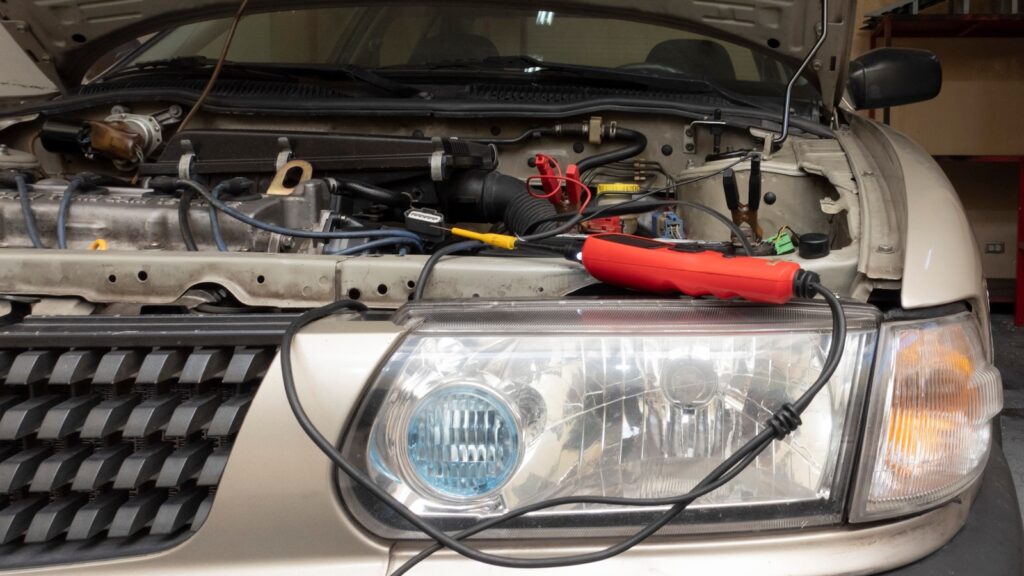
According to the driver, the old spark plugs were extremely stuck in place. Following instructions from a tutorial video, she tried spraying WD-40 on the threads to help loosen them.
Even with lubricant, it reportedly took about an hour of effort before the plugs finally came free.
Once they were removed, she installed the new plugs and started the engine. Almost immediately, something seemed wrong.
The engine produced a noticeable amount of white smoke, which she initially assumed was just leftover lubricant burning off. But instead of quickly clearing up, the car began misfiring and shutting off after about 10 seconds of running.
Spark plugs play a crucial role in the engine by igniting the fuel-air mixture in each cylinder, which is why problems during installation can lead to rough running or misfires. You can learn more about how spark plugs work .
With the engine struggling to stay running, the driver worried she might have seriously damaged something.
When DIY Repairs Trigger New Problems
Situations like this are fairly common for first-time DIY repairs. Even small jobs like replacing spark plugs can lead to complications if something gets disturbed during the process.
Misfires, for example, can happen for several different reasons. Sometimes the spark plugs themselves aren’t seated correctly, but other times the issue involves nearby components such as ignition coils or plug wires.
In older vehicles especially, rubber ignition components can become brittle over time. Simply removing and reinstalling them can reveal problems that were already developing.
That possibility became a major part of the conversation as people started offering advice.
What Other Drivers Think Might Have Happened
As the story circulated, many commenters suggested that the issue might not have been caused by the WD-40 alone.
Some pointed out that ignition coils or coil boots can fail once they’re disturbed during a repair. If the rubber has become dry or cracked over time, simply pulling the components apart to replace spark plugs can expose those weaknesses.
Others suggested checking the basics first—like making sure the plug wires were reconnected in the correct order and that each ignition coil was properly seated.
Several people also questioned the advice from the original tutorial video. While WD-40 can help loosen some parts, commenters noted that mechanics typically use dedicated penetrating oils for stubborn spark plugs because they break down rust more effectively and evaporate more quickly.
One commenter even mentioned the possibility of hydrolock, which can occur if too much liquid ends up inside the cylinders. But they added that if the engine turned over normally and simply ran rough, it was more likely that the spark plugs had gotten temporarily soaked.
Then came the twist.
After letting the car sit for a bit, the driver tried starting it again—and this time, it fired up normally.
Her update suggested the engine simply needed time to burn off the excess lubricant after all. For now, at least, the DIY repair appears to have worked out—though she admitted she probably won’t be reaching for WD-40 during her next spark plug change.
More from Wilder Media Group: