
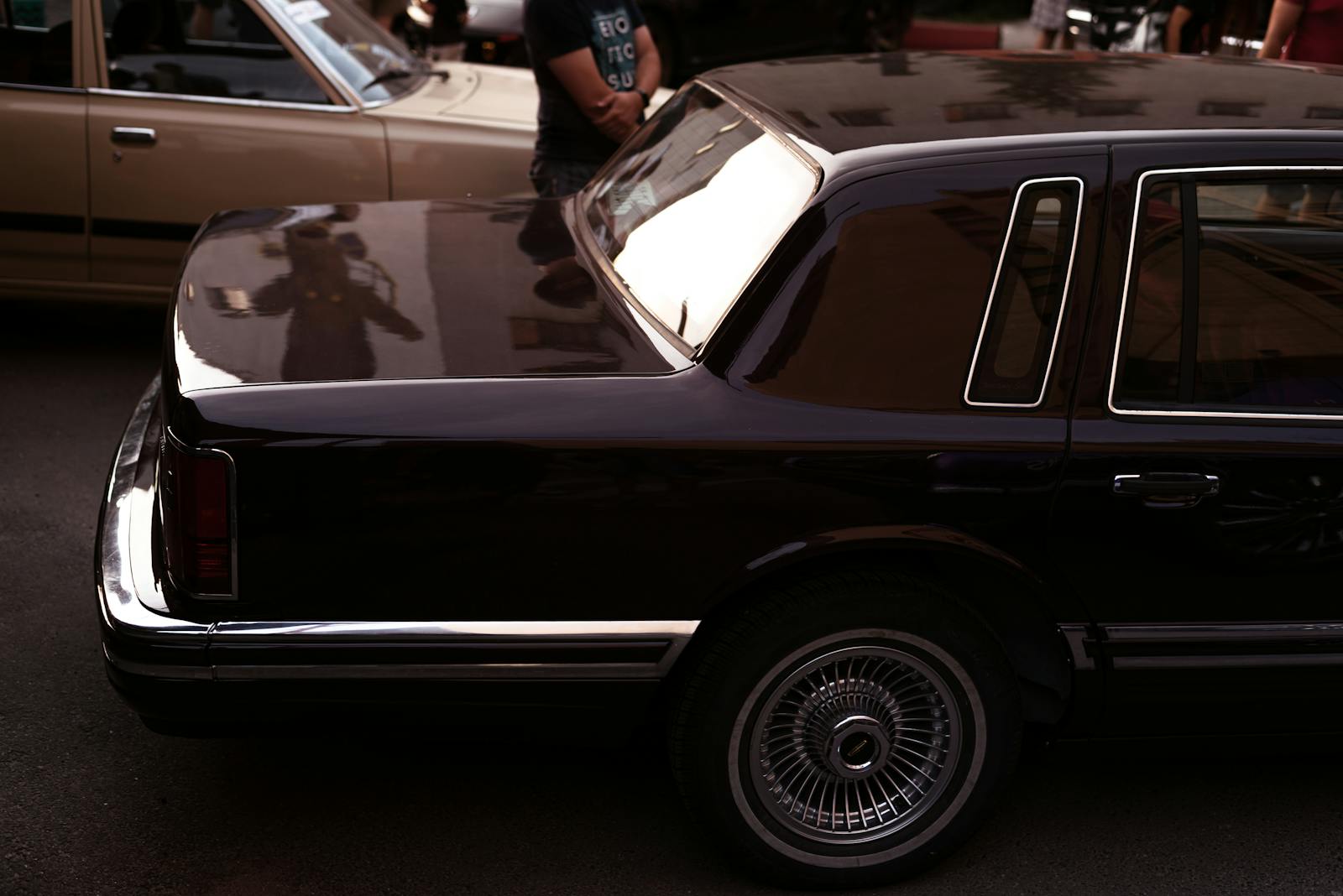

A folded note under the windshield wiper used to mean a parking ticket. Increasingly, it means a neighbor has something to say. Over the past year, drivers across the U.S., Canada and Australia have posted photos of handwritten complaints left on legally parked cars, many of them laced with insults, territorial claims or outright threats. The pattern has turned “parking note” into its own genre of viral content, but behind the sarcasm and the smartphone photos sits a real and growing friction: more cars, fewer spaces and no agreed-upon rules for sharing them.
For the drivers on the receiving end, the frustration is specific. Their vehicles sit inside the painted lines. No hydrant is blocked. No driveway is obstructed. And yet the notes keep coming. Understanding why, and knowing what to do about it, requires looking past the paper on the glass.

Legal parking, social friction
In most U.S. municipalities, a vehicle parked within marked lines on a public street or in a shared lot is legally compliant, full stop. Municipal codes typically govern parking through posted signage, time limits, fire lane clearances and hydrant setbacks. If none of those apply, the driver has met the legal standard. No city ordinance in wide use grants a resident ownership of the curb in front of their home, a point the City of Boston’s transportation department and similar agencies have stated explicitly when addressing “space saver” disputes.
But legal compliance and social acceptance are different currencies. In dense neighborhoods where street parking functions as a shared resource, residents develop informal hierarchies: the person who has lived there longest, the one who shovels snow, the one with a visible disability. When a newcomer or a visitor parks in “someone’s” spot, the note is the lowest-cost way to assert a claim the law does not support.
The notes that go viral, and why they keep coming
Social media has given these scraps of paper a second life. In one widely shared case, a driver posted a photo of a neighbor’s repeated complaints about how their car occupied a shared lot, even though it appeared to be within the bay. The post drew thousands of comments and split readers into familiar camps: those who sided with the parker and those who argued that technically legal parking can still be inconsiderate.
In an Australian apartment complex, a new resident found four separate handwritten notes on the windscreen, each escalating in tone, accusing the driver of taking a spot that “belonged” to longer-term tenants. The story triggered a national debate about entitlement and unwritten rules in shared housing.
These incidents follow a consistent script: a driver parks legally, a neighbor objects on social rather than legal grounds, and the note becomes the battlefield. The virality rewards the most outrageous examples, which in turn normalizes the behavior for people who might otherwise have knocked on a door and talked.
When notes become threats
Most parking notes are passive-aggressive at worst. Some cross a line. In a Canadian apartment complex, a driver posted in a legal advice forum that a neighbor had left a message threatening damage to the vehicle if the parking behavior did not change. Respondents, including users who identified as legal professionals, were unequivocal: even if a car is slightly over a line, no private citizen has the right to damage it or threaten to do so. In most Canadian provinces and U.S. states, a written threat to damage property can constitute criminal harassment or menacing, depending on jurisdiction.
In a San Diego neighborhood, a resident went further, leaving a series of hostile Post-it notes on multiple cars over several weeks. Local news coverage of the campaign showed drivers holding up the bright squares and describing how the anonymous messages had created a climate of anxiety on the block. Police in that case encouraged residents to file reports, noting that a pattern of threatening notes can support a harassment complaint even if no physical damage has occurred.
For drivers receiving threatening notes, attorneys who handle neighbor disputes generally recommend a consistent response: photograph every note with a timestamp, photograph your vehicle’s position in the space, save the notes in a bag (handling them minimally to preserve potential fingerprint evidence), and report the pattern to building management or local police. Documentation is what separates a he-said-she-said complaint from an actionable case.
Assigned spaces do not always end the argument
Even when a complex assigns numbered bays, disputes persist. In one case that gained traction online, a driver posted a photo of a note left on a car parked in its own assigned space, with the anonymous writer insisting the driver had no right to be there. Commenters speculated about double-assigned spots, a common administrative error in larger complexes. Property managers who responded in the thread recommended that residents confirm their assignment in writing with management and request that the complex audit its parking map, a step that resolves a surprising number of these conflicts before they escalate.
The assigned-space disputes highlight a structural problem. Many apartment complexes built before 2010 were designed with fewer spaces per unit than current car-ownership rates demand. A 2024 study by the Parking Reform Network found that residential parking minimums in U.S. zoning codes have been declining, but the existing housing stock still reflects older ratios. When supply is short, even a legitimate occupant of a numbered bay can become a target for a neighbor who has nowhere else to park.
What actually works
Parking notes persist because they are easy and anonymous. Resolving the underlying disputes requires more effort but produces better results. Urban planners and community mediators who study residential parking conflicts point to a few approaches that consistently reduce tension:
- Clear, posted rules. When a complex or HOA publishes specific parking guidelines, including guest policies, overnight rules and consequences for violations, residents have a shared reference point. Ambiguity is what fuels note-writing.
- Permit systems for street parking. In neighborhoods where curb space is scarce, residential permit programs administered by the city give legal residents priority without relying on informal claims. Cities including Chicago, San Francisco and Washington, D.C., operate such programs.
- Direct conversation before paper. Mediation professionals consistently find that a 90-second face-to-face exchange resolves more parking disputes than any number of unsigned notes. The anonymity of a windshield message removes accountability and invites escalation.
- Management accountability. In rental complexes, the landlord or property manager has a contractual obligation to enforce parking provisions in the lease. Tenants who receive threatening notes should loop in management in writing, creating a record that can matter if the situation worsens.
For the driver who parks between the lines and still finds paper under the wiper, the instinct to fire back with a sharper note is understandable. It is also, by every measure, the least effective response. The note on the windshield is a symptom. The disease is a neighborhood that has not figured out how to share a finite resource, and fixing that takes a conversation, not a pen.
More from Wilder Media Group: