

Across the country, drivers say a simple style choice on their cars is turning into a magnet for blue lights. Tinted windows, once mostly a cosmetic upgrade or a way to beat the sun, are now at the center of a growing fight over safety, discretion and who gets pulled over in the first place. As more people report being stopped over tint, the pattern is raising a sharper question: where does legitimate enforcement end and targeted policing begin?
Police departments insist they are chasing visibility and officer safety, while motorists and civil rights advocates see a pretext that lands hardest on drivers of color. The rules themselves are shifting too, with new laws, new tech and even the end of some inspection programs changing how tint is policed. The result is a messy, high stakes debate playing out on the side of the road, one traffic stop at a time.
How a style choice turned into a traffic stop trigger
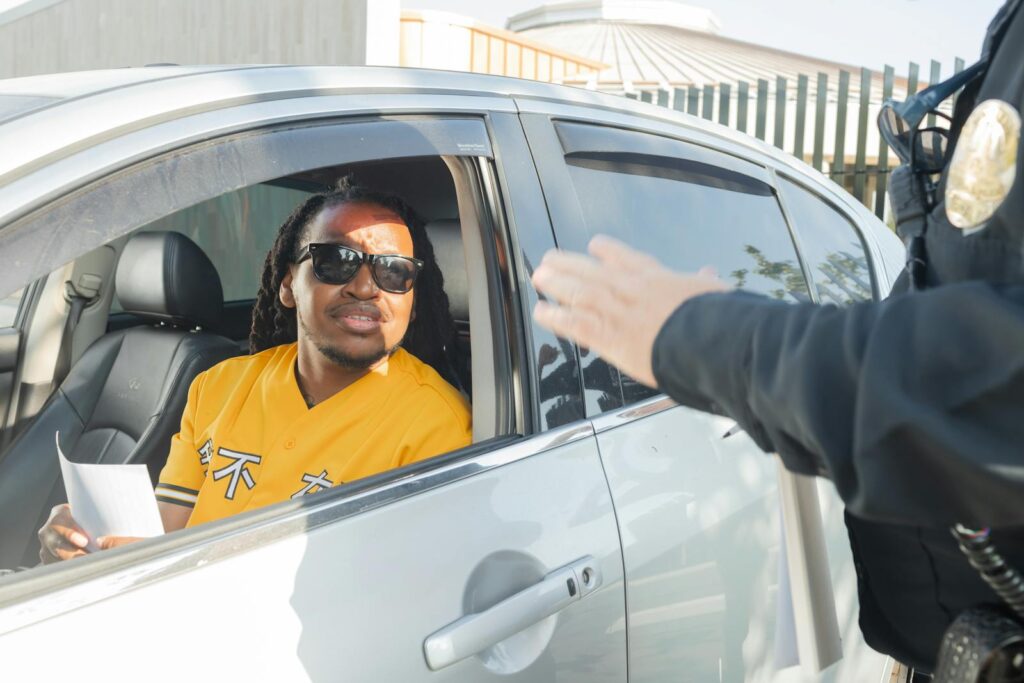
Window tint used to be a quiet corner of car culture, the kind of upgrade people added to a Honda Civic or a Tesla Model 3 to keep the cabin cool and the interior private. Now it is one of the most common reasons drivers say they are getting pulled over, folded into a wider surge of stops for minor equipment issues. Civil liberties advocates point out that millions of drivers are stopped every year for low level issues like broken taillights or tinted glass, and those encounters can escalate quickly from a simple warning to a search or arrest, even when the original violation is trivial, a pattern backed by Millions of data points.
Part of the reason tint has become such a popular excuse for a stop is baked into the traffic codes themselves. In many states, decades old laws list upwards of 500 separate reasons an officer can legally pull someone over, and window darkness is one of the easiest to spot from a distance. That buffet of technical violations gives officers enormous discretion to decide which cars to stop and which to ignore, and drivers who already feel over policed say tint has become the latest catchall reason to justify a roadside interrogation.
What the rules actually say about tint
For drivers, part of the frustration is that the rules around tint are confusing even before an officer walks up to the window. State laws typically spell out how much light has to pass through each pane of glass, but the numbers and exceptions vary wildly, and the jargon around “visible light transmission” can feel like a physics exam. Guides aimed at car owners stress that visibility is a key factor in most regulations, with Everything You Need to know framed around how much an officer, or another driver, can actually see through the glass.
On top of that, the legal landscape is shifting under drivers’ feet. One detailed 2025 guide for car owners notes that Window Tint Laws are tightening in some places and loosening in others, with new rules around windshield strips, medical exemptions and documentation standards. That patchwork means a tint job that is perfectly legal in one state can draw a ticket the moment a driver crosses a border, and it gives officers wide room to claim a violation even when a motorist thought they were playing by the book.
Safety, visibility and the official case against dark glass
Police and safety officials argue that the crackdown on tint is not about style policing but about seeing what is happening on the road. They point to crashes where drivers could not spot pedestrians or cyclists in time because their side windows were too dark, and to officers who say they cannot safely approach a car if they cannot see the hands inside. In one Canadian city, Police with The Lethbridge Police Service explicitly linked a new enforcement blitz on illegal tint to pedestrian collisions tied to reduced visibility, arguing that darker glass was making it harder for drivers to spot people in crosswalks.
Safety concerns are not limited to side windows either. Industry briefings on Stricter Enforcement describe how New Tech Many agencies now use digital meters to scan windshields and front windows, arguing that even a slightly darker film can cut down on night time visibility or distort a driver’s view in rain and glare. Supporters of these rules say that if a few extra percentage points of light transmission can prevent a crash or keep an officer from misreading a situation, then tighter enforcement is a reasonable tradeoff, even if it means more tickets for drivers who thought they were just upgrading their ride.
When a tint stop feels like a pretext
For a lot of motorists, though, the problem is not the safety argument on paper, it is how tint rules are used on the street. Civil rights advocates have long warned that minor equipment violations are a convenient pretext to stop drivers an officer already finds suspicious, and then go fishing for something more serious. Research on discretionary stops has found that when officers are told to rely on their instincts rather than clear safety threats, they are more likely to pull over certain groups, with one analysis concluding that “the evidence is just crystal clear” that suspicion based stops are a particularly intrusive form of policing, a concern laid out in detail by police more likely to stop drivers based on suspicion alone.
That dynamic shows up in the numbers. A statewide study in Connecticut found that Data shows that about 1 in 36 Black drivers and 1 in 31 Hispanic drivers experience vehicle searches, even though they are not stopped more often for clear cut safety threats like drunk driving or speeding. During the 2023 legislative session, lawmakers cited those disparities as they debated how much discretion officers should have to pull someone over for non safety issues, and tint was repeatedly mentioned as one of the easiest ways to justify a stop that might otherwise never happen.
Audits, racial gaps and the view from the dashboard
Some cities have started to dig into their own traffic stop data, and the results are fueling the sense that tint enforcement is not falling evenly. In Sacramento, an Audit of Sacramento by Sacramento’s Office of Public Sa used detailed stop records to look at who was being pulled over and why. The audit found evidence of excessive driver stops overall and raised questions about whether officers were leaning too heavily on low level violations, including equipment issues, when deciding which cars to flag.
California officials have responded with new rules meant to inject more transparency into those roadside encounters. A statewide policy change will soon require officers to tell drivers exactly why they are being pulled over at the very start of the interaction, a reform prompted in part by a report from Office of Inspector that showed the LAPD was stopping Black and Latino drivers much more often than others. For motorists who feel singled out over tint, being told upfront that the stop is about window darkness rather than some vague suspicion is a small but meaningful shift in power, even if it does not change the ticket at the end.
Communities of color say tint tickets are not neutral
Long before audits and statewide reports, drivers in Black neighborhoods were already complaining that tint laws were being used as a tool of harassment. In South Carolina, Civil rights leaders pointed to a heavy slant in window tinting tickets that fell on Black drivers, arguing that the pattern added to the perception that police were prone to harass and profile them. They noted that the same aftermarket shops were selling identical tint packages to customers of all races, yet the citations were clustering in certain zip codes and on certain kinds of cars.
Those complaints line up with broader national concerns about how non safety stops are distributed. Civil liberties groups warn that when officers have hundreds of technical reasons to pull someone over, from license plate frames to tint percentages, the choice of who actually gets stopped often reflects bias more than danger. The ACLU has argued that Data on millions of traffic stops shows that minor violations are frequently used as a gateway to search Black and Latino drivers, even when those same violations on white drivers are ignored or handled with a quick warning.
Tech, inspections and the next wave of enforcement
Even as drivers push back, the tools police use to enforce tint rules are getting more precise. Industry briefings describe how agencies are rolling out handheld meters and even dash mounted scanners that can instantly read how much light passes through a window, a shift captured in coverage of New Tech Many departments now rely on. That technology cuts down on guesswork and gives officers a numerical reading to back up a ticket, but it also makes it easier to run large scale enforcement waves where every car in a checkpoint gets scanned, whether or not it was driving dangerously.
At the same time, some states are stepping away from formal tint inspections, shifting the burden from annual checkups to roadside discretion. In one state, officials announced that tinted window inspections. 1, 2025, meaning anyone who has tint on their vehicle will no longer have it checked during a state inspection even though the tint rules have changed. A local explainer on what drivers need to know about those changes underscored that, as of December the December the 1st cutoff, enforcement would effectively move from inspection lanes to patrol cars, giving individual officers more say in when a tint job crosses the line.
Why people tint in the first place
Lost in the back and forth over enforcement is a simple reality: a lot of drivers are not trying to skirt the law, they are just trying to make their cars more livable. A recent explainer on the hidden reasons behind these rules notes that Window tinting can transform a car into a sanctuary, shielding passengers from the sun’s harsh glare and prying eyes. Yet the same piece points out that darker glass can also hide what is happening inside a vehicle from police, a concern highlighted by Sgt. level officials who say they need to see whether someone is reaching for a wallet or a weapon.
For many owners, especially in hot states, tint is as much a practical upgrade as air conditioning. They are trying to protect kids in the back seat, keep leather from cracking or simply avoid feeling like they are driving a greenhouse in August. Consumer guides that promise Know About Car emphasize that there are legal ways to get those benefits, but the line between comfort and citation is thin enough that a lot of people only learn it when they see flashing lights in the rearview mirror.
Where the tint fight goes next
The tug of war over tinted windows is not going away, in part because it sits at the intersection of so many bigger fights about policing. Reformers argue that if states trimmed their traffic codes and focused enforcement on clear safety threats, like speeding or drunk driving, there would be fewer opportunities for bias to creep in. They point to analyses showing that in many states, decades old codes with more than What 500 technical violations give officers far more discretion than they actually need to keep roads safe.
On the other side, police leaders and some safety advocates say the answer is not fewer rules but smarter ones, paired with better training and clearer communication. Industry voices urge drivers to keep Staying on top of changing tint and windshield rules so they are not caught off guard, while civil rights groups push for more states to follow California’s lead and require officers to state the reason for a stop right away. Until lawmakers narrow the gap between how tint laws are written and how they are enforced, drivers will keep telling the same story: a simple choice about their windows turned into a roadside encounter that felt a lot less like safety and a lot more like targeting.
More from Wilder Media Group: