
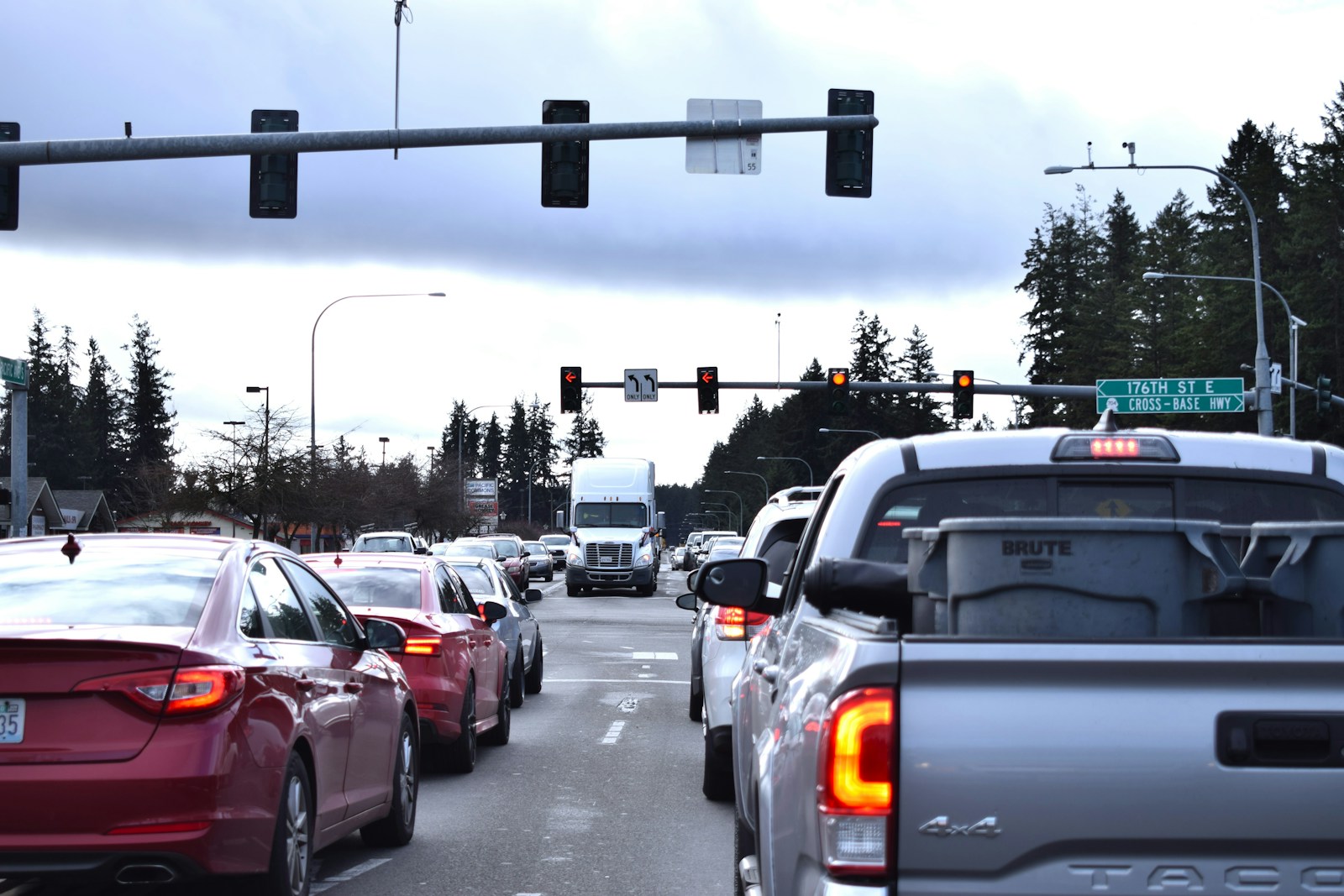

Traffic cameras are no longer a novelty reserved for a handful of big-city intersections. As of early 2026, automated enforcement programs are expanding rapidly across the United States, covering red lights, school zones, bus lanes, and school bus stop-arms. The penalties they carry are getting steeper, too. In several states and cities, a single camera-captured violation now triggers a flat fine of $250 or more, mailed directly to the vehicle’s registered owner with no police stop involved.
The expansion is driven by a combination of new state legislation, city-level pilot programs, and a financial model that uses fine revenue to fund further camera installations. For drivers, the practical effect is the same everywhere: if a camera records the violation, the ticket follows automatically.
California and New York lead the push
California’s Senate Bill 720, the Speed Safety System Pilot Program, was signed into law in 2024 and authorized up to six cities and counties to deploy automated speed enforcement cameras beginning in 2026. Los Angeles, San Francisco, San Jose, Oakland, Glendale, and Long Beach are among the jurisdictions moving forward with installations. Fines under the program are set on a sliding scale, but repeat offenders face escalating penalties that can reach $250 and beyond. The law includes income-based fine adjustments and prohibits the use of camera data for purposes other than traffic enforcement, provisions meant to address civil liberties concerns that have dogged earlier camera programs.
Still, compliance is far from universal. California has a long history of drivers ignoring mailed camera tickets, particularly so-called “snitch tickets” that are not filed with the court. Under California law, a red-light camera citation must be served by mail in a way that meets judicial requirements. Tickets that arrive as informal notices rather than formal citations carry no legal obligation to pay, a distinction that has led to widespread confusion and, according to reporting by the Los Angeles Times, thousands of unpaid notices statewide. SB 720’s architects have tried to close that gap by requiring proper service, but enforcement will depend on how rigorously each pilot city follows through.
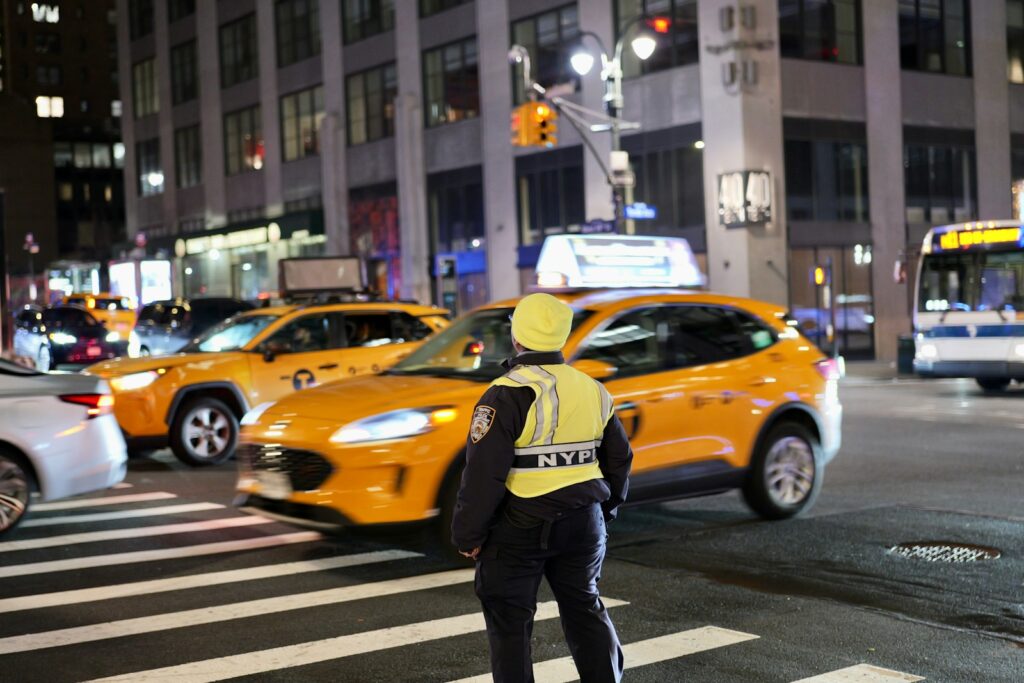
New York, meanwhile, already operates the largest automated traffic enforcement network in the country. In 2024, Governor Kathy Hochul signed a legislative package expanding red-light camera authority to additional municipalities, including Kingston, and extending the New York City speed camera program that covers school zones citywide. New York City’s Department of Transportation has outlined plans to add cameras at hundreds of additional intersections as part of its Vision Zero initiative. The city’s camera programs generated more than $900 million in fine revenue over a recent multi-year period, according to city budget documents, a figure that has made the system largely self-sustaining financially but has also drawn criticism from advocates who argue the fines fall disproportionately on lower-income drivers and communities of color.
School bus cameras and the $250 baseline
The $250 fine is becoming a common benchmark for one violation in particular: passing a stopped school bus. All 50 states prohibit drivers from passing a school bus that is displaying its stop arm and flashing red lights. What has changed is how that law gets enforced. A growing number of states and school districts are mounting cameras directly on bus stop-arms, allowing violations to be recorded and tickets mailed automatically without a police officer present.
Several states have set the camera-issued fine for a first offense at $250. In New York, the fine for passing a stopped school bus ranges from $250 to $400 for a first offense under Vehicle and Traffic Law §1174-a, and camera-equipped buses are now operating in dozens of districts. Other states, including Virginia, Maryland, and Georgia, have authorized similar stop-arm camera programs with fines in the same range. Because the ticket is issued to the vehicle’s registered owner rather than the driver, it typically does not carry license points, but the financial sting is immediate.
Bus lane enforcement is following the same pattern. New York’s Metropolitan Transportation Authority launched a camera-based bus lane enforcement program that issues fines starting at $50 for a first offense but escalating to $250 for repeat violations. The program is designed to keep bus lanes clear and improve transit speeds, but it has also become a significant revenue source, reinforcing the self-funding model that makes camera expansion politically attractive.
What happens if you ignore a camera ticket
The consequences of ignoring a camera-issued ticket vary by state, but in most jurisdictions, they escalate quickly. In Florida, red-light camera violations begin as a $158 Notice of Violation under Florida Statute §316.0083. If the registered owner does not pay or contest the notice within 60 days, it converts to a Uniform Traffic Citation carrying a $277 fine, plus court costs. Continued non-payment can result in a hold on vehicle registration renewal. Because the initial notice is treated as a non-criminal infraction with no points, some drivers assume it can be safely ignored. It cannot. The Florida Supreme Court upheld the constitutionality of the state’s red-light camera statute in 2018, and courts have consistently ruled that the registered owner is liable regardless of who was driving.
In California, the stakes depend on whether the citation was properly filed with the court. A formally served camera ticket that goes unanswered can result in a failure-to-appear charge, additional fines, and a civil assessment that can push the total past $800. In New York, unpaid camera violations can lead to booting or towing of the vehicle once a threshold number of tickets is reached.
Safety results and ongoing debate
Proponents of camera enforcement point to measurable safety gains. A 2017 study by the Insurance Institute for Highway Safety found that red-light cameras reduced the fatal red-light-running crash rate by 21% in large cities that used them. Speed cameras in school zones have shown similar results: New York City reported a significant reduction in speeding in camera-enforced school zones after the program launched in 2014.
Critics counter that many camera programs are structured primarily to generate revenue, not to improve safety. The National Motorists Association has long argued that extending yellow-light timing and improving intersection design would reduce violations more effectively than cameras. Civil liberties groups, including the ACLU, have raised concerns about surveillance creep and the lack of due process when tickets are issued to vehicle owners rather than identified drivers.
What is not in dispute is the trajectory. Automated enforcement is expanding, fines are climbing, and the $250 camera ticket is becoming a routine cost of a momentary lapse behind the wheel. Drivers who assume these tickets are optional are likely to find out otherwise when their registration renewal is blocked or a collections notice arrives in the mail.
More from Wilder Media Group: