

Drivers in several major U.S. cities are discovering new roadside cameras only after a ticket arrives in the mail, turning a routine commute into an expensive surprise. What looks like another piece of street furniture is, in reality, part of a fast‑spreading system of automated enforcement that can issue a fine the instant a car crosses a threshold.
As more jurisdictions lean on these devices to slow traffic and raise revenue, the financial shock is colliding with deeper questions about fairness, privacy, and who really benefits when enforcement moves from the patrol car to the algorithm.
The quiet rollout of “instant” enforcement
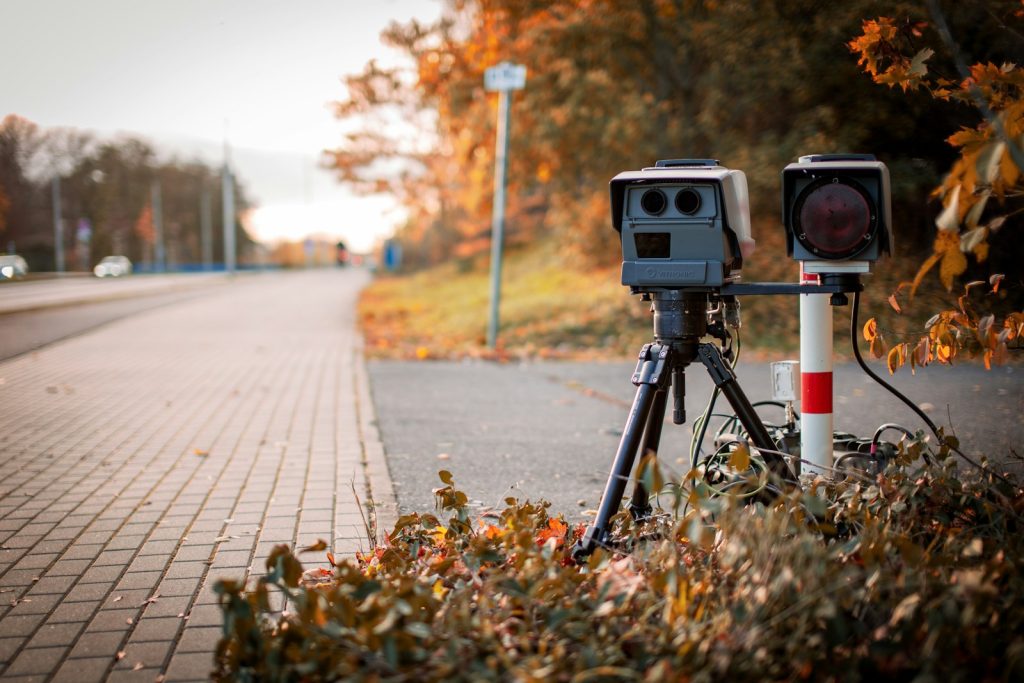
In many neighborhoods, the first sign that anything has changed is not a flashing light on the roadside but a notice in the mailbox. Cities are installing compact, pole‑mounted units that blend into existing infrastructure, so a driver may pass a new camera for weeks before realizing that every trip is being logged and scored. The promise from officials is simple: if the system detects a violation, it can generate an “instant” fine, with no need for a traffic stop or a court appearance.
That model is now central to how California and New York are trying to rein in speeding and red‑light running. In both states, local authorities are deploying automated systems that capture a vehicle’s plate, compare its speed to the posted limit, and trigger a penalty the moment the driver exceeds the threshold, a process described as instant fines when the system confirms a violation.
California’s AB‑645 and the new rules of the road
California has moved from pilot projects to formal enforcement, reshaping expectations for anyone who drives through participating cities. Earlier this year, the state began enforcing a law known as AB‑645, which authorizes automated speed cameras on selected corridors and in school zones. For drivers, that means a familiar stretch of asphalt can suddenly become a high‑stakes zone where a few miles per hour over the limit are no longer a warning from a trooper but a printed citation tied to a license plate.
The statute, referenced in coverage of California’s rollout as AB‑645, is part of a broader push to automate enforcement in dense urban areas where traditional policing has struggled to keep speeds down. Officials argue that fixed cameras can operate continuously, avoid the perception of bias in traffic stops, and free up officers for other work. For motorists, the practical effect is that a route driven for years without incident can start generating tickets as soon as the hardware goes live.
New York’s expanding camera network
New York has followed a similar path, steadily expanding its network of automated devices that monitor speed and red‑light compliance. In parts of New York City, cameras now operate around the clock, tracking vehicles that surge through school zones or race to beat a changing signal. The system is designed so that once a car is clocked above the legal limit, the violation is recorded and a fine is automatically processed, with no officer present at the scene.
State and city leaders frame this as a safety intervention aimed at corridors with a history of crashes, not a blanket surveillance grid. Yet for drivers who suddenly find their daily commute lined with new hardware, the distinction can feel academic. The cameras are calibrated to trigger penalties as soon as the driver exceeds the limit, mirroring the “instant” model that has taken hold in California and New, and the resulting tickets can stack up quickly if someone is unaware that enforcement has changed.
How the technology turns a snapshot into a fine
Behind each roadside unit is a chain of sensors, software, and databases that transforms a passing car into a data point and, if necessary, a penalty. Radar or lidar measures a vehicle’s speed, high‑resolution cameras capture the license plate, and onboard processors compare the reading to the posted limit. If the system detects a violation, it stores the images and data, then forwards them to a central platform that generates a citation tied to the registered owner.
Vendors pitch this as a near real‑time process, where the gap between a driver crossing a line and a fine being issued is measured in seconds rather than days. In jurisdictions that have embraced instant enforcement, the expectation is that once the driver exceeds the limit, the system can immediately log the offense and initiate the fine, a workflow that underpins the concept of instant penalties for automated traffic violations.
The financial shock for everyday drivers
For many motorists, the most jarring part of this shift is not the technology but the bill. A single ticket can be enough to disrupt a tight monthly budget, and the risk multiplies when a driver unknowingly passes the same camera several times a day. Because the systems operate continuously, someone who speeds on the way to work, at lunch, and on the drive home can collect multiple citations before the first notice even arrives.
That pattern is especially punishing for delivery workers, rideshare drivers in vehicles like a 2018 Toyota Camry or a 2020 Honda Civic, and parents shuttling children through school zones. The cameras do not distinguish between a hurried nurse finishing a night shift and a reckless street racer; they simply record when the driver exceeds the limit and trigger a fine. In states such as California and New York, where instant enforcement is now embedded in law and policy, the result is a steady stream of penalties that can feel less like a deterrent and more like a recurring bill.
Safety gains versus revenue dependence
Supporters of automated enforcement point to collision data and argue that the trade‑off is worth it. By placing cameras on corridors with a history of crashes, they say, cities can slow traffic, reduce severe injuries, and protect pedestrians and cyclists who have little defense against a speeding SUV. The logic is straightforward: if drivers know that a camera will issue a ticket the moment they cross a threshold, they are more likely to ease off the accelerator.
Critics counter that once a municipality begins to rely on these systems, the line between safety tool and revenue engine can blur. When instant fines are baked into budgets, there is a risk that policymakers will favor more cameras and stricter thresholds, even if the marginal safety benefit is small. In places where California’s AB‑645 framework and New York’s camera network are now entrenched, the tension between public safety goals and financial dependence is becoming a central part of the debate over how far automated enforcement should go.
Equity, privacy, and the feeling of being watched
Beyond the dollars, there is a growing unease about who bears the brunt of automated enforcement and how much data is being collected along the way. Cameras are often concentrated in dense urban neighborhoods, which can mean that lower‑income residents and communities of color see more tickets than drivers in wealthier, less monitored suburbs. Because the systems are tied to license plates rather than individual behavior, the registered owner can be penalized even when someone else is behind the wheel.
Privacy advocates also warn that a network built to issue instant fines can easily double as a tool for tracking movement. Each time a car passes a camera, the system logs its presence, creating a trail of time‑stamped images and location data. In states like California and New York, where the infrastructure for instant enforcement is expanding, the question is not only how fairly the fines are distributed but also how long that information is stored and who can access it beyond traffic officials.
How drivers are adapting, from apps to dashboards
Faced with the risk of surprise tickets, drivers are turning to technology of their own. Navigation apps such as Waze and Google Maps now crowdsource the locations of speed and red‑light cameras, pinging users when they approach a known enforcement zone. Some late‑model vehicles, including recent versions of the Subaru Outback and Ford F‑150, integrate speed‑limit recognition and audible alerts directly into the dashboard, nudging drivers to slow down before a camera does it for them.
These tools do not eliminate the risk of a fine, especially when new cameras appear without much public notice, but they can soften the blow. In regions where instant enforcement is tied to laws like AB‑645 or to citywide programs in New York, drivers who combine real‑time alerts with more cautious habits are better positioned to avoid the cascade of penalties that can follow a single overlooked sign or an unfamiliar stretch of road.
What accountability looks like for automated systems
As the hardware spreads, the question of who is accountable when something goes wrong is becoming harder to ignore. If a camera is miscalibrated, a sign is obscured, or a software update introduces an error, thousands of drivers can be affected before anyone notices. Unlike a roadside stop, where an officer exercises discretion, automated systems apply the same rule to every passing vehicle, which makes transparency about how they are configured and audited all the more important.
Some advocates are calling for independent oversight boards, clear public maps of camera locations, and simple processes for contesting tickets that appear to be based on faulty readings. In states that have embraced instant fines, including California and New York, the legitimacy of the entire model may hinge on whether drivers feel they have a fair chance to challenge the technology that now watches over their daily routes.
More from Wilder Media Group: