
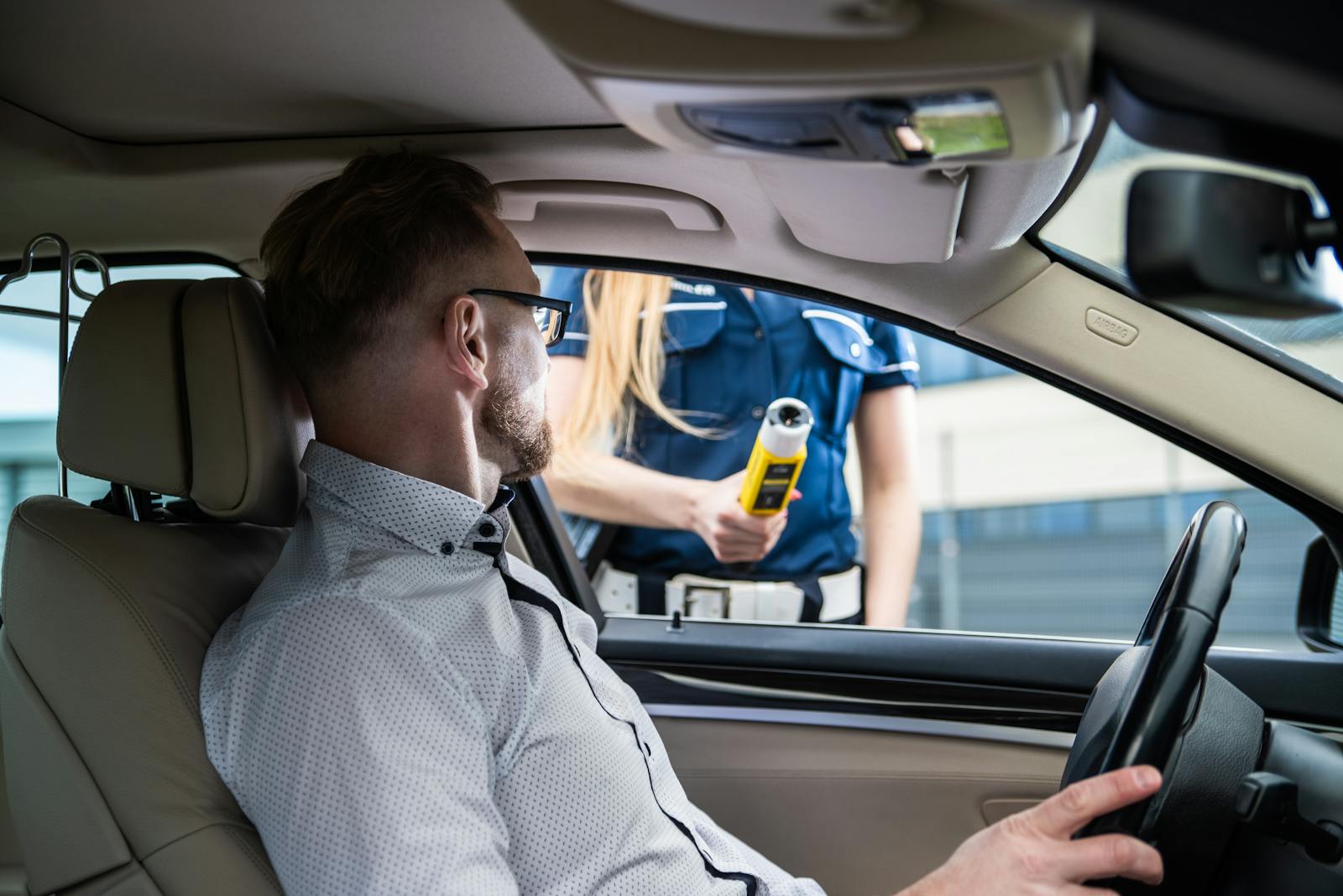

Older motorists in the UK are being told they may soon need to prove their eyesight is good enough to stay behind the wheel. Proposals for mandatory vision checks target drivers over 70, with ministers arguing that routine tests could cut collisions without stripping people of their independence. The debate now centres on how far the state should go in policing age related risk on the roads.
The emerging policy mix combines public health aims with a hard look at crash statistics, and it is already provoking strong reactions from drivers and medical groups. Supporters see a straightforward safety measure, while critics fear a creeping age cut off that could push thousands of competent older drivers off the road.
What the government is consulting on
The Department for Transport has opened a formal consultation on introducing mandatory eyesight testing for older drivers, presented as part of a broader effort to reduce serious collisions. In Great Britain, the entitlement to drive currently expires at the age of 70, and once drivers reach 70 years of age they must renew their licence every three years through a self declaration of fitness, with no requirement to produce clinical evidence of vision. The consultation signals that ministers are considering a move away from this self reporting model toward a system in which proof of an eye examination would be tied to licence renewal.
The official paper explains that the consultation is seeking views on how often older motorists should be tested and whether eyesight checks should sit alongside other measures such as cognitive assessments or medical reviews. It highlights the potential for mandatory eye examinations to pick up undiagnosed conditions as well as to confirm that drivers meet the legal standard to read a number plate at the prescribed distance. The document, published in Jan, is presented by Department for Transport as a chance for clinicians, road safety groups and older people to shape the final design.
Why attention is fixed on drivers over 70

Ministers and campaigners are focusing on the point at which eyesight and other age related changes become more common, which is why the age of 70 features so prominently in the current debate. In Great Britain, the law already treats 70 as a threshold by requiring licence renewal at that point, and the consultation explicitly notes that entitlement to drive expires at that age unless renewed. One version of the government plan would require a vision test at each renewal, effectively creating a three year cycle of checks from 70 onwards.
Earlier reporting on the proposals indicates that drivers over the age of 70 will have to have their vision checked every three years if the preferred model is adopted. Coverage of the policy has stressed that such checks could help with early diagnosis of other underlying conditions, not just eyesight problems, by steering older motorists into regular contact with optometrists. A detailed briefing from the Association of Optometrists argues that mandatory eyesight tests for older drivers could be integrated into existing community optometry services, and that this would support both road safety and eye health. That position paper from the Association of Optometrists, accessible via the organisation’s London address on Discovered maps, underpins the policy briefing that calls for a structured regime rather than ad hoc checks.
Safety arguments and public support
Road safety statistics are central to the case for change. One analysis cited in regional coverage reports that over 70s are involved in one in four driver fatalities, a figure that has sharpened calls for targeted interventions at older age bands. Legal commentators examining the Government’s new road safety strategy describe mandatory eyesight testing for drivers as one of several measures grouped under a theme titled Supporting Road Users, which aims to prevent collisions before they occur. Within that theme, statistics are used to argue that improving vision standards among older drivers could reduce serious injuries while still allowing people to have their mobility and independence.
Charities focused on eye disease have also entered the debate. The Macular Disease Society has promoted a Consultation for compulsory eye tests for drivers over 70, presenting the policy as a way to support road safety and improve the nation’s eye health at the same time. In its campaign material, the organisation explains that routine checks around 70 can catch macular degeneration and other conditions before they cause sudden loss of vision, which in turn can make the UK’s roads safer. Its call for responses to the Consultation for compulsory tests frames the proposals as a public health opportunity rather than simply a driving rule change.
Concerns about ageism and licence bans
The prospect of extra checks has triggered a backlash among some older drivers who see the policy as a step toward blanket age based restrictions. A widely shared discussion on a car enthusiast forum highlighted a headline suggesting that drivers over 70 could be banned from roads in 2026, with contributors warning that new checks were “likely” to be followed by tougher measures. Within that thread, users debated whether a requirement to renew a driving licence every three years at 70 with medical evidence would effectively push marginal drivers out by default. The conversation, captured under the heading Drivers over 70 could be banned from roads in 2026 (UK), reflects a fear that bureaucratic hurdles might matter as much as actual eyesight standards.
Some commentators have also questioned whether focusing on a single age threshold is fair given that poor eyesight can affect younger motorists too. A briefing from the House of Commons Library on driving licences for the over 70s asks directly, “Is the government going to change driving licence rules for the over-70s?”, and notes that earlier reviews suggested there may be scope to refine medical fitness rules without relying solely on age. That research, which looks at driving with a medical condition alongside age based rules, feeds into a wider conversation about proportionality. For now, the official consultation stresses that the aim is to improve safety rather than to ban older motorists, but scepticism remains among those who have followed debates about older drivers for years.
How the changes would work in practice
Practical questions about implementation are already being raised by fleet operators, insurers and optometrists. A detailed industry note titled Mandatory Eye Tests for Drivers Over 70: Compliance and Risk Implications for Fleet Managers sets out how employers that rely on older drivers would need to adapt. It explains that The UK currently relies on drivers to self declare medical conditions, and that a mandatory eyesight test regime would shift some of that responsibility onto formal assessments. For companies that employ older delivery drivers or sales staff, the briefing argues that tracking compliance with regular vision checks would become a key part of managing road risk.
Public service information has started to sketch what a new testing pattern could look like. Reporting on the proposals states that drivers over 70 will have to have their vision checked every three years, aligning the test cycle with the existing licence renewal timetable. Coverage of the policy notes that regular eye examinations could help with diagnosis of other underlying conditions, since optometrists often pick up signs of diabetes, high blood pressure or neurological issues. A feature on the subject explains that drivers would likely book appointments with local practices, receive documentation confirming that they meet the standard, and then submit that proof as part of their renewal. That reporting, which sets out how Drivers over 70 might navigate the system, is already being used by motoring groups to brief their members.
More from Wilder Media Group: