

Public charging stations were supposed to make electric driving feel futuristic and easy. Instead, a growing number of drivers say the real headache is not the hardware, it is the behavior of the people plugged into it. From line‑cutting to cable snatching, EV charging etiquette has turned into a running argument in parking lots and group chats.
What started as a few unwritten rules is hardening into a culture war over what is polite, what is selfish, and who gets to decide. As more first‑time owners roll up to fast chargers with little guidance, the gap between expectations and reality is getting wider, and the stories coming out of these stations are getting a lot more heated.
The new battleground in the parking lot
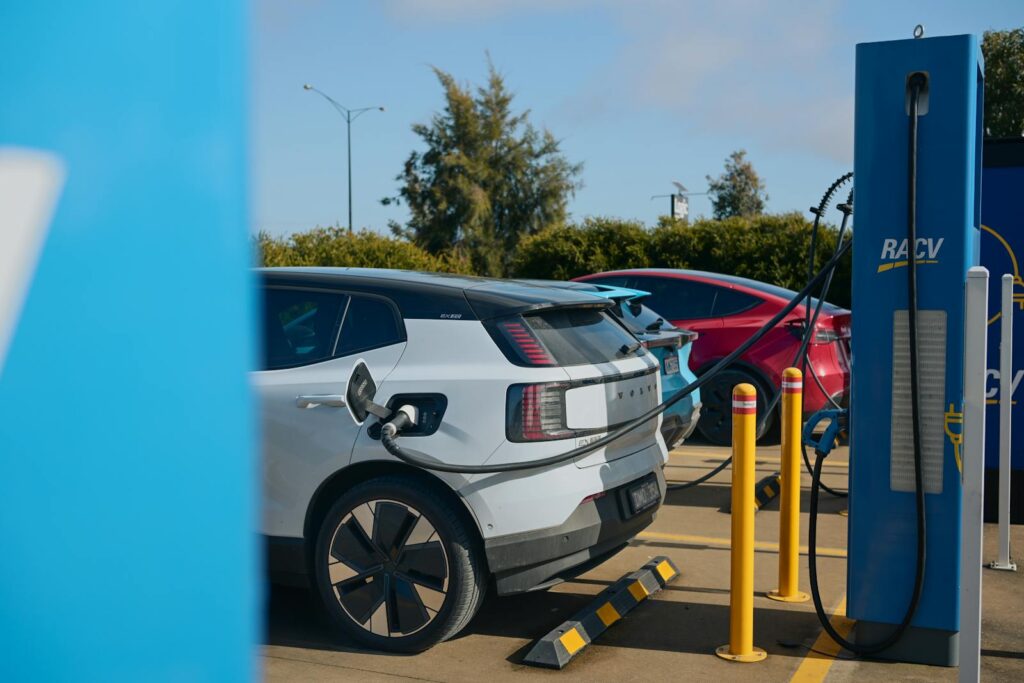
Ask regular EV drivers where the tension starts and they will usually point to the same thing: limited plugs and unlimited opinions. At busy sites, one person lingering at a charger can throw off everyone else’s plans, which is why drivers and experts keep repeating the same basic plea, if you are done charging, move the car. In one segment on public behavior, a driver named Martineau put it bluntly, shouting, “If you are done charging, move the car. Move the car,” as a kind of unofficial motto for shared infrastructure, while others around him stressed that the only real rule is to be courteous to the next person in line, a point that has led some operators to add idle fees once a session is complete to nudge people along, as described in idle fees.
Those unwritten rules are starting to sound a lot like traffic laws, even if they are not printed on a sign. Reporter ByChad Pradelli captured drivers comparing the scene to a kind of social experiment, with one unidentified driver explaining that, just like on the road, everyone is relying on each other to act predictably and not treat the charger as a personal parking space, a sentiment that has turned “just be decent” into the closest thing EV owners have to a constitution, as reflected in Pradelli.
What “good manners” actually look like at a charger
For drivers trying to do the right thing, the first hurdle is surprisingly basic, parking in the right spot. Guides on public behavior spell out that when someone pulls into a station, they should park at the correct plug for their vehicle, instead of stretching a cable across other bays or blocking a connector they cannot even use, advice that shows up in detailed Charging Etiquette Tips that walk through how to match a car to the right connector.
Beyond the parking geometry, the golden rule still applies. Drivers are told to be considerate, to remember that someone else may be counting on that same plug to get home, and not to leave others hanging by camping out long after the battery is topped up, a point hammered home in advice that reminds You that most modern apps show real‑time charging progress so there is no excuse for pretending not to know when a session is finished, as laid out in guidance that tells You to keep an eye on the app.
The rise of the “charger hog” villain
If there is one behavior that unites frustrated EV owners, it is Hogging the Charger Beyond Full Charge. Etiquette breakdowns list Leaving a car plugged in long after it is fully charged as the top complaint at public stations, describing it as a major breach of etiquette that turns a shared resource into a private parking spot and forces everyone else to wait for no good reason, a pattern called out explicitly in lists of Hogging the Charger.
The same warning is repeated again and again, Leaving a vehicle on the plug after the battery is full is not just mildly annoying, it is framed as a major breach of etiquette that poisons the mood at already crowded sites and turns simple top‑ups into simmering standoffs, a theme that shows up twice in breakdowns of the ten habits that annoy neighbors, where Leaving is singled out as the cardinal sin.
Planning, lines, and the “don’t be that person” rule
Because public chargers are still outnumbered by gas pumps, a little planning goes a long way. Advice aimed at new owners boils down to two big ideas, do not be That Person at Your Next Charging Stop, and Plan Ahead Whenever Possibl so that a road trip does not turn into a scramble for the last open plug, guidance that shows up in detailed Charging Etiquette that treats route planning as part of basic manners.
Those same guides remind drivers that the etiquette starts before they even park, from checking which stalls match their connector to lining up in an orderly queue instead of blocking the driveway, and they repeat the message in multiple sections on Tips for Public Charging that tell people not to be That Person at Your Next Charging Stop and to Plan Ahead Whenever Possibl so the whole system does not grind to a halt, advice that is echoed again in another rundown of Tips for Public.
“Please don’t let it sit”: what drivers tell each other
While official guides try to stay polite, peer‑to‑peer advice is a little more blunt. In one popular thread, a commenter responding to a New EV owner with a dumb question about public charging simply wrote, Please dont let it sit when charging is done, before going on to describe how often they arrive to find every stall taken by cars that are no longer drawing power, a frustration summed up by another line that starts with Unfortunately and then explains that EV charging parking stalls are used as free parking by people who never moved after their session ended, as captured in the Comments Section.
That mix of Please and Unfortunately has become the unofficial tone of EV forums, a blend of pleading and exasperation aimed at people who may not even realize they are causing a problem. Seasoned owners swap tips on setting phone alarms, watching the car’s app, and leaving notes on the dash with their return time, all in the hope that a little communication can keep a simple top‑up from turning into a parking lot argument.
When inconsiderate behavior crosses the line
Of course, some stories go way beyond mild rudeness. In one account shared from the NY and NJ area, a driver described seeing a ticket on a car and reacting with, Now that is a fine! And US$ too, after enforcement officers cracked down on someone abusing the rules At the EA chargers in flagstaff AZ today, only for the same witness to add, Unfortunately, I also saw possibly the worst charging etiquette, describing a scene where a driver ignored the line and tied up a fast charger even though their are other chargers available, a snapshot of how quickly tempers flare when people feel the system is being gamed, as detailed in a post that starts with Now.
Other drivers describe even more direct confrontations. One EV owner wrote that Today, while charging my EV at a public charging station, the owner of another car unplugged my vehicle mid‑charge to plug in their own, a move that left them stunned and sparked a wider conversation about how people need to treat each other with respect when sharing limited infrastructure, a story that has been cited as one of several uncomfortable truths about public EV charging and is captured in a post that opens with the word Today.
Operators step in with rules, fees, and “commandments”
Charging companies are not just watching this drama from the sidelines, they are rewriting the rulebook. Electrify America, one of America’s biggest charging companies, has started experimenting with new ways to deal with charger hogs who make it difficult and unpleasant to travel in an EV, including stricter time limits and pricing that ramps up if a car sits too long after the battery is full, a strategy described in coverage of how Electrify America is clamping down.
Some networks are also publishing their own versions of the Ten Commandments for chargers. One guide on Rapid charging etiquette spells out that drivers should not block the bay with an internal combustion engine vehicle, comparing it to finding your driveway blocked, and folds that into a broader list called The 5 Chargepoint Commandments that cover everything from not overstaying to leaving the cable neatly coiled for the next person, a codified set of norms laid out in a section labeled 5 Chargepoint Commandments.
Simple habits that would fix half the drama
Strip away the horror stories and most etiquette advice comes down to a few simple habits. One popular checklist starts with Move Vehicle When Finished Charging and explains that Once the EV is charged, the driver should simply unplug and relocate so someone else can use the spot, treating the charger like a fuel pump instead of a parking space, a point that is spelled out clearly in a guide that opens with the word Here.
Another set of Dos and Don’ts spells it out even more bluntly, What is the Etiquette for Charging EVs, it starts, before warning, Don’t Occupy the Charging Position When Not Charging and calling out Leaving an EV parked at a charging bay without drawing power as a clear violation of shared norms, a message that is repeated in a section labeled What that compares bad charging manners to blocking a gas pump and walking away.
Why etiquette feels “out of control” right now
Part of the reason drivers say etiquette has spiraled is that the culture is still catching up to the technology. Public charging etiquette guides published by motoring groups now promise to walk people through the key practices that make the experience smooth and stress‑free for everyone, from Get set up before you arrive with the right apps and payment methods to leaving the cable ready for whoever is charging next, a set of norms laid out in a resource that starts with the word Jan and is echoed again in another version that highlights the need to Get everything ready before pulling in so the driver is not fumbling with accounts while blocking a bay, as described in a second rundown that emphasizes the word Get.
At the same time, etiquette lists from car sites and charging companies keep multiplying, from Charging Etiquette Tips that tell drivers to Park at the right plug and not leave others hanging, to reminders that You can monitor your real‑time charging progress on an app, to broader advice on Charging Etiquette and Tips for Public Charging that urge people not to be That Person at Your Next Charging Stop and to Plan Ahead Whenever Possibl, all of which underline how much of this conflict could be defused if drivers simply followed the shared playbook laid out in resources like the Charging Etiquette Tips and the reminder that Be considerate is still the baseline.
More from Wilder Media Group: