

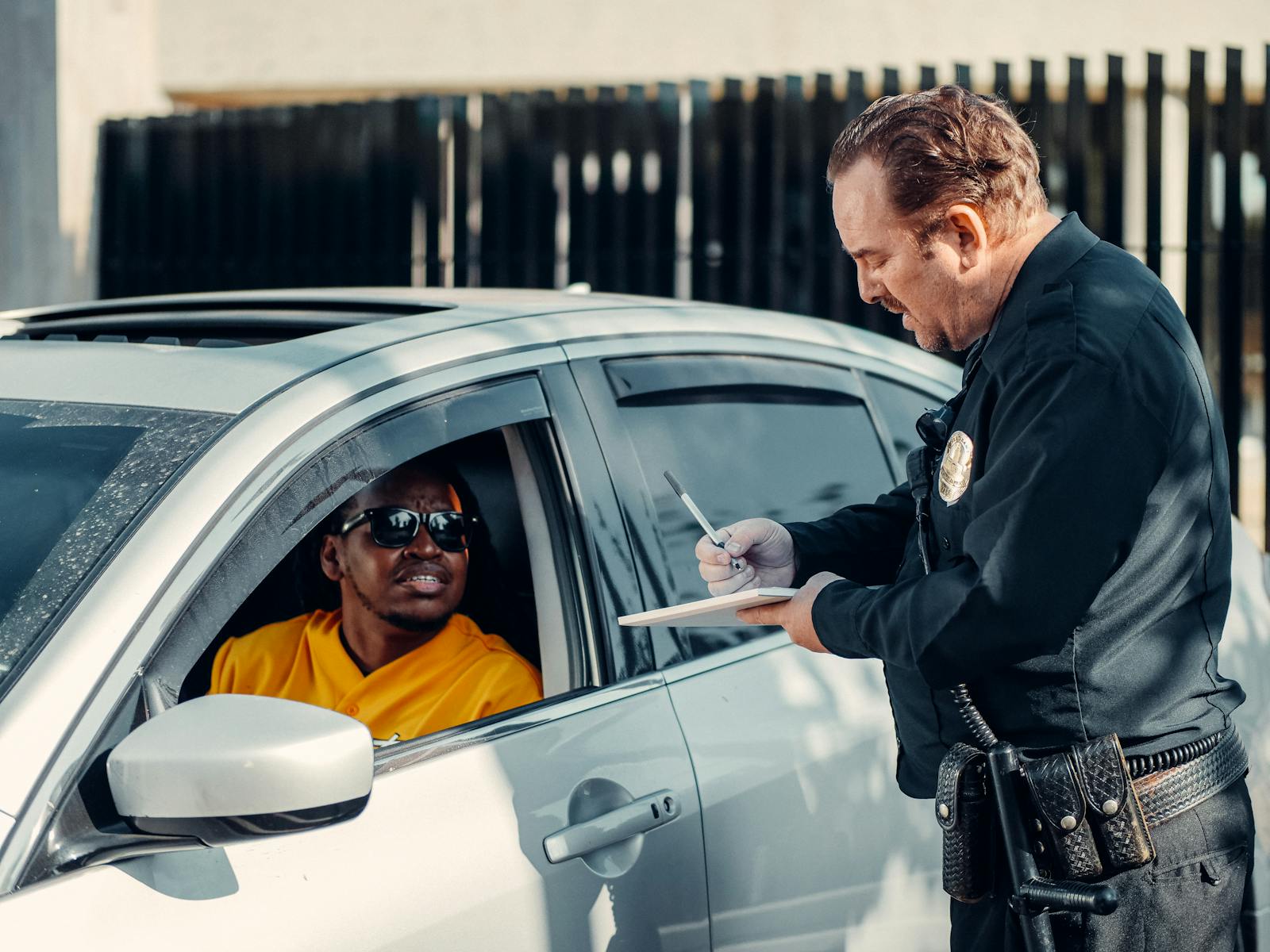
Across the United States, drivers are discovering that the rules of the road have shifted under their wheels. A wave of new and tougher traffic laws is turning once casual habits into costly violations, often before motorists realize anything has changed. From stricter phone rules to camera enforcement and expanded “move over” requirements, many of those being ticketed say they had no idea their everyday behavior had quietly become illegal.
The confusion is colliding with an aggressive push by states to curb crashes and recalibrate driving culture. Lawmakers and safety advocates argue that the new penalties are necessary to save lives, while frustrated drivers insist they are being blindsided by complex, fast‑moving changes. The result is a growing tension between public safety goals and the basic expectation that people should clearly understand the laws they are expected to follow.
From Warnings To Zero Tolerance On Phones
For years, many states treated phone use behind the wheel as a bad habit that might earn a warning, not an automatic ticket. That era is ending. Nationally, the grace periods that once gave drivers time to adjust to hands‑free rules have largely expired, and officers are shifting to full enforcement of bans on holding or even touching a device while driving. Reporting on Big changes in enforcement describes how “Hands Free Driving Laws Are More Strictly Enforced,” turning what some drivers saw as a gray area into a bright red line.
That shift is especially jarring in places where the law now treats almost any manual interaction with a phone as a violation. One set of Seven new rules highlights a “touch” standard that penalizes drivers simply for handling a cellphone in the car, even briefly. Many motorists who grew used to tapping a navigation app at red lights or scrolling playlists in traffic now find that the same gestures can trigger a stop, a fine, and points on their record, feeding the sense that they are being punished for behavior they never realized had crossed a legal line.
Missouri’s Hands‑Free Crackdown Shows The New Reality
The experience in Missouri illustrates how quickly a new rule can reshape daily driving. When the state’s hands‑free law took effect, it did not remain a symbolic measure. Local reporting shows that Missouri agencies began writing significant numbers of citations in 2025, with police departments and sheriff’s offices across the state actively enforcing the ban.
Many of those stopped say they assumed the law would be enforced lightly at first, or that a quick glance at a text would not count. Instead, the data compiled by KSHB 41 News shows that enforcement ramped up quickly, signaling that officers were not treating the statute as optional. For drivers who had not followed the legislative debate, the first real notice that the rules had changed came in the form of a citation and a court date.
National Traffic Law Trends Leave Little Room For Error
Missouri is not an outlier. Across the country, a pattern of tougher rules and stricter enforcement is emerging, and it is catching inattentive drivers off guard. A review of National Traffic Law in 2026 notes that “Hands Free Driving Laws Are More Strictly Enforced” and that by this year the grace periods for hands‑free statutes have ended in many states. What began as education campaigns and warnings has hardened into primary enforcement, where simply seeing a phone in a driver’s hand can justify a stop.
Insurance and risk analysts are watching the same shift. Coverage of Previously secondary offenses becoming primary notes that by 2026, the grace periods for hands‑free laws have largely expired and that states are increasingly using automated tools, such as cameras installed at high‑risk locations, to monitor compliance. For drivers who still think of phone tickets as rare or discretionary, the new reality is that violations are easier to detect, harder to contest, and more likely to feed directly into how insurers judge a driver’s risk profile.
“Touch” Rules And Red‑Light Changes Confuse Everyday Drivers
Beyond the broad push for hands‑free driving, some of the most confusing changes are buried in the fine print of state codes. One package of NEW traffic laws highlights how a simple “touch” of a cellphone can now be enough to trigger a violation, even if the driver is stopped at a light. The same set of rules describes a “huge change” to how red lights are treated, tightening expectations around full stops and right turns on red in certain zones.
In Maryland, for example, the new framework means drivers can be cited for phone use in a school or construction zone, with penalties that escalate as offenses rack up to $300, according to the Maryland provisions. Drivers who long relied on quick glances at their screens in low‑speed areas now find that the most heavily monitored stretches of road are also the least forgiving, and many say they only learned about the new limits after a stop in a school drop‑off lane or a work zone bottleneck.
Automated Cameras Turn Minor Mistakes Into Costly Tickets
At the same time, technology is changing who, or what, is doing the ticketing. Automated enforcement systems that once focused on red‑light runners are expanding to cover speed and phone violations, and they are doing so with little room for human discretion. Coverage of cameras notes that being caught by automated systems for speeding or running red lights can now lead to higher fines, especially in high‑speed corridors where violations are treated as particularly dangerous.
Insurance analysts warn that by 2026, the spread of these systems means more drivers will receive tickets in the mail for behavior they did not realize had been recorded. A separate review of By 2026 enforcement trends notes that cameras are increasingly installed at locations with high crash rates, turning those stretches into zones where even small lapses can generate automated citations. For drivers, the sense of being watched by unseen systems, combined with complex new rules, feeds the perception that they are being set up to fail.
State‑By‑State Patches: California, Georgia And Iowa Raise The Stakes
Layered on top of national trends are state‑specific changes that can catch out‑of‑state drivers by surprise. In California, Assembly Bill 390 expands the familiar “slow down, move over” rule, requiring drivers to change lanes or slow when approaching any stationary vehicle with hazard lights, not just police or tow trucks. A review of the law notes that the goal is to reduce crashes that are “often serious for everyone involved,” but it also means that a driver who fails to shift lanes for a stranded car on the shoulder can now face a ticket.
Other states are tightening different parts of the code. In Georgia, drivers are being told that if they operate a car, truck, or other vehicle, they need to understand what new laws took effect on July 1 and how those rules will be enforced “As of Ju” that date. In the Midwest, a proposal in Iowa would suspend a driver’s License for 30 days if they are caught Speeding over 100 mph, a measure that has already cleared a Senate committee for further consideration in DES MOINES. For travelers crossing state lines, the patchwork of rules means that what is legal on one side of a border can lead to a suspension or hefty fine on the other.
Grassroots Warnings And Viral Posts Fill The Information Gap
As official outreach struggles to keep pace with the volume of new rules, some of the loudest warnings are coming from grassroots channels. In Pennsylvania, a viral post from CHANNEL 5 RATCHET NEWS ™ urges residents to “Save The Date” and “Mark Your Calendar Reminder” for the start of “Paul Miller’s Law,” which the post says went into effect on June 5, 2025. The tone is part public‑service announcement, part social‑media meme, reflecting both the seriousness of the change and the informal way many drivers now learn about it.
These community alerts often spread faster than official notices, but they can also add to the confusion. The same viral post warns that “most people are still ignoring this new law” and that “tickets will be coming,” without always spelling out the exact behavior that is prohibited. For drivers who rely on friends’ feeds instead of state websites, the result can be a hazy sense that something has changed, but not enough detail to avoid a stop. The reliance on social channels underscores how many motorists feel disconnected from the formal process of traffic lawmaking, even as violations become more expensive.
Insurance, Risk And The Hidden Cost Of A Single Ticket
Behind every citation is a second, quieter penalty: the impact on insurance and long‑term risk scoring. Analysts tracking National Traffic Law in 2026 note that by this year, the grace periods for hands‑free laws have ended and that insurers are increasingly using violations, including camera‑based tickets, to judge a driver’s risk profile. A single distracted‑driving citation can now ripple through premium calculations for years, especially when combined with speeding or red‑light offenses.
Consumer‑facing guides on What Drivers Need to Know about Stricter Distracted Driving warn that tougher rules on phones and speed limits in many states are not just about roadside fines. They also feed into telematics programs and risk models that can raise costs even for drivers who avoid crashes. For motorists who say they never realized a quick tap on a screen or a few miles per hour over the limit had become a serious offense, the financial shock often arrives months later, in the form of a renewal notice.
Why Lawmakers Say The Crackdown Is Worth It
Officials and safety advocates counter that the confusion and complaints are the price of confronting a stubborn safety crisis. Coverage of New driving laws in 2025 notes that Drivers across the United States are being asked to adjust to a slew of new rules that take effect in 202, including tougher penalties for scrolling on phones and changes to safety inspections in Texas. The argument is that without sharper consequences, entrenched habits will not change and crash numbers will not fall.
National analyses of National Traffic Law and Being caught by cameras emphasize that “Hands Free Driving Laws Are More Strictly Enforced” because distracted driving and high‑speed corridor violations have proved resistant to softer approaches. In that context, measures like Iowa’s proposed 30‑day suspension for triple‑digit speeds, California’s expanded AB 390 move‑over rule, and Maryland’s $300 phone fines are framed as necessary corrections, not overreach. For drivers who feel blindsided, the challenge now is to catch up with a rulebook that is changing faster than many expected, and to recognize that the cost of not knowing the law is rising with every new statute that takes effect.
More from Wilder Media Group: