


Ever pulled up to a pump and paused, guessing which side the filler sits on? That tiny arrow next to the fuel gauge points to the side of the car where the gas cap lives, saving time and awkward maneuvers at the station.
This piece will unpack how such a small dashboard detail became a universal convenience and tell the straightforward story behind the design that led most manufacturers to adopt it. Expect a quick look at the arrow’s purpose, how it works across different cars, and the practical origin story that made the feature common.
The Secret Behind The Fuel Gauge Arrow
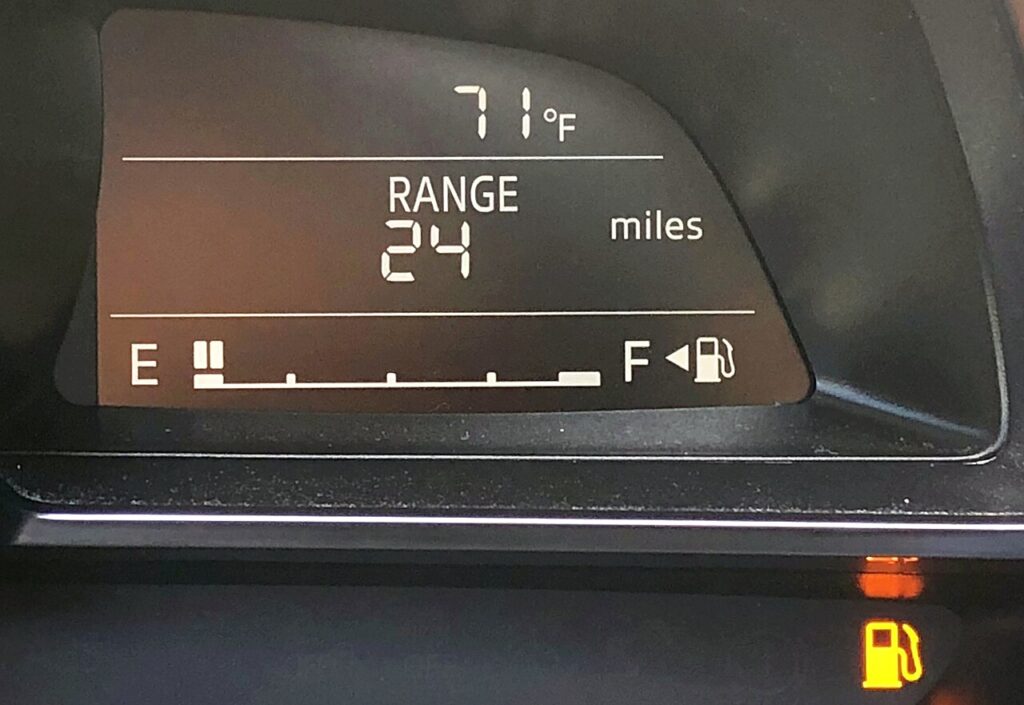
The tiny arrow points to the side of the car with the fuel filler door and saves drivers a trip around the vehicle. It appears on the fuel gauge as a small chevron or triangle and is now a near-universal dashboard cue.
How The Fuel Gauge Arrow Works
The arrow sits next to the fuel icon on the instrument cluster and points left or right to indicate which side the fuel filler door and gas cap are on. It ties directly to vehicle design data, not to fuel level or sensor signals, so its position is fixed for each model rather than changing while driving.
Manufacturers place the arrow during instrument-cluster design, and it’s hardwired or set in the gauge graphics. In many modern cars the arrow is part of the digital display; in older cars it was printed on the gauge face, like on some 1980s models. That makes it consistent across trims and years for a given model, so a 1989 Ford Escort owner would see the same indicator placement every time.
Why Most Drivers Miss This Detail
The arrow is small and blends with other icons, so many drivers never notice it until they’re at a pump. Drivers also focus on the fuel-percentage readout or the low-fuel warning light and skip the tiny directional cue. Cognitive load plays a role: people arrive at stations distracted or hurried, reducing attention to small dashboard details.
Carmakers assumed the cue would be obvious enough over repeated use, so they didn’t highlight it in owner manuals or marketing. That omission means a perfectly simple feature stays invisible until someone points it out. Social media and viral pieces have been the main way many discover the arrow’s purpose.
First Cars To Feature The Arrow
The practice of marking fuel-door side evolved gradually; some early manufacturers used physical cues on gauges. Ford popularized a standardized small arrow concept after an employee submitted the idea, and it spread across brands as dashboards modernized. Historical examples point to late-20th-century models adopting the printed arrow on analog gauges.
Some niche models, like certain Mercury vehicles and other contemporaries, used variations—a red triangle or small text—so drivers of older cars such as a Mercury Tracer might remember a differently styled indicator. Adoption accelerated as dashboards moved to modular designs, making it easy for OEMs to include the arrow in cluster artwork or digital layouts.
Common Myths About Gas Tank Location
Myth: The arrow moves with steering or fuel level. Fact: it’s static for the vehicle model and does not change while driving. Myth: the arrow always points toward the nearest gas station pump. Fact: it only shows the side of the car with the filler door.
Another myth claims older models like the 1989 Ford Escort lacked the arrow; some pre-arrow cars exist, but many late-1980s and early-1990s cars already had printed indicators. Misconceptions persist because styling varied—some gauges used small triangles, others used text—so owners misremember whether an arrow appeared on their specific vehicle.
The Story Of The Moylan Arrow
A simple visual tweak on the fuel gauge fixed a small, common driving frustration and quietly spread across the industry. The story tracks one designer’s memo, rapid adoption within a major automaker, and the feature’s slow migration into nearly every make and model.
How James Moylan Invented The Arrow
James Moylan worked in Ford’s interior trim design group in Detroit when he hit the problem that sparked the idea. He stopped to refuel a company car in poor weather, realized the pump was on the opposite side, and had to reposition the vehicle. That inconvenience prompted him to write a short product-convenience suggestion memo proposing an indicator next to the fuel gauge that shows which side the fuel filler is on.
Moylan’s early sketch showed an overhead car icon pointing to the fill door; Ford designers simplified it to a small arrow beside the fuel pump symbol. He didn’t seek credit, and his name only surfaced publicly years later after company archivists digitized the memo and journalists highlighted the backstory.
How The Feature Became Standard
Ford first put the indicator into production in the late 1980s and early 1990s on models such as the Escort and later across its lineup. Managers and production engineers liked the change because it required minimal retooling of instrument clusters while improving driver convenience. The low cost and clear utility made it easy to include on more trims.
Competitors took notice. As automakers compared instrument-cluster features, the arrow migrated from Ford to other manufacturers’ dashboards. Industry writeups and obituaries credit Moylan, and the design’s inclusion in press cars and rentals helped make it a de facto standard for buyers and fleets.
Evolution Into Modern Cars
The original arrow stayed visually similar but moved into digital clusters and infotainment displays as dashboards modernized. On analog gauges it appears as a static arrow; on digital screens manufacturers can show dynamic icons that change with vehicle settings or fuel warnings. Some brands pair the arrow with schematic graphics that highlight the side in more detail.
Manufacturers also integrated the indicator into low-fuel alerts and trip-planning software. Navigation and fuel-station search apps sometimes reference the vehicle’s fuel-door side when routing or suggesting pumps that accommodate large vehicles, reducing the chance drivers pull up wrong even in unfamiliar cars.
Real-World Benefits And Everyday Scenarios
The indicator reduces awkward stops at pumps and prevents wasted time during quick fill-ups, especially in poor weather or on busy forecourts. Rental-car drivers, ride-share drivers, and people switching between multiple vehicles report the most direct benefit. It also helps newcomers who rent or borrow cars abroad where conventions differ.
Beyond convenience, the arrow lowers minor safety risks: fewer awkward maneuvers in tight stations and fewer vehicle repositionings in traffic. Fleet managers note the small feature saves cumulative time across many drivers, and service advisors use it as a quick tip when briefing rental customers or loaner-car users.
Relevant reading about Moylan’s memo and its spread is available from automotive outlets that detail his role at Ford and the arrow’s adoption, including coverage by Autoweek and The Drive.
More from Steel Horse Rides: