

Across the country, drivers are learning the hard way that the unremarkable pole at the side of the road is not just another traffic camera. What looks like routine infrastructure is quietly reshaping how speeding is policed, how tickets are issued and how much money flows from motorists into city and state coffers. The surprise does not end with the envelope in the mail, it continues as drivers discover how automated enforcement, fine structures and even malfunctioning signs can turn a single moment behind the wheel into a costly ordeal.
As more cities lean on radar and camera systems instead of in‑person traffic stops, the stakes are rising for anyone who misreads a speed limit or misses a flashing school zone light. The technology promises safer streets, but it also raises questions about fairness, transparency and the true price of a ticket that starts as a simple notice and ends as a stack of fees that have little to do with the original infraction.
The day a “normal” camera became a ticket machine
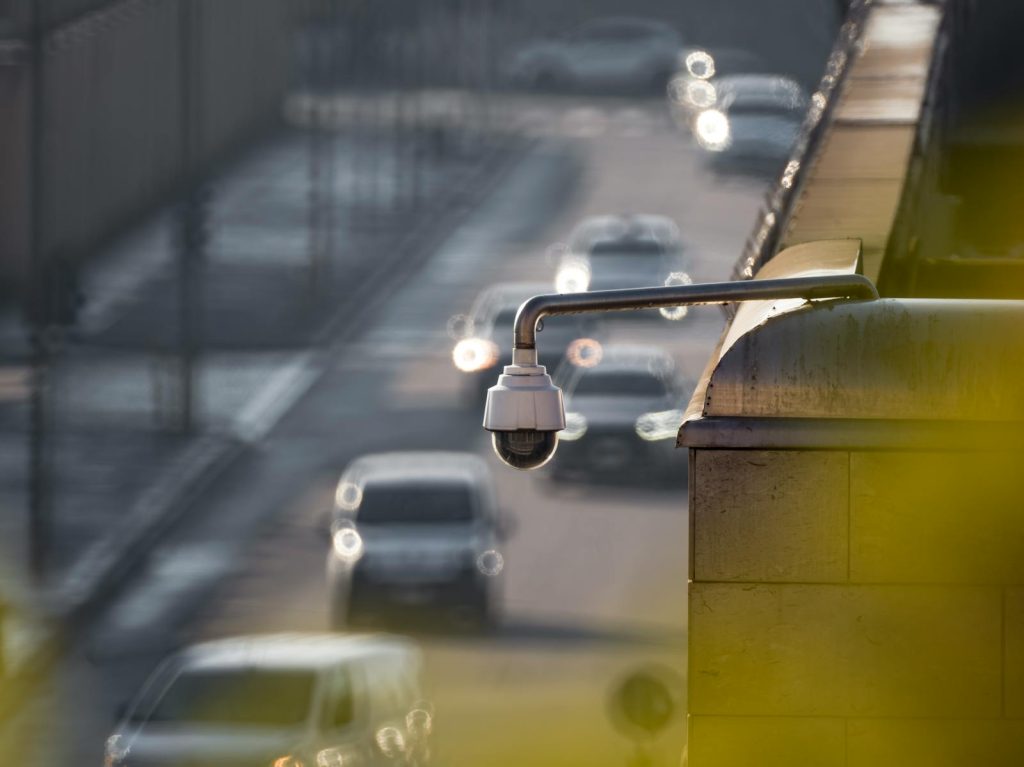
For many drivers, the shift to automated enforcement is not obvious until the first citation arrives. A camera that blended into the background of a familiar commute suddenly reveals itself as a precision tool, capturing license plates, timestamps and speeds with no warning beyond a small roadside sign. The shock is not just that the device was there, but that it was silently logging every pass, ready to generate a ticket without a conversation, a warning or the human judgment that sometimes lets a borderline case slide.
Once the system is switched on, the volume of tickets can spike in a way that would be impossible for a single patrol car. A corridor that once saw occasional stops can quickly become a steady revenue stream as the camera records every driver who drifts a few miles per hour over the limit. That is the moment when residents start comparing notes, realizing that what they assumed was a standard traffic camera has become a highly efficient ticket machine, one that does not tire, does not get distracted and does not exercise discretion.
California’s quiet turn to radar‑only enforcement
California is now at the center of this transformation, with new rules that allow speeding tickets to be issued based solely on radar and automated camera enforcement, without a traditional traffic stop. Starting in 2026, drivers in California can receive a citation in the mail even if they never see flashing lights in the rearview mirror. The policy is framed as a way to reduce crashes and improve road safety, especially in areas where speeding has been a persistent problem.
For motorists, that means the familiar cues that once signaled enforcement, a cruiser parked on the shoulder or an officer standing with a radar gun, are no longer reliable guides. The enforcement zone can extend across long stretches of roadway, monitored by devices that track speed continuously rather than in brief snapshots. I see this as a fundamental change in the relationship between drivers and the state, shifting from person‑to‑person encounters to a system where algorithms and sensors decide when a violation has occurred and when a fine should be triggered.
Long Beach as a test bed for automated speed cameras
One of the clearest examples of this new approach is in Long Beach, where officials are preparing to install a network of automated speed cameras along key corridors. The plan calls for 18 devices to be placed in areas with a history of crashes and heavy traffic, turning those stretches into continuous enforcement zones rather than sporadic patrol spots. The rollout has been widely discussed, including in social media posts that highlight how these cameras will change the way people drive in Long Beach and how often they can expect to see a ticket in the mail.
Public reaction has been intense enough that even the comment counts have become part of the story, with one widely shared post drawing exactly 356 responses as residents debated whether the cameras are about safety or revenue. The discussion has also underscored how closely this local experiment is tied to statewide changes, since Jan is now associated not just with a new calendar year but with a new era of automated enforcement in California. In my view, Long Beach is functioning as a proving ground, a place where policymakers can watch how drivers adapt when they realize that what looked like a standard roadside box is actually a constant speed monitor.
When the sign is wrong but the ticket is real
Automated systems depend on accurate information about speed limits and school schedules, and when that information is wrong, the consequences fall on drivers who did nothing more than trust what they saw. In Atlanta, a wave of incorrect tickets exposed how fragile the system can be when a single component fails. One driver, identified as Patterson, received a citation that claimed she was traveling at 37 miles per in a 25 mile per hour school zone, even though the flashing warning sign that should have indicated the lower limit was malfunctioning.
According to the ticket, the camera system treated the zone as active based on the school’s schedule, while the physical sign that drivers rely on to adjust their speed was not working properly. The result was a batch of citations that had to be refunded once the error came to light, but only after drivers like Patterson had spent time and energy contesting charges they believed were unfair. I see that case as a warning that when enforcement is automated, any misalignment between digital rules and real‑world signals can quietly generate hundreds of flawed tickets before anyone notices.
The hidden price tag inside a California ticket
Even when a ticket is valid, the amount printed on the front is often only the beginning of what a driver will ultimately pay. In California, the base fine for a traffic infraction can be relatively modest, but a stack of surcharges, assessments and add‑ons can push the total into territory that feels wildly out of proportion to the original offense. Reporting on the hidden fees built into these citations has shown how money from a single speeding ticket can be routed to programs that have little to do with road safety or driver behavior.
One analysis detailed how a woman who made a minor mistake behind the wheel ended up funding a range of unrelated initiatives through mandatory charges that were automatically attached to her citation. The story, written by Philip Uwaoma, explained how the total she owed had far more to do with state budget choices than with the specifics of her driving infraction. I find that dynamic especially troubling in the context of automated cameras, because when enforcement volume rises, so does the flow of these hidden fees, turning what looks like a safety measure into a significant revenue engine.
How a single mistake snowballs into financial strain
The financial impact of these tickets is not limited to the initial payment. For drivers who cannot afford to pay immediately, late fees, collection costs and license holds can quickly turn a manageable fine into a long‑term burden. In one widely cited case, a California driver discovered that the true cost of her citation was shaped less by her speed on the day of the violation and more by a maze of add‑ons that accumulated over time. The reporting on Hidden Fees Inside by Philip Uwaoma described how charges that had nothing to do with her driving infraction quietly inflated the bill.
Those details matter because automated cameras can dramatically increase the number of people who find themselves in that position. A driver who might have received a warning from an officer instead gets a mailed notice, and if that notice is missed or misunderstood, the penalties can escalate quickly. I see a direct line between the expansion of camera enforcement and the growth of a system in which a single lapse, like missing a payment deadline, can trigger a cascade of financial consequences that far exceed the original mistake on the road.
Safety gains versus revenue dependence
Supporters of automated enforcement argue that cameras and radar are essential tools for reducing crashes, especially in school zones and high‑injury corridors. They point to data showing that consistent speed control can lower the severity of collisions and protect pedestrians who are most vulnerable when drivers are traveling too fast. In California, the move to allow tickets based solely on radar and cameras was explicitly justified as a way to cut down on dangerous driving and improve road safety across the state, as highlighted in the description of how these systems are intended to reduce.
At the same time, the reliance on fines and fees to fund a wide range of programs creates a powerful incentive to keep the tickets flowing. When city budgets come to depend on revenue from automated cameras, it becomes harder to treat them purely as safety tools rather than as financial instruments. I believe that tension is at the heart of public skepticism, especially in communities that have already seen how hidden surcharges can turn a basic citation into a substantial bill. The more opaque the money trail becomes, the more drivers suspect that the unmarked camera on the corner is watching their wallets as much as their speed.
Due process in an automated world
One of the most striking changes in this new landscape is how drivers are expected to contest tickets that are generated by machines. Instead of explaining their side of the story to an officer on the roadside, they are often directed to online portals, administrative hearings or mail‑in appeals that can feel distant and impersonal. In the Atlanta case involving Patterson, the process of challenging a citation based on a malfunctioning school zone sign required not just persistence but a willingness to question the accuracy of a system that initially appeared unassailable, even though the underlying technology had clearly failed.
As more jurisdictions follow California’s lead and expand radar‑only enforcement, the question becomes how to preserve meaningful due process in a system that is designed for efficiency. I see a risk that drivers will be treated as data points rather than as individuals, with little room for context or explanation when something goes wrong. Ensuring that people can easily access evidence, understand how their speed was measured and obtain relief when signs or schedules are incorrect will be critical if public trust is to keep pace with the rapid spread of these cameras.
What drivers can do now
For motorists, the practical response starts with awareness. Knowing that a seemingly ordinary roadside device may be an active enforcement camera changes how carefully people scan for speed limit signs, school zone indicators and temporary restrictions. In cities like Long Beach, where 18 automated cameras are being installed along busy routes, drivers who pay attention to public maps, local announcements and even heavily discussed social media posts are better positioned to avoid unintentional violations that can lead to expensive surprises in the mail.
Beyond that, understanding the structure of fines and fees can help drivers make informed choices if they do receive a ticket. Reading the breakdown of charges, asking how much of the total is a base fine versus surcharges and seeking clarification when something seems off are all steps that can prevent a minor infraction from spiraling into a long‑term financial problem. As Jan brings a new wave of automated enforcement to California and other jurisdictions watch closely, I believe the most important thing drivers can do is treat every “normal” traffic camera as a potential enforcement tool and every ticket as a document worth scrutinizing line by line.
More from Wilder Media Group: