

Electric car owners are discovering that the honeymoon is over. After years of incentives and fuel savings, many are now opening registration notices and finding new line items that bill them directly for the wear and tear they put on public roads. The shift marks a turning point in how the United States pays for highways, with electric vehicles moving from being subsidized guests on the system to full fare‑paying users.
Instead of quietly contributing through gasoline taxes at the pump, drivers of battery-powered cars are being pulled into a new regime of flat fees and per‑mile charges. The change is reshaping the economics of owning a Tesla Model 3 or a Chevrolet Bolt, and it is forcing policymakers to confront a basic question: how to fund infrastructure in a world where burning fuel is no longer the default way to move.
From “free rider” myth to targeted EV fees
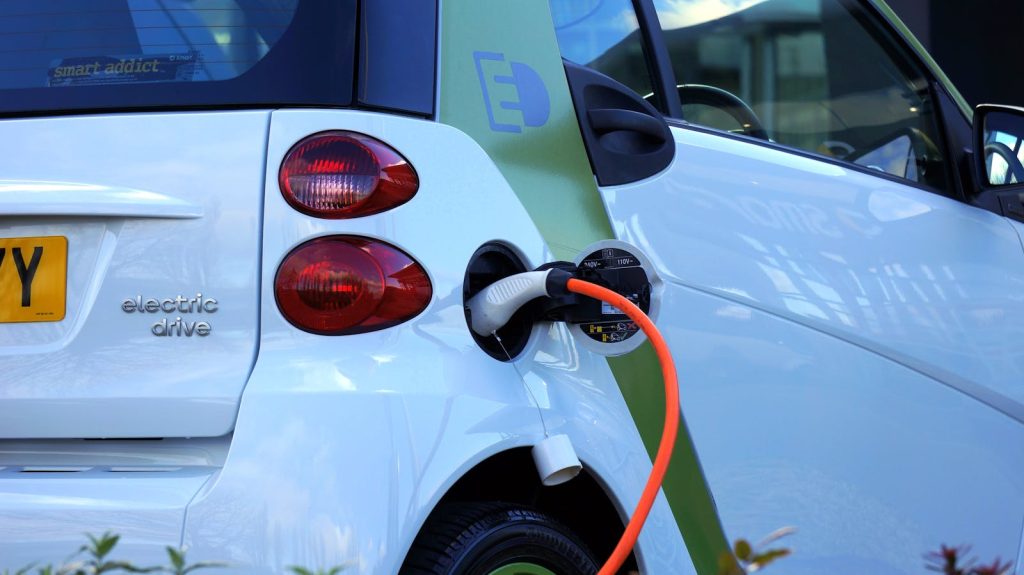
For years, critics argued that Drivers of electric cars were gliding over publicly funded asphalt without paying their share, because they did not contribute to fuel taxes that traditionally support highway budgets. That narrative helped justify a wave of new levies aimed squarely at plug‑in models, even as owners pointed out that they still pay sales taxes, property taxes and, in many places, standard registration charges. Advocates for electrification now warn that the pendulum has swung so far that Drivers are being punished for choosing a cleaner energy alternative, a concern that is backed up by the spread of extra registration costs in dozens of states, as detailed in recent EV road tax analysis.
What began as a handful of experiments has hardened into a national pattern. Thirty states now levy additional fees for electric models, typically on top of standard registration, turning what was once a niche policy into a mainstream revenue tool. Researchers tracking these policies note that The EV fee is typically an annual flat fee collected in addition to the registration tax and applies to all fully electric vehicles, often with a lower fee charged to hybrid vehicles, a structure that has been documented in a detailed study of state EV fee adoption. The result is that electric drivers are no longer exempt from road finance, they are a distinct and increasingly lucrative tax category.
Flat registration surcharges: simple, blunt and growing
The most common way states are billing EV owners for road use is through extra registration surcharges that arrive with the annual tag renewal. These charges are easy to administer and politically straightforward, but they are also blunt instruments that do not distinguish between a low‑mileage commuter and a rideshare driver who racks up 30,000 miles a year. In several jurisdictions, Electric Vehicles now face fixed add‑ons that can rival or exceed what a typical gasoline driver would pay in fuel taxes, a trend that is clearly visible in state comparisons of Electric Vehicles registration fees.
Some states have opted for relatively modest surcharges, while others have pushed higher. Jan reports from legislative researchers show that a fee of $50 is common in places such as Colorado, Colorado, Hawaii and South Dakota, with Hawaii layering that charge on top of a separate mileage‑based system. At the same time, broader tax coverage explains why Road infrastructure and maintenance are paid for by federal, state and local levies that historically leaned heavily on gasoline, a structure that is now being rebalanced so that Road taxes for EV drivers are collected more directly from vehicle owners at higher rates, as outlined in recent guidance on road taxes for EV drivers. For many households, the new line item is the first visible sign that the cost of going electric includes a dedicated road bill.
Pay‑per‑mile experiments: Utah, Oregon and the new road meter
Alongside flat fees, a smaller but influential group of states is testing mileage‑based billing that functions like a road meter. Instead of assuming that every EV imposes the same cost on the system, these programs track how far a car travels and charge a set rate per mile, often with technology that uploads odometer readings or uses connected devices. Utah has branded its initiative as the Welcome to Utah Road Usage Charge Program, presenting it as The Future of Utah Transportation and inviting owners of electric and other alternative fuel vehicles to enroll so that charges are calculated per mile and then credited against the state’s alternative fuel vehicle fee, a structure described in detail on the official Road Usage Charge Program site.
Oregon has taken a similar path with OReGO, which is explicitly described as a Pay by Mile Program for Passenger Vehicles in Oregon and is run by ODOT as a voluntary alternative to traditional fuel taxes. Members in this system pay a per‑mile road usage charge for the public roads they drive on, with the amount owed reconciled against any fuel taxes already paid when the vehicle is enrolled in OReGO, a model that is laid out in the state’s overview of its Pay by Mile Program for Passenger Vehicles. These pilots are being closely watched because they hint at a future in which every car, regardless of fuel type, might pay for roads based on actual use rather than how much gasoline flows through a pump.
Hawaii’s RUC and the rise of per‑mile EV billing
Hawaii is emerging as one of the clearest examples of the new EV road bill in action. Your vehicle registration now arrives in the mail with a new line item for Most electric vehicle (EV) owners, a road usage charge (RUC) that appears alongside existing fees and is calculated based on how far the car has traveled. The state’s HiRUC initiative explains that the RUC is designed as a new way to pay for the roads, shifting away from exclusive reliance on fuel taxes and toward a system where electric drivers see a direct connection between their mileage and their contribution, a concept spelled out for residents on the RUC information portal.
That shift is being formalized in law. Beginning July 1, 2025, the owner of an Electric Vehicle in Hawaii may elect to pay an annual mileage‑based fee instead of a flat registration surcharge, under what is officially called the Electric Vehicle Road Usage Charge Program. Beginning July, this Road Usage Charge Program gives EV owners a choice between a per‑mile assessment and a higher fixed fee, embedding the RUC concept into the state’s broader transportation finance framework as described in federal summaries of Hawaii’s Electric Vehicle Road Usage Charge Program. For drivers on islands where long commutes are rare, the mileage option could be cheaper than a flat charge, while high‑mileage users may find that the new road bill climbs quickly.
National pressure: shrinking gas taxes and a looming federal fee
Behind the state‑level experimentation is a simple budget problem. Since fuel efficiency has improved and more electric models have hit the road, motor fuel taxes have declined as a percentage of transportation revenue, leaving lawmakers scrambling to fill the gap. Aug reporting on state transportation finance notes that More States Are Charging EV Registration Fees as part of a broader push to raise road use charges and other transportation‑related levies through June 30, 2026, a trend that is documented in coverage of how states raise road use fees. The political logic is straightforward: EV owners are a visible and growing group, and asking them to pay more is easier than raising gasoline taxes on everyone.
The debate is now spilling into Washington. Drivers Staring Down a proposed federal Fee from the Feds to Pay for Roads have been watching a bill that would charge EV owners $250 annually to help fund national infrastructure, a figure that has become a rallying point for both supporters and critics of a federal EV road charge, as detailed in coverage of the $250 federal proposal. Jun analysis of congressional tax plans notes that a House GOP proposed $250 EV fee would have been collected by the Federal Highway administration if approved, effectively creating a nationwide baseline road bill for electric owners regardless of state policy, a concept that was spelled out in discussions of the House GOP $250 EV fee. While that measure has not yet become law, its prominence signals that the era of EVs skating past the road‑funding debate is over.
Balancing fairness, climate goals and the EV road bill
As these policies spread, the central question is no longer whether electric drivers should pay for roads, but how to do it fairly without undermining climate goals. Some tax experts argue that tying charges to actual use, as in Utah’s $0.02 per mile option paired with an $86 annual registration fee for Drivers who opt into a pay‑as‑you‑go system, is more equitable than flat surcharges that ignore mileage, a structure that is highlighted in comparative tables of state EV taxes. Others warn that stacking high fees on top of the purchase price of an electric car risks slowing adoption just as manufacturers are finally bringing more affordable models like the Chevrolet Equinox EV and Hyundai Kona Electric to market.
Policymakers are also wrestling with how to treat Hybrid models that still use gasoline but at much lower volumes, and whether to differentiate between urban drivers who have transit alternatives and rural residents who rely on long car trips. The EV fee structures emerging across the country show that there is no single answer yet, only a patchwork of experiments that collectively amount to a new kind of road bill for electric owners. As more states refine their systems and as federal proposals like the $250 annual charge continue to surface, the quiet assumption that going electric meant escaping road taxes has been decisively retired, replaced by a more complicated, and more visible, price of using the pavement.
More from Wilder Media Group: