

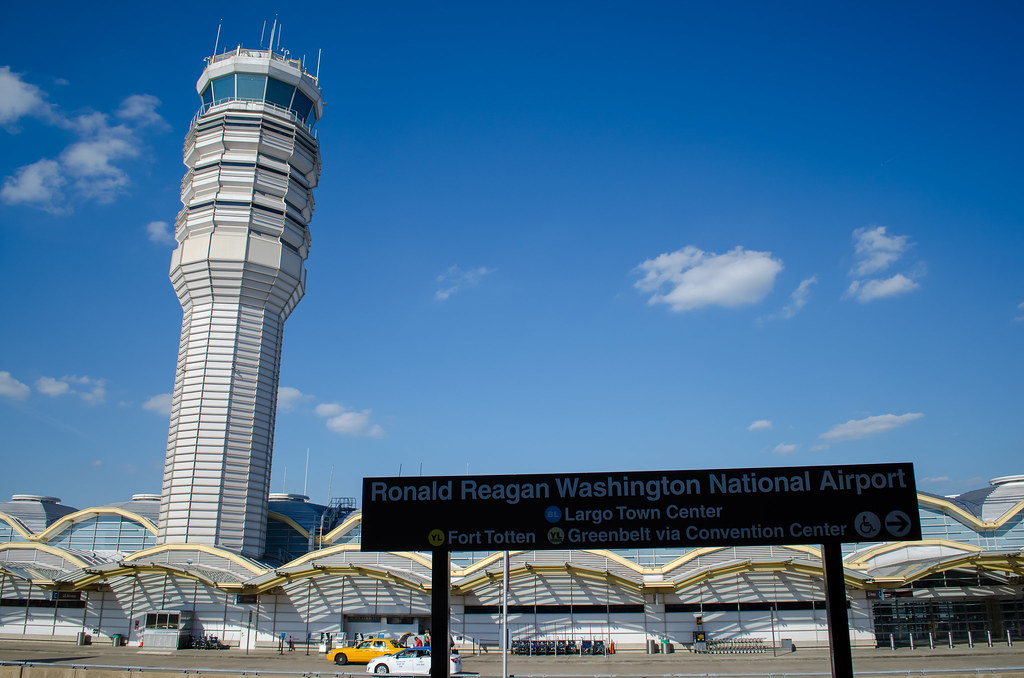
Federal regulators have turned a year of emergency fixes over the Potomac into a permanent reset of how helicopters operate around Ronald Reagan Washington National Airport. After a midair collision that killed 67 people and exposed just how crowded and fragile the capital’s airspace had become, the Federal Aviation Administration has locked in long term restrictions that carve helicopters out of the airport’s most sensitive corridors.
The move cements what had been temporary workarounds into a new normal for pilots, passengers, and the region’s booming rotorcraft scene. It is a blunt answer to a simple promise from safety officials after the crash: never again.
The crash that forced Washington’s hand
The story of these new rules starts with a clear blue day over the Potomac that turned into one of the region’s worst aviation disasters in decades. A commercial jet on approach to Reagan National and a helicopter sharing nearby airspace collided in midair, sending wreckage into the river and killing 67 people in seconds. The crash, just upriver from the familiar bends and bridges that define the airport’s tricky approaches, instantly raised questions about why helicopters were flying so close to heavy jets in the first place.
Investigators and regulators quickly zeroed in on the mix of aircraft types crowding the same slices of sky. The FAA stressed that Safety is its highest priority and began stripping away points where helicopters and fixed wing traffic crossed paths. That included Eliminated mixed operations in key corridors and a Permanently closed segment of Route 4 between the airport and nearby waypoints, a route that had long threaded helicopters through the same funnel used by airliners.
From emergency fixes to permanent rules
In the months after the collision, the agency leaned on temporary orders and letters of agreement to keep helicopters away from the busiest arrival and departure paths. Those stopgap measures were always going to be a hard sell for operators who built business models around quick hops into the heart of the capital, but they bought time for a deeper rethink. Earlier this week, the FAA moved from patchwork to permanence, rolling out an interim final rule that takes effect immediately and locks those limits into the regulatory code.
The interim rule, set to publish in Jan, traces directly back to the January 29, 2025 collision and folds in a broader package of changes that also require more aircraft to broadcast their locations under revised military agreements. Officials described it as a long term blueprint for how helicopters and power lift aircraft will operate around the airport, with the Jan move effectively freezing into place what had been emergency procedures.
What the ban actually covers
For pilots, the headline is simple: most helicopter flights are now off limits in the core airspace around Reagan National. The Federal Aviation Administration has ordered a widespread permanent ban on most helicopter operations in a zone that stretches from the American Legion Bridge in the northwest to the Wilson Bridge in the south, boxing out sightseeing circuits and point to point charter hops that once traced the river. The new boundaries are designed to keep rotorcraft clear of the airport’s critical arrival and departure phases, where even a small deviation can ripple through tightly packed traffic.
Regulators have carved out narrow exceptions for emergencies like national security missions or medical transport, but routine flights are effectively shut out of the area. The Federal Aviation Administration framed the move as a necessary tradeoff to protect airline passengers and people on the ground, with the permanent ban on most helicopter flights near Reagan National described as a direct response to the January 2025 accident. That shift is spelled out in detail in the agency’s formal order, which notes that The Federal Aviation Administration is using its authority to Federal Aviation Administration reshape how the capital’s airspace works.
How the airspace around DCA is being redrawn
Under the new scheme, helicopters are pushed out of the tight corridors that hug the Potomac and line up with Reagan National’s runways, especially the approaches that bring jets in low over the river. A permanent helicopter ban now applies in a swath of airspace that includes the final approach to runway 33 and other segments where wake turbulence and pilot workload are highest. The idea is to separate slower, more maneuverable rotorcraft from the high speed streams of jets that have little room to dodge or delay once they are established on final.
The U.S. Department of Transportation and the Federal Aviation Administration have framed the redesign as a way to protect those critical arrival and departure phases without shutting down helicopter activity across the region. Outside the core exclusion zone, helicopters and power lift aircraft can still operate under tighter rules, including altitude limits and routing that keep them clear of jet funnels. The agencies described the package as a coordinated effort, with the Department of Transportation and the Federal team in WASHINGTON emphasizing that the new map is built around those critical phases of flight.
Who pushed the policy over the finish line
Inside the administration, the final push came from the top of the transportation hierarchy. U.S. Transportation Secretary Sean P. Duffy, President Donald Trump’s Transportation Secretary, publicly announced that the Federal Aviation Administration is formalizing permanent restrictions for aircraft in Reagan National’s airspace. Transportation Secretary Sean Duffy framed the decision as a necessary step to ensure that the procedures introduced after the crash do not quietly expire once public attention drifts.
In a statement from WASHINGTON, D.C., Transportation Secretary Sean Duffy said the FAA is finalizing these restrictions so that the safety gains from separating aircraft types at DCA are locked in whenever the airport’s busiest configurations are in use. The agency’s own summary of the rule notes that the Federal Aviation Administration, acting through the FAA, is using its authority to codify the helicopter limits and related changes. That message was echoed in industry briefings where officials stressed that the Transportation Secretary Sean decision reflects a broader push to tighten safety margins nationwide.
Local fallout for operators and passengers
On the ground, the new rules land hardest on the small companies that built their business around quick access to the capital’s skyline. Sightseeing operators that once traced loops past the monuments and along the river now face a no go zone that cuts directly through their most popular routes. Charter firms that sold time savings to executives and government contractors are being forced to rework schedules, reroute flights to more distant landing sites, or in some cases park aircraft that no longer have a viable path into the city.
Local coverage from WASHINGTON has highlighted how the Federal Aviation Administration’s permanent ban on helicopter flights near Ronald Reagan National Airport is already reshaping the market. One report noted that The Federal Aviation Administration, through the FAA, announced the change as a safety measure after the Potomac collision, while pilots and a former traffic controller at the airport warned that the new patterns will take time to adjust to. For passengers, the immediate impact is fewer helicopter options and more reliance on ground transport, a shift that regional outlets like WASHINGTON have tied directly to the new ban.
What still flies: carve outs and exceptions
Even with the sweeping language of a “ban,” the new regime does not ground every rotorcraft that might need to get near Reagan National. The FAA has carved out exceptions for missions that cannot reasonably be delayed or rerouted, including national security flights, law enforcement operations, and medical transport. Those carve outs reflect a recognition that helicopters are sometimes the only practical way to move people or equipment quickly across the capital region, especially in crises where minutes matter.
Agency statements and local explainers have stressed that nearly all routine commercial and private helicopter flights are barred, but that emergencies like national security or medical transport can still be cleared into the restricted area. One widely shared video report noted that nearly one year after the deadly midair crash over the Potomac, the FAA enacted sweeping changes that still allow such emergency missions. That nuance is important for residents who might still see or hear helicopters overhead and wonder how the new rules work, a point underscored in coverage that highlighted how Nearly all non emergency flights are now off the table.
How the FAA is selling the safety case
Inside the agency, officials are leaning hard on a simple message: the risk of mixing helicopters and jets in tight airspace is no longer acceptable. The FAA has repeatedly said that Safety remains its highest priority and that the new rules are designed to eliminate helicopter and fixed wing mixed traffic in the most congested parts of the D.C. area sky. That includes the decision to Permanently close portions of Route 4 between helicopters and other aircraft, a procedural change that might sound obscure but has major implications for how controllers sequence traffic.
Public statements have also emphasized that the new rules are part of a broader push to separate aircraft types and require more of them to broadcast their locations. One summary of the package noted that the FAA makes permanent rules separating planes and helicopters in D.C. airspace after last year’s crash near Reagan National, and that the agency has determined the interim measures worked well enough to justify locking them in. Officials have framed the decision with a “never again” tone, arguing that the FAA would be failing its mandate if it allowed the old patterns to return.
Industry pushback and the road to “never again”
Helicopter operators have not been shy about pointing out what they see as the costs of the new regime. Trade groups and individual companies have argued that the January 2025 accident was the product of specific failures rather than an inherent flaw in mixed operations, and that a blanket ban punishes operators who were not involved. Some have warned that the changes could push more traffic into already busy suburban airports or onto congested highways, trading one kind of risk for another.
Regulators, for their part, have signaled that they heard those complaints but ultimately sided with a more conservative approach. Coverage of the rulemaking process noted that the FAA Wants to Ban Helicopters Near Washington Airport After Crash, describing how the agency weighed comments before finalizing the restrictions. In the end, the Federal Aviation Administration concluded that the safety benefits of separation outweighed the economic hit, a stance reflected in summaries that tie the decision directly to the January 2025 accident and the agency’s determination that it must Wants to avoid a repeat.
What it means for travelers and the broader system
For most airline passengers, the new rules will be invisible, which is exactly how the FAA likes it. Flights in and out of Reagan National will continue to thread the river and the capital’s tight noise corridors, but with one less variable for controllers to juggle. The agency has been at pains to remind the public that, Yes, you can still fly, and that even during past funding fights and partial shutdowns, essential safety staff remained on the job. The helicopter restrictions fit into that same narrative of an agency that sees its core mission as keeping the system running safely, even if that means telling some operators no.
At the same time, the decision around Reagan National is likely to echo far beyond the Beltway. Other congested airports with nearby helicopter traffic will be watching to see whether the D.C. model becomes a template, especially as more urban air mobility concepts and power lift designs push for access to crowded skies. Industry briefings have already flagged that the Federal Aviation Administration is permanently restricting helicopter and power lift operations near Ron Reagan National, and that similar logic could apply elsewhere. For now, the capital’s airspace is the test case, a high profile experiment in how far regulators are willing to go in the name of separation and how the flying public responds when the Federal Aviation Administration redraws the map.
More from Wilder Media Group: