
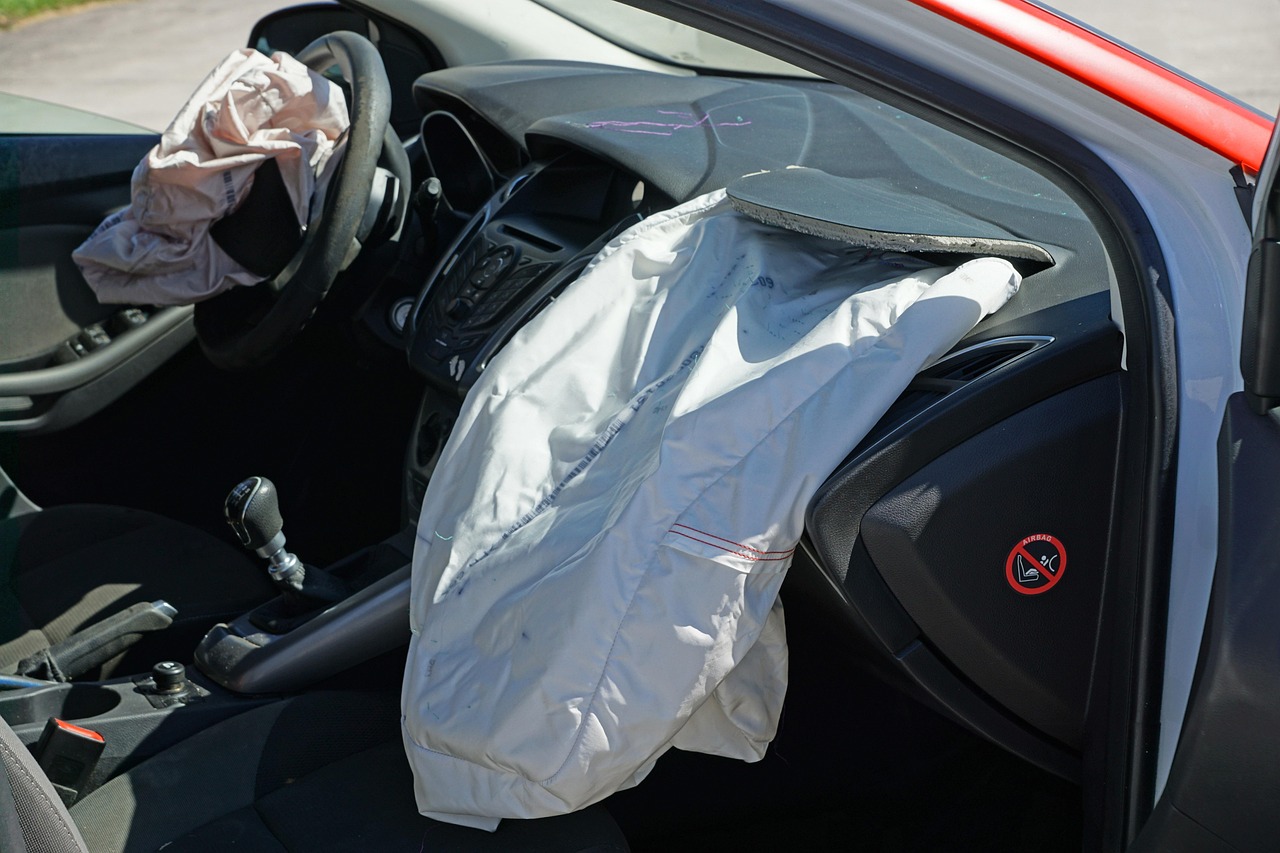

The Takata airbag fiasco was supposed to be yesterday’s nightmare, wrapped up once regulators forced the industry into the largest safety campaign in automotive history. Instead, the fallout from more than 100 million recalled vehicles still lingers in driveways, dealer lots, and scrapyards around the world. The defect has turned a life‑saving device into a potential grenade, and the industry is still trying to track down every last one.
For drivers, that means a strange kind of limbo: a recall that feels old, but a risk that is very much current. Even as new models tout ever more advanced safety tech, millions of older cars and trucks still carry inflators that can explode, sending shrapnel into cabins during a crash. What began as a single supplier’s failure has become a long, grinding test of how far carmakers and regulators will go to clean up their own history.
The scandal that rewired how airbags are built
The core of the problem traces back to a simple, brutal calculation about cost and chemistry. Takata bet on an ammonium nitrate propellant that was cheaper and more compact than rivals, a choice that became a textbook example of how cost cutting can morph into catastrophe. As the material aged in heat and humidity, it could burn too fast, rupture the metal canister, and turn the airbag into a blast of shrapnel, a sequence dissected in detail in the Takata scandal. What began as a clever engineering shortcut spiraled into a global recall that has reshaped how suppliers talk about long term durability and climate testing.
Regulators have tried to keep the scope of that failure visible. In its Takata Recall Spotlight, the U.S. safety agency describes an Overview in which tens of millions of vehicles with Takata air bags are under recall and warns that long term exposure to high heat and humidity makes the inflators more likely to explode. That framing matters because it shifts the narrative away from a one time manufacturing defect and toward a slow burn risk that grows as vehicles age. For owners of older sedans and pickups, the danger is not fading with time, it is sharpening.
Why the crisis refuses to die in 2026
More than a decade after the first campaigns, the Takata mess is still generating fresh warning letters and parked cars. In Germany, a guide titled Airbag Recalls 2026: notes that numerous airbag recall campaigns are ongoing in 2026 as well, particularly involving the Takata NADI gas generator, and flags Germany as one of the markets where that clean up is still active. The fact that a European parts specialist is publishing a fresh overview in Jan underlines how far from finished the job really is.
The scale of the original Takata recall also keeps haunting regulators who are trying to close the books. The same Takata recall analysis points out the sheer size of the campaign and explains that some countries have resorted to operating bans for unrepaired vehicles, a sign that polite reminder letters are no longer enough. When governments start telling owners they cannot legally drive until a free repair is done, the defect has moved from background noise to a hard line on road safety.
From “recall notice” to “Do Not Drive”
In the United States, the language around Takata inflators has hardened as well. Under its Takata Airbag Inflator, FCA US LLC has issued a Stop Drive advisory for all vehicles with unrepaired recalled Takata inflators, an unusually blunt instruction for owners to park their cars until parts are installed. That kind of language is typically reserved for the most acute mechanical failures, yet it is now attached to airbag modules that many drivers barely think about until they deploy.
Federal regulators have backed up that tone. In a Consumer Alert, the agency highlighted that FCA Issues a Do Not Drive Warning for All Vehicles with unrepaired Takata recalls, spelling out that certain Chrysler, Dodge, Jeep and even Mitsubishi Raider models should not be on the road until their airbags are replaced. Separate reporting on the same wave of action noted that Still dangerous after, about 225,000 vehicles received that Do Not Drive label because their Takata inflators had already caused explosions when activated. For owners, that is not a theoretical engineering flaw, it is a blunt message that the next crash could be survivable in every way except for the airbag.
The human cost behind those warnings is what keeps the story from fading into recall statistics. One analysis of the Takata airbag debacle notes that Takata’s faulty airbag inflators prompted the largest and most widespread recall series in automotive history, tied to injuries and 38 deaths globally in model year 2003 to 2015 vehicles. Another breakdown of how many cars were affected puts the tally at over 67 million in the United States alone and explains that Takata’s deadly airbags have affected more than 67 million cars in the U.S., with millions worldwide still containing the dangerous product. For every owner who has already had a replacement, there is another who has not opened the letter or does not realize their aging compact or SUV is part of a global safety experiment that is still in progress.
More from Wilder Media Group: