

Buying a used SUV does not have to mean settling. The right model from the right year can deliver current styling, proven reliability, and thousands in savings over buying new. But “right” depends on real data, not just brand loyalty. We looked at depreciation curves from Kelley Blue Book, reliability ratings from J.D. Power and Consumer Reports, and recall histories from NHTSA to identify five used SUVs that consistently reward second owners. Here is what stands out as of early 2026.
Honda CR-V (2020–2023): The Benchmark That Earns Its Reputation
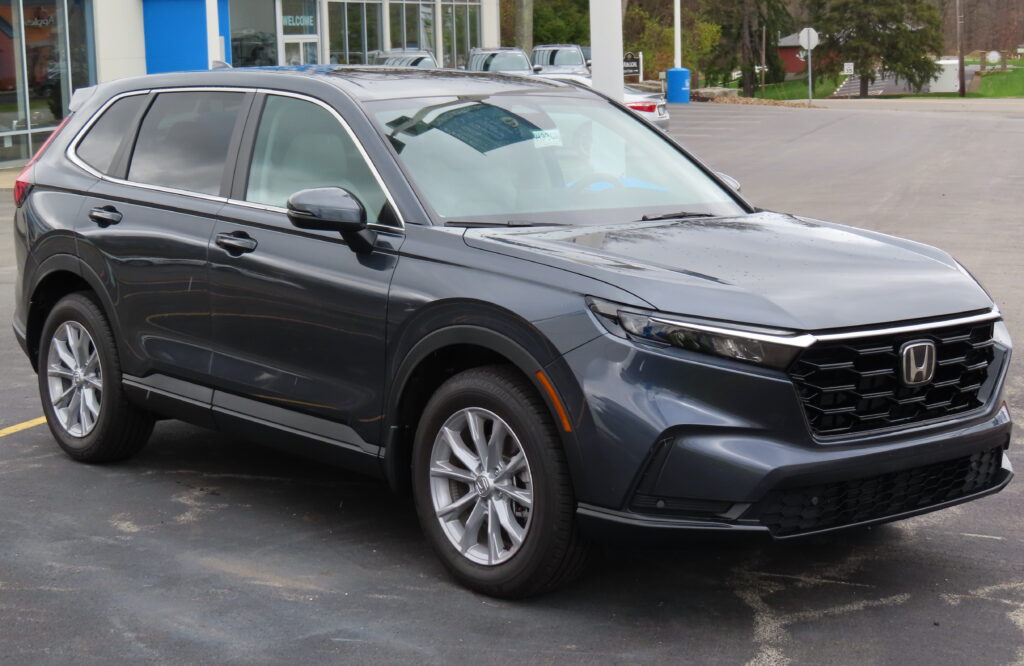
The fifth-generation CR-V has been the best-selling SUV in America for a reason, and on the used market it remains the safest pick in the compact class. J.D. Power gives the 2020–2023 CR-V above-average predicted reliability scores, and Consumer Reports has rated it a top pick in the compact SUV segment for multiple consecutive years.
Expect to pay roughly $24,000 to $31,000 for a 2021 or 2022 model with under 40,000 miles, according to Kelley Blue Book fair market estimates in early 2026. That is steep for a used compact, but the CR-V’s resale curve is among the flattest in the segment, meaning you lose less per year of ownership than you would with most competitors. The 1.5-liter turbo four-cylinder returns an EPA-rated 30 mpg combined in front-wheel-drive form, and the interior still feels modern, with a clean dashboard layout and 75.8 cubic feet of cargo space behind the front seats.
One caveat worth knowing: the 2017–2018 models had documented oil dilution issues with the 1.5T engine, particularly in cold climates. Honda addressed the problem through software updates and a warranty extension, but buyers shopping older CR-Vs should check service records and verify the fix was applied. Sticking with 2020 or newer largely sidesteps the issue.
Toyota RAV4 (2019–2023): The Lowest-Stress Ownership in the Class
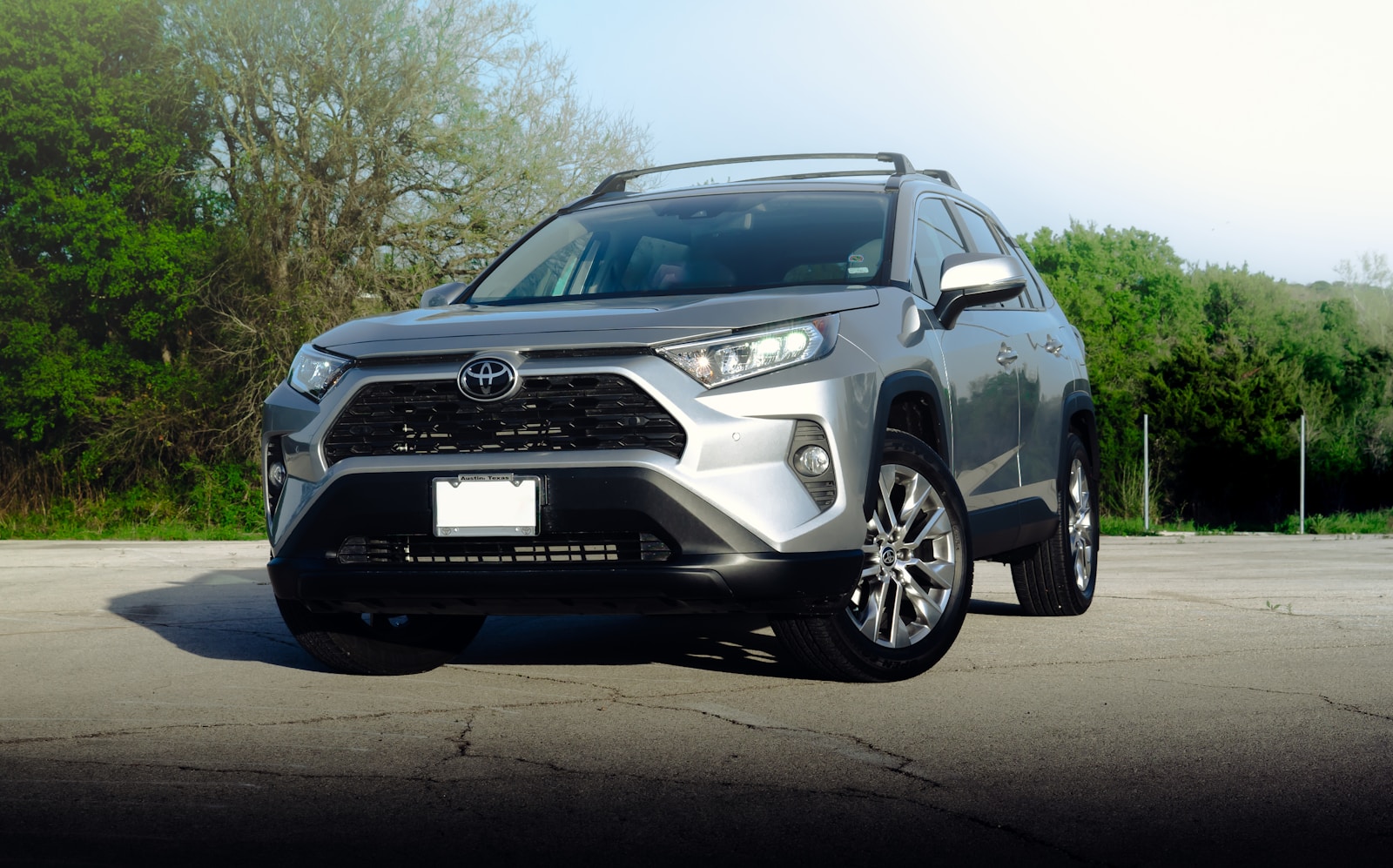
If the CR-V is the benchmark, the RAV4 is its most serious rival, and on long-term ownership costs it may actually edge ahead. The RAV4 has earned a “Most Dependable” award from J.D. Power in the compact SUV category, and Consumer Reports rates the 2019-and-newer generation highly for predicted reliability.
The fifth-generation RAV4 (2019+) brought a sharper, more angular design that reads as rugged rather than minivan-adjacent. The base 2.5-liter four-cylinder delivers 203 horsepower and an EPA-rated 30 mpg combined with front-wheel drive. For buyers open to a hybrid, the RAV4 Hybrid pushes that to 40 mpg combined and has become one of the most popular used SUVs in the country. Used RAV4 Hybrids from 2021–2022 typically list between $27,000 and $33,000, per KBB data.
Maintenance costs are genuinely low. Toyota’s 2.5-liter engine and eight-speed automatic are well-proven, and NHTSA recall activity for the 2020–2023 RAV4 has been minimal compared to the segment average. The trade-off is a slightly firmer ride than the CR-V and an infotainment system that, while functional, feels a generation behind Honda’s and Hyundai’s in responsiveness.
Hyundai Santa Fe (2019–2023): More Space, More Tech, Less Money
The Santa Fe occupies a useful gap between compact and full-size. It is a two-row SUV with a cabin that feels closer in space to some three-row competitors, and on the used market it is priced well below comparably equipped Hondas and Toyotas. A 2021 Santa Fe SEL with around 35,000 miles typically lists in the $23,000 to $27,000 range, according to Kelley Blue Book, which undercuts a similarly equipped RAV4 by several thousand dollars.
That lower price does not mean lower quality. The 2021+ Santa Fe received a significant redesign with a wider, more planted stance, a 10.25-inch touchscreen on upper trims, and standard forward-collision avoidance with pedestrian detection. J.D. Power rates the 2021–2023 Santa Fe at or above the segment average for reliability.
Buyers should be aware of Hyundai’s Theta II engine history. While the Santa Fe’s 2.5-liter engine (used from 2021 onward) is a different unit from the recalled 2.4-liter Theta II, earlier 2019–2020 models with the 2.4L should be checked against NHTSA recall records to confirm any applicable engine-related campaigns have been completed. Hyundai’s 10-year/100,000-mile powertrain warranty (for original owners) often transfers partially to second owners, adding a layer of protection that Honda and Toyota do not match.
Mitsubishi Outlander (2022–2024): The Overlooked Contender
The Outlander rarely appears on mainstream shopping lists, which is precisely why it offers some of the strongest value in the mid-size SUV segment. The 2022 redesign was a turning point. Built on a shared platform with the Nissan Rogue, the current Outlander is a fundamentally different vehicle from the forgettable model it replaced. Consumer Reports noted a dramatic improvement in ride quality, interior materials, and overall refinement with the 2022 model.
It is also one of the few SUVs in this price range that offers a usable third row, making it a legitimate option for families who occasionally need seven seats but do not want a full-size vehicle. The 2.5-liter four-cylinder produces 181 horsepower, which is adequate rather than exciting, and the CVT is tuned for smoothness over sportiness. EPA-rated fuel economy sits at 27 mpg combined with front-wheel drive.
Depreciation is where the Outlander really pays off. Because Mitsubishi’s brand cachet trails the Japanese Big Three, used 2022 Outlanders with under 30,000 miles can be found in the $22,000 to $26,000 range, thousands less than a comparable RAV4 or CR-V. The trade-off is weaker resale when you eventually sell, but for buyers who plan to keep the vehicle for several years, the upfront savings more than compensate.
Honda Passport (2019–2023): The Midsize That Feels a Size Up
The Passport fills a niche Honda carved between the CR-V and the three-row Pilot. It rides on the Pilot’s platform but drops the third row, freeing up a flat, deep cargo area that measures 41.2 cubic feet behind the rear seats and 77.9 cubic feet with them folded. For buyers who haul gear more often than extra passengers, that layout is more practical than a three-row they would never unfold.
Under the hood, every Passport gets Honda’s 3.5-liter V6 with 280 horsepower and a nine-speed automatic, a combination that feels genuinely quick and refined. EPA fuel economy is 22 mpg combined with all-wheel drive, which is average for the class but acceptable given the power advantage over four-cylinder rivals. J.D. Power rates the Passport’s reliability as above average, and the 2022–2023 refresh brought a more aggressive front end and updated infotainment.
Pricing sits in the $27,000 to $34,000 range for 2021–2022 models with reasonable mileage, per Kelley Blue Book. That is competitive with a loaded RAV4 or Santa Fe but delivers a noticeably larger, more powerful vehicle. The Passport’s main weakness is name recognition: many buyers do not realize it exists, which keeps used prices lower than they probably should be.
How to Shop Smart Across All Five
Regardless of which model catches your eye, a few principles apply to every used SUV purchase in 2026:
- Check recall status first. Enter the VIN at NHTSA.gov before you test drive. Outstanding recalls are free to fix at any dealership, but an unresolved safety campaign is a red flag about how the vehicle was maintained.
- Get a pre-purchase inspection. A $150 to $200 independent inspection can catch problems that a dealer walkaround will not. This is especially important for models with known engine or transmission concerns.
- Compare certified pre-owned (CPO) pricing. Honda, Toyota, and Hyundai all offer CPO programs that extend the factory warranty and include multi-point inspections. The premium over a non-CPO example is often $1,000 to $2,000, which can pay for itself if a major repair surfaces in the first year.
- Look at total cost, not just sticker price. A Santa Fe that costs $4,000 less than a CR-V upfront but depreciates faster and carries higher insurance premiums may not actually save money over a three-year ownership period. Tools like Edmunds True Cost to Own can help estimate the full picture.
- Do not overlook the Outlander and Passport. The least popular nameplates on this list offer the steepest discounts precisely because fewer buyers are competing for them. If you are keeping the vehicle long-term rather than flipping it in two years, lower purchase price matters more than resale value.
The used SUV market in early 2026 still carries some of the pricing pressure from pandemic-era inventory shortages, but supply has improved significantly for the 2020–2023 model years. Patience and flexibility on color or trim level can save another $1,000 to $2,000. The five models above have earned their spots not because they are flashy, but because the data consistently backs them up.
More from Wilder Media Group: