
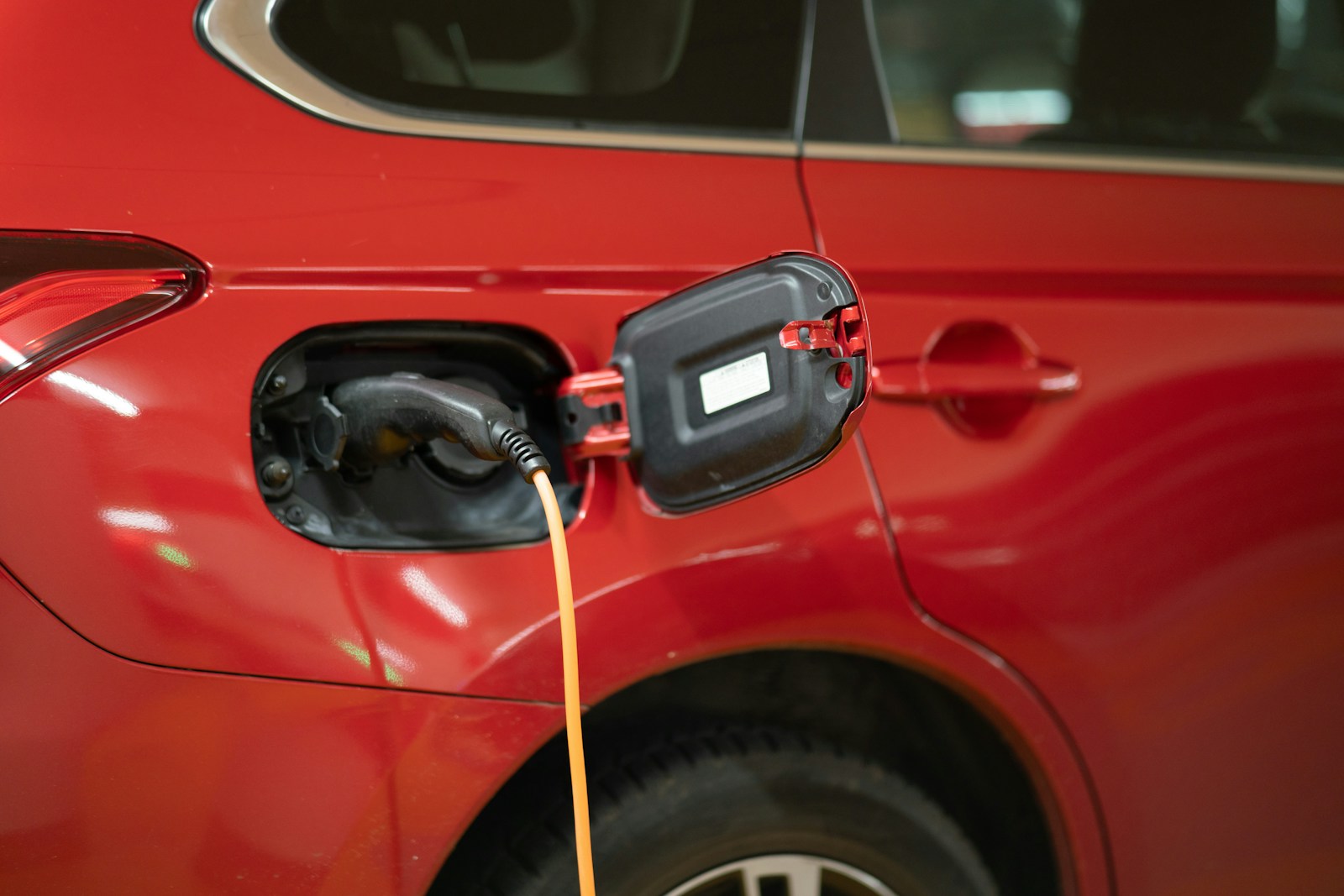

Florida is turning a stretch of new pavement into a live experiment in how electric vehicles refuel, embedding wireless charging hardware directly into a highway so batteries can top up while traffic keeps moving. The project aims to chip away at range anxiety, cut downtime for commercial fleets, and test whether dynamic charging can work at scale on a busy regional corridor. If it succeeds, the road could become a template for how fast-growing states upgrade infrastructure for an era when plug-in vehicles are no longer the exception.
The plan centers on a short but strategically placed expressway west of Orlando that will double as a proving ground for high power wireless charging at highway speeds. Engineers, local transportation officials, and technology partners are betting that if they can make this system reliable in Florida’s heat, storms, and tourist traffic, it can work almost anywhere in the United States.
Why Florida Is Turning a New Highway Into a Power Strip

Few places in the United States are as defined by car culture as Florida, and that dependence on highways is exactly why the state is experimenting with charging vehicles in motion. Officials in central Florida are planning a new expressway that will connect fast-growing communities while also serving as a testbed for wireless charging, an attempt to align transportation expansion with the rapid rise of electric cars. Instead of treating EV infrastructure as an afterthought in parking lots and rest stops, planners are baking it into the concrete from day one so that the road itself becomes part of the energy network.
Local leaders see the project as a way to future proof a region that already leans heavily on toll roads and long commutes. According to reporting on the project, Officials in central Florida are framing the expressway as both a congestion fix and a clean transportation upgrade, pairing the new lanes with a multi use trail and advanced charging technology. The combination reflects a broader shift in how highway projects are justified, with climate goals and EV adoption now part of the core rationale rather than a side benefit.
Inside State Road 516, the Short Highway With Big Ambitions
The backbone of the experiment is State Road 516, a brand new toll route that will link US 27 near Clermont to State Road 429 near Winter Garden. Project documents describe State Road 516 as a limited access expressway designed to relieve pressure on local roads while improving access to jobs and attractions west of Orlando. The alignment is relatively modest in length but strategically placed, threading through fast growing suburbs where EV ownership is expected to climb quickly.
Online discussion of the project notes that State Road 516, a brand new 4.4-mile highway being constructed in Centra Florida, will carry the embedded charging hardware in at least one lane. That relatively short distance is deliberate, giving engineers a contained environment to monitor how vehicles interact with the system, how the pavement holds up, and how drivers respond to signage and lane markings that distinguish the charging segment from the rest of the road.
The Central Florida Expressway Authority’s High-Tech Testbed
The Central Florida Expressway Authority is the public agency turning this concept into concrete, and it has been unusually explicit about its desire to use the road as a live laboratory. Project materials describe how The Central Florida Expressway Authority, often shortened to CFX, is building SR 516 in three segments, with one portion designated as a dedicated charging lane. That segmentation allows construction to proceed on traditional sections while the more experimental stretch is coordinated with technology partners and utility planners.
In public messaging, the agency has leaned into the futuristic feel of the project, with social posts describing how The Central Florida Expressway Authority is pushing the boundaries of innovation with the nation’s first wireless EV charging lane in motion, connecting Clermont and Winter Garden. That framing matters politically, because it positions the toll authority not just as a builder of roads but as a regional technology leader, something that can help justify the higher upfront costs and the inevitable learning curve that comes with a first of its kind installation.
How Wireless Charging Coils Turn Pavement Into a Power Source
The technical heart of the project is a series of inductive coils embedded beneath the concrete, which transfer energy to compatible vehicles through magnetic fields. Reporting on the design explains that the system will rely on coils underneath the concrete pavement that communicate with receivers mounted on the underside of EVs, allowing power to flow without any physical contact. As cars equipped with the right hardware pass over the coils at highway speeds, their batteries can gain charge in small but continuous increments, smoothing out the peaks and valleys of traditional plug in sessions.
Coverage of the project notes that the new approach embeds 200 k of wireless charging capacity into the road surface, enough to deliver meaningful energy even during a short drive while you maintain highway speeds. Another report describes the broader project as a $540M expressway in Florida that brings wireless dynamic charging from science fiction to reality, underscoring both the scale of the investment and the ambition behind the technology choice.
From Indiana Proof-of-Concept to Florida’s First Public Trial
Florida’s move did not come out of nowhere, and transportation planners have been watching earlier experiments closely. According to one account, After Indiana researchers demonstrated that wireless highway EV charging works in a controlled setting, Florida confirmed it would integrate the technology into a real world toll road. That sequence highlights how quickly pilot projects can move from test tracks to public infrastructure once a basic level of technical confidence is established.
Industry focused coverage describes how CFX has labeled the solution a revolutionary testbed for electric in vehicle charging, pitched at both consumer and commercial users. That language reflects a recognition that Florida’s project is not just another EV charger rollout but a test of whether dynamic charging can move beyond closed research facilities, such as earlier work in Michigan, and into the messy reality of public roads with varied vehicles, weather, and driving behavior.
Built for Fleets, but Open to Everyday Drivers
While the idea of a road that charges cars in motion captures the imagination of individual drivers, the early business case is tilted toward commercial users. One detailed report explains that the primary target for this type of charging infrastructure is commercial fleets, including delivery vans and other high mileage vehicles, describing the system as Built for Fleets. For operators that run predictable routes along the corridor, the ability to add energy on the move could reduce the need for large batteries, cut time spent at depots, and improve vehicle utilization.
At the same time, the project is being marketed to residents and tourists as a glimpse of a more convenient EV future. Social media posts highlight how Florida is planning to build a Wireless Charging Road, framed as Revolutionizing EV Travel for Central Florida drivers. That dual messaging, one aimed at logistics managers and another at everyday motorists, suggests that CFX and its partners are trying to build a coalition of support broad enough to sustain the project through its early, inevitably imperfect years.
Hype, Hashtags, and the Politics of a “Future” Highway
Beyond engineering diagrams and procurement documents, the project is also playing out in the realm of public perception, where images and slogans can matter as much as kilowatts. One widely shared post declares that FLORIDA, BUILDING, THE, FUTURE, LITERALLY on the road, urging residents to say goodbye to range anxiety and hello to charging while driving. That kind of messaging taps into a broader narrative of the state as a place that embraces big infrastructure and bold experiments, even as it navigates the politics of climate policy and energy transition.
National coverage has picked up on that theme, noting that Florida loves highways and is building a new one west of Orlando that will feature wireless EV charging lanes that allow charging without stopping. Framing the project as a red state highway with cutting edge EV tech underscores how electric transportation is no longer confined to traditionally green policy environments, and how conservative leaning regions are finding their own reasons, from economic development to tourism, to invest in advanced charging infrastructure.
Unresolved Questions: Standards, Retrofitting, and Who Pays
For all the excitement, the project is also surfacing hard questions about how dynamic charging fits into the broader EV ecosystem. Analysts point out that Standards, interoperability, and retrofitting costs remain unresolved, and it is not clear how quickly automakers would adopt the necessary hardware. Without common technical specifications, there is a risk that only a narrow slice of vehicles will be able to use the charging lane, limiting the return on investment for both the toll authority and the drivers who help fund it through fees.
There are also practical concerns about how the system will detect misalignment, manage billing, and handle maintenance when the charging equipment is literally buried under traffic lanes. Reporting on the fleet focused design notes that the system can halt charging if misalignment is detected, but that still leaves open questions about how often such interruptions will occur and how they will be communicated to drivers. Until those operational details are worked out in the real world, Florida’s wireless charging road will remain as much a research project as a piece of everyday infrastructure.
What Success Could Mean for EV Travel Across Florida
If the experiment on SR 516 works, the implications could ripple far beyond a single 4.4 mile stretch of pavement. Advocates argue that a functioning wireless charging corridor could encourage more residents to switch to electric vehicles, knowing that at least some highways will help keep their batteries topped up on longer trips. That vision is echoed in coverage that describes Florida as building a highway that can wirelessly charge EVs, positioning the state as an early adopter of a technology that could eventually spread to other toll roads and interstates.
Industry watchers note that the solution, which CFX called a revolutionary testbed, is being closely watched by other regions that have already piloted static wireless charging pads or short dynamic segments. If Florida’s Wireless Charging Road proves reliable in daily use, it could accelerate similar projects in other fast growing corridors, turning what is now a headline grabbing novelty into a standard feature of how new highways are built and financed.
More from Wilder Media Group: