


Luxury-car money now buys a bewildering mix of choices, from a carefully engineered German SUV to a Chinese crossover that looks like it was built to mimic one. The tension between paying for heritage and paying for imitation is no longer hypothetical, it is baked into the global car market. For buyers staring at an $80,000 budget, the question is less about badge snobbery than about what that money really secures in design, engineering, and long-term trust.
The contrast is sharpest when a polished European model sits beside a Chinese sport-utility that borrows its silhouette and attitude. One promises decades of refinement and a dealer network that lives or dies on repeat customers. The other leans on aggressive pricing and visual familiarity, betting that a familiar shape and a lower sticker will outweigh doubts about provenance and staying power.
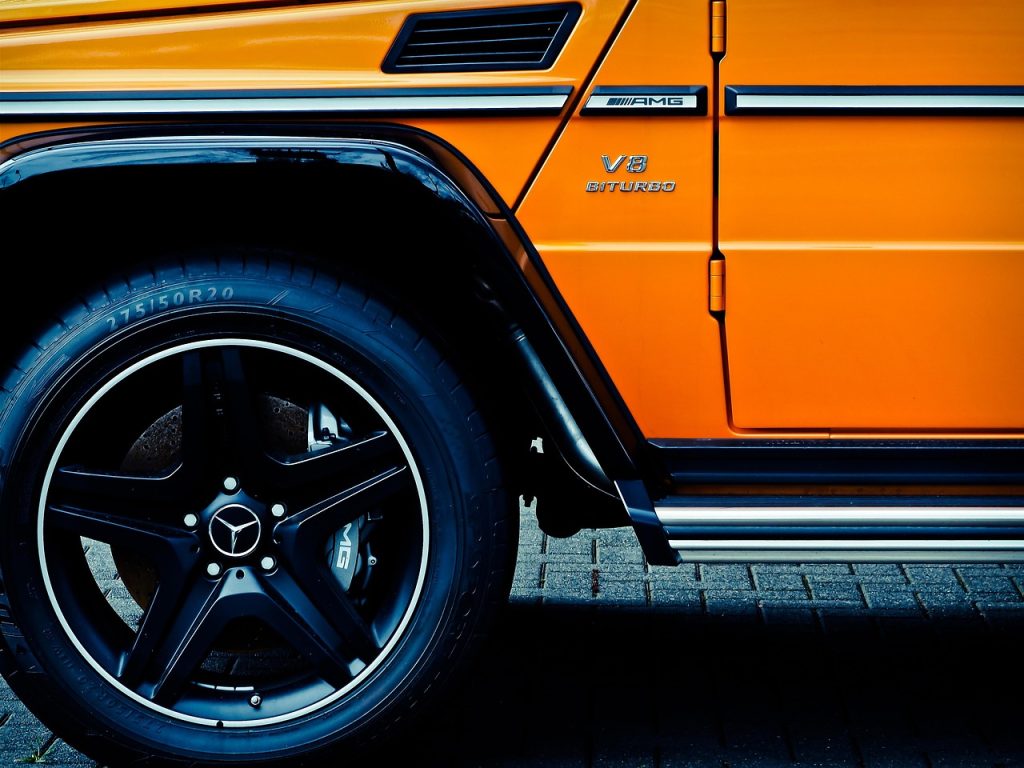
The Chinese copycat SUV problem is bigger than one model
China’s car industry has spent years closing the gap with Western brands, and part of that journey has involved building vehicles that look uncannily like established European crossovers. The Zotye SR9 is a mid-size CUV produced by Zotye Auto for the Chinese market, a vehicle that illustrates how closely some domestic manufacturers track foreign styling while offering a very different ownership proposition. As a mid-size CUV, the Zotye SR9 is positioned as an attainable family SUV rather than a premium flagship, yet its proportions and detailing are clearly meant to evoke the kind of European design language that commands far higher prices in export markets.
Price is the sharpest tool in this strategy. Official figures show that pricing for the Zotye SR9 ranges from 109.800 to 162.800 yuan, a fraction of what a well-equipped German luxury SUV costs in North America or Europe. That gap is what makes the thought experiment so stark: for the cost of a single high-end Mercedes, a buyer in China could almost assemble a small fleet of domestic crossovers that echo the same visual cues. The trade-off is that the cheaper CUV is built by a relatively young automaker that has not yet proven it can match the durability, safety validation, and residual values that underpin the premium segment.
Cost disruption, from AI to EVs, is reshaping expectations
The pricing pressure that enables Chinese SUVs to undercut European rivals is not confined to the showroom. Across technology sectors, The Chinese are demonstrating that they can deliver similar or better performance at dramatically lower cost, resetting what consumers expect to pay for advanced products. In artificial intelligence, one prominent example is a Chinese model that reportedly operates at roughly 90% less in cost than comparable Western systems, a figure that has rattled investors and underscored how quickly cost structures can be overturned when scale and state-backed ecosystems align. That kind of 90% cost delta is a warning sign for any industry that has long relied on premium pricing to fund research and brand cachet.
Automakers are already reacting. Executives at legacy brands know that if Chinese manufacturers can apply the same cost discipline to electric vehicles and connected-car software that they have brought to AI, the traditional premium ladder will come under intense strain. The Chinese advantage in batteries, supply chains, and domestic demand gives them room to experiment with aggressive pricing while still investing in new platforms. For a buyer weighing an $80,000 Mercedes SUV against a far cheaper Chinese alternative, the question becomes whether the established brand can justify its margin in a world where disruptive players have shown they can slash costs without immediately sacrificing capability.
Western carmakers scramble to match China on value and trust
Western brands are not standing still in the face of this pressure. Ford, for example, has publicly framed its next wave of electric vehicles around the need to compete directly with Chinese rivals on affordability, signaling that it intends to match China’s EVs on costs rather than cede the lower end of the market. Enthusiasts discussing the company’s strategy point out that Ford has already walked away from some smaller, lower-margin models, noting that one compact car was regarded as a successful product but was discontinued in 2021 as the company shifted focus to higher margin, more expansive cars. That history, captured in a detailed discussion, shows how difficult it is for legacy automakers to chase both volume and profit while responding to Chinese price aggression.
Trust is the other half of the equation, and here Chinese brands still face headwinds. Zotye Automobile, the parent behind several copycat-style SUVs, has already drawn scrutiny from regulators at home. Zhejiang securities officials issued a warning letter to Zotye Automobile (SHE:000980) for inaccurate financial reporting and other issues under China’s information disclosure rules for listed companies, a reminder that corporate governance can lag behind product ambition. That episode, documented in a regulatory warning, will matter to buyers who see an $80,000 Mercedes not just as a vehicle but as a long-term asset backed by a tightly audited multinational.
Even in the AI arena, where The Chinese cost advantage is most dramatic, analysts stress that low prices alone do not guarantee global dominance. A detailed conversation about China’s growing influence on AI notes that the Chinese model’s ability to operate for 90% less in cost is a game changer, but also raises questions about data governance, export controls, and interoperability with Western systems. Those same concerns echo in the car market, where a cheap SUV that imitates a European silhouette must still clear regulatory, safety, and financing hurdles before it can truly substitute for a Mercedes in the eyes of cautious buyers. For now, the $80,000 decision is less about choosing between two similar products and more about deciding whether cost disruption and visual mimicry are enough to outweigh the still-potent pull of established engineering and institutional trust, a tension that is captured in ongoing debates about China’s influence on high-tech industries.
More from Wilder Media Group: