
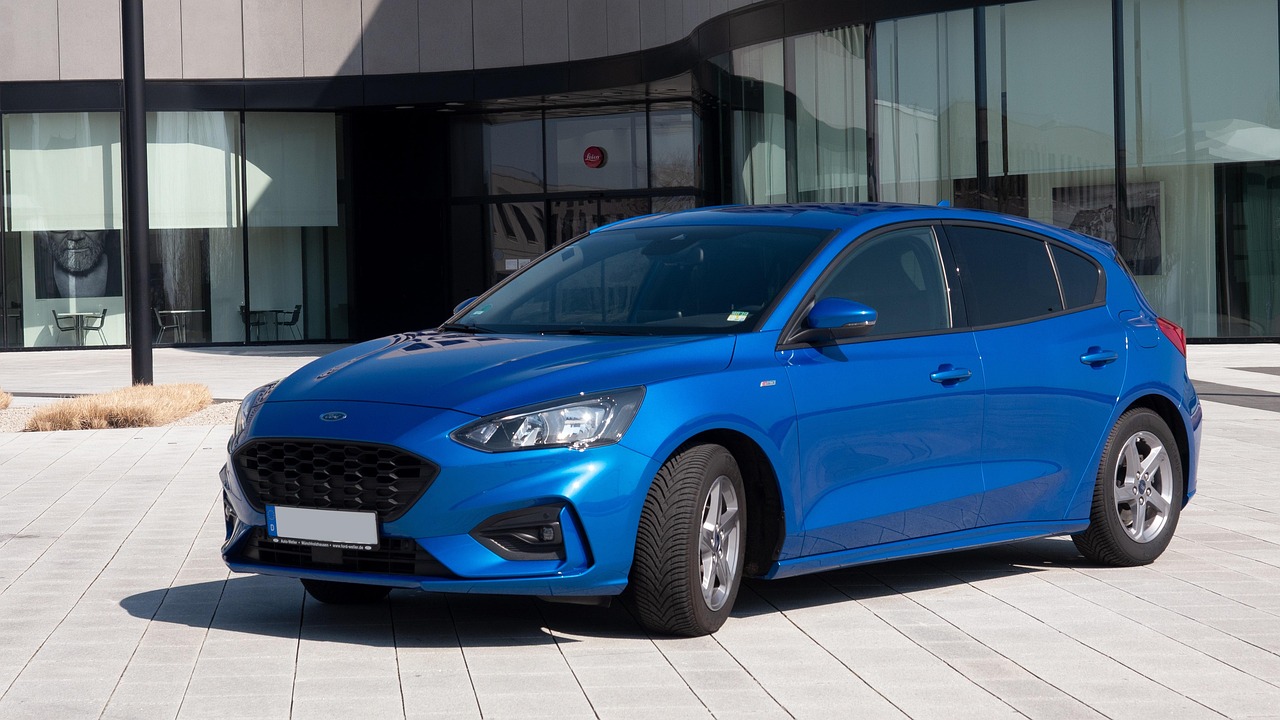

Ford is taking a direct swing at sticker shock in American showrooms, rolling out an all-new car that slides in under the $40,000 mark and is built specifically for buyers who have been priced out of the new-vehicle market. With the average new vehicle MSRP in America having blown past the $50,000 line, the company is betting that a purpose-built affordable model can reset expectations without feeling like a penalty box. The move is not just about one car, either, but about proving that a mainstream brand can still deliver value in a market that has drifted steadily upmarket.
Instead of treating affordability as a trim level or a fleet special, Ford is framing this new sub-$40K entry as a core part of its future lineup and a test bed for a fresh vehicle architecture. In a landscape where shoppers are used to crossovers and trucks dominating the conversation, a relatively attainable car with modern tech and a realistic payment could be a quiet revolution. The question now is how far Ford is willing to push this strategy and how quickly it can scale it across other segments.

Why a Sub-$40K Car Matters Right Now
The simple reality is that new cars have gotten too expensive for a huge slice of American households, and Ford is openly acknowledging that problem by targeting a price below $40,000 for its new model. Internal data and industry trackers show the average new vehicle MSRP in America has already cleared the $50,000 threshold, a psychological and financial barrier that leaves many shoppers stretching loan terms or walking away from the market altogether. By positioning this car comfortably under that average, Ford is trying to create breathing room in monthly payments without forcing buyers into bare-bones transportation.
That pricing strategy is not happening in a vacuum. Ford has already told its retail network that more vehicles under the $40,000 mark are on the way, signaling to dealers that affordability is now a formal corporate priority rather than a side project. In those conversations, Ford CEO Jim has tied internal goals and even team incentives to hitting that price band, which is a strong hint that this new car is the opening act in a broader push. When leadership starts linking compensation to sub-$40,000 offerings, it tells investors and dealers alike that the company sees long-term volume and loyalty in going downmarket again.
The Car, The Platform, And Ford’s Bigger Affordable Play
Ford is not just dusting off an old chassis and slapping a cheap sticker on it; the new sub-$40K car is built on a fresh architecture designed to be flexible and cost-efficient. Company materials describe it as a foundation that can support multiple body styles and powertrains, which means this first car is likely only one flavor of what the platform can do. That modular approach is crucial if Ford wants to keep the MSRP below $40,000 while still offering features that buyers now expect as standard, from advanced safety tech to modern infotainment.
The financial logic is straightforward: spread development costs across several models and you can afford to keep each individual vehicle’s price in check. Reporting on Ford’s product roadmap already points to a pipeline of five vehicles coming in under $40,000, including at least one new EV that is set to arrive in 2027. By tying this car to that same strategic umbrella, Ford is effectively using it as a proof of concept for a family of more affordable vehicles that can share parts, software, and manufacturing footprints. If the first entry hits its price and volume targets, it will validate the entire architecture and give Ford confidence to accelerate the rest of the lineup.
Affordability, however, does not mean Ford is ignoring the shift toward electrification and new propulsion tech. In internal and public presentations, executives have framed the next wave of Ford electric vehicles as a “next leap” that has to balance cost with capability, rather than chasing headline-grabbing specs at any price. That mindset is visible in the way the company talks about its EV strategy in materials like The Next Leap, where the focus is on global competitiveness and disciplined engineering. Even if this particular sub-$40K car launches with a conventional powertrain or a hybrid setup, it is clearly part of a continuum that will include lower-cost EVs built on the same or related underpinnings.
Trucks, Dealers, And How This Fits Ford’s U.S. Game Plan
To understand why Ford is leaning so hard into value, it helps to look at what the company is doing on the truck side of the house. The brand has already previewed a small electric pickup with a target price in the $30,000 range, a move that shows it is willing to compress margins to capture buyers who might otherwise default to used vehicles. Coverage of that program, including analysis from channels like Truck King, highlights how Ford is trying to carve out a new entry point in a segment that has ballooned in size and price. Pairing a budget-friendly truck with a sub-$40K car gives Ford a one-two punch aimed squarely at cost-conscious Americans who still want something new in the driveway.
More from Wilder Media Group: