
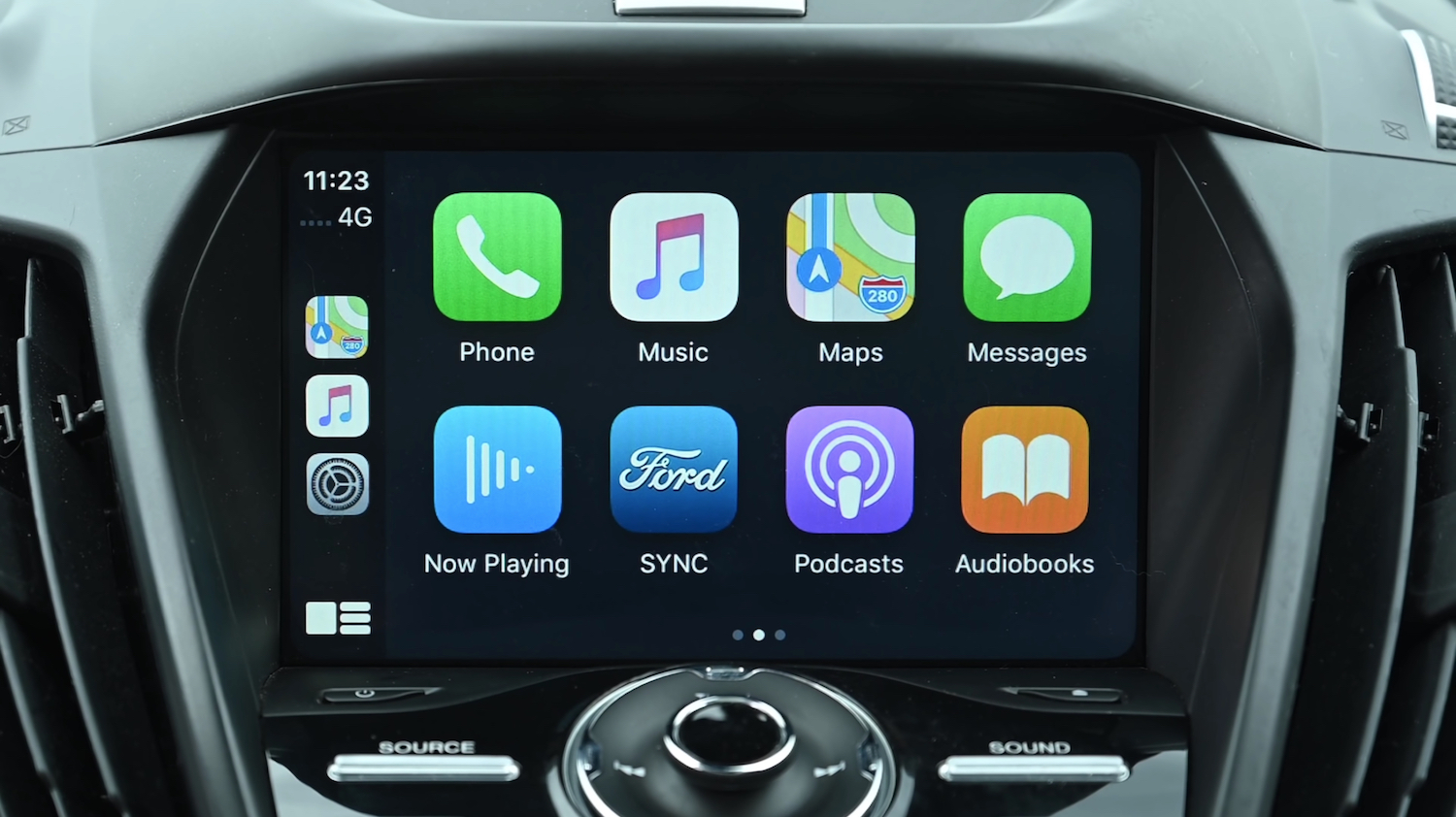

Ford is drawing a clear line in the sand on in-car software, treating Apple CarPlay not as a temporary add-on but as a central part of its cockpit strategy. While some rivals walk away from phone projection in favor of fully proprietary systems, Ford is publicly committing to keep CarPlay deeply integrated alongside its own technology. That stance turns the company into a test case for whether traditional automakers can balance data ambitions with drivers’ demand for familiar, phone-like interfaces.
The commitment is not just a marketing slogan. It is backed by specific product decisions, from hardware modules and SYNC upgrades to new digital dashboards that still leave room for Apple’s ecosystem. Taken together, those choices show how Ford is trying to keep iPhone owners loyal without surrendering the entire dashboard to outside platforms.
CarPlay Becomes a Strategic Line in the Sand
Ford’s decision to keep Apple CarPlay at the heart of its infotainment strategy comes at a moment when the industry is sharply divided over who should control the dashboard. Some automakers, including General Motors, have moved to strip out phone projection in new electric models so they can own more of the software, data and subscription revenue. Ford is moving in the opposite direction, with executives stressing that Apple CarPlay is a “product our customers really want” and that removing it would cut against the company’s promise to give drivers genuine choice, a point underscored in reporting on how Ford, Apple, General Motors are taking different paths.
That choice is not just about convenience, it is about brand positioning. By leaning into CarPlay rather than treating it as a threat, Ford is signaling that it sees value in being the automaker that plays nicely with the devices people already carry. Analysts note that Apple’s ecosystem is often the preferred option for drivers who want a consistent experience across phone, earbuds and car, a dynamic highlighted in coverage explaining why Apple CarPlay is generally the preferred option for many iPhone owners. In that context, Ford’s stance looks less like a concession and more like a calculated bet that aligning with Apple will help it win and retain customers in a crowded market.
Jim Farley’s Public Pledge Locks In the Direction
The strategic tone is being set from the top. Ford CEO Jim Farley has repeatedly gone on the record to say that Apple CarPlay and Android Auto are staying in Ford vehicles, framing the decision as a response to what drivers actually use. During a conversation with The Wall Street Journal, Ford CEO Jim Farley emphasized that customers rely heavily on Apple and Android apps for navigation, music and messaging, and that ripping those out would be a mistake. That kind of explicit pledge makes it harder for the company to quietly reverse course later, and it gives dealers a clear message to take to shoppers who are wary of losing CarPlay in their next vehicle.
Farley has also struck a nuanced tone on Apple’s more ambitious next-generation platform, often referred to as CarPlay Ultra. In interviews, he has suggested that Ford is not fully convinced by the way Apple wants to extend its interface across every screen and control in the car, even as he reiterates that basic CarPlay and Android Auto are not going anywhere. Coverage of his comments notes that Still, the data hasn’t yet persuaded carmakers to hand over full control of the dash to Apple, and Farley’s stance fits that pattern. He is drawing a line between phone projection, which Ford embraces, and total software dominance, which it resists.
Reaffirming CarPlay as a “Must Have” Feature
Ford’s leadership is not alone inside the company in treating CarPlay as non‑negotiable. Executives have described the feature as a “must have” in new vehicles, a phrase that has been echoed in coverage of Ford’s latest statements on the topic. One detailed report on the company’s software roadmap explains that internal surveys and usage data show drivers overwhelmingly plug in their phones and launch CarPlay when it is available, which is why Ford has publicly reaffirmed its ongoing commitment to keeping the feature in future models.
That message has filtered into enthusiast communities as well, where Ford’s stance is being closely watched. In one widely shared discussion, fans highlighted how the company’s finance chief is backing up Farley’s comments with clear guidance to investors. According to a summary of that conversation, Ford CFO Sherry House confirmed that the automaker sees CarPlay as a core expectation for buyers, not a niche add‑on. When both the CEO and CFO are aligned in public on a technology choice, it signals that the commitment is baked into product planning and financial models, not just marketing copy.
How SYNC and CarPlay Coexist in Ford’s Lineup
Under the hood, Ford is not simply handing the keys to Apple. The company continues to invest heavily in its own SYNC software, and it is pursuing a hybrid model that blends native features with third‑party projection. Reporting on Ford’s infotainment roadmap notes that the company is explicitly choosing to keep CarPlay while still evolving SYNC, rather than following rivals that are dropping phone projection entirely. One analysis describes how Ford is using its in‑house system for deeper vehicle controls and data services, while letting drivers bring in their own apps for navigation and media, a balance captured in coverage explaining that But instead of abandoning CarPlay, Sync is being positioned as the backbone that works alongside Apple’s interface.
That coexistence is already visible in the current lineup. Dealer materials spell out that Ford vehicles from the 2017 model year onward, when equipped with SYNC 3 or newer, support both Apple CarPlay and Android Auto. A detailed breakdown for shoppers notes that Which Ford Vehicles Have Apple CarPlay and Android Auto support, and it ties that capability directly to SYNC hardware and software levels. In practice, that means Ford can keep rolling out its own connected services while still reassuring iPhone and Android users that their familiar apps will appear on the center screen the moment they plug in or connect wirelessly.
Digital Experience: Ford’s Answer to Next‑Gen CarPlay
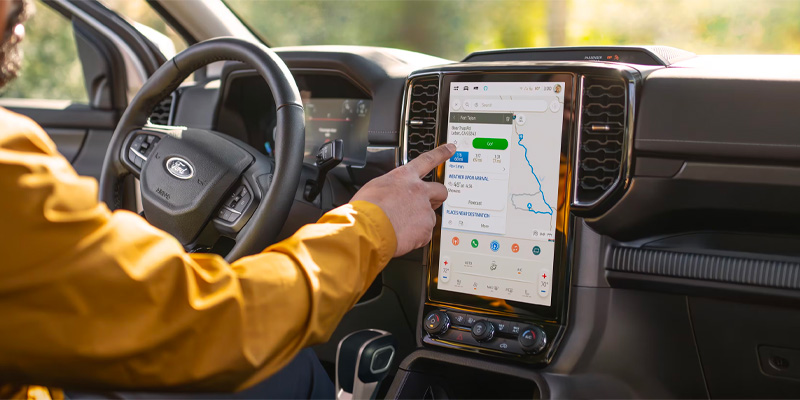
Ford’s commitment to CarPlay does not mean it is standing still on its own software. The company has unveiled a new in‑car platform called Digital Experience, which is designed to power richer graphics, faster responses and more integrated vehicle controls. This system is Ford’s answer to Apple’s next‑generation CarPlay concepts, which envision Apple’s interface stretching across instrument clusters, climate controls and more. Reporting on the rollout explains that Ford has unveiled its answer to next‑generation CarPlay with Digital Experience, while still keeping a key feature that iPhone users will appreciate.
That key feature is continued support for Apple CarPlay within the new environment. Rather than blocking Apple’s software from the upgraded screens, Ford is building Digital Experience so that CarPlay can still run on the main display while Ford’s own interface handles deeper vehicle functions. The result is a layered approach: drivers can use Apple Maps or Spotify through CarPlay, while still accessing Ford‑specific settings, driver assistance controls and over‑the‑air updates through Digital Experience. It is a practical demonstration of Ford’s broader strategy to integrate Apple where customers expect it, without ceding total control of the cockpit.
CarPlay Ultra: Enthusiasm, Skepticism and Ford’s Middle Path
The arrival of CarPlay Ultra, Apple’s more expansive vision for in‑car integration, has sharpened the debate inside automakers. Some technology vendors and accessory makers are already embracing the idea of Apple’s interface taking over more of the dashboard, including instrument clusters and advanced widgets. One overview of Ford‑compatible setups describes how Ford Models Supporting Apple CarPlay Ultra in 2025 include electric vehicles that aim to redefine the driving experience for tech‑savvy, environmentally conscious buyers. That kind of aftermarket and accessory support shows there is real demand for deeper Apple integration among some Ford owners.
Inside Ford itself, however, the tone is more cautious. Jim Farley has been quoted as saying the company does not like the execution of CarPlay Ultra, even as it keeps standard CarPlay and Android Auto in the lineup. Coverage of his comments notes that Ford CEO Jim Farley is not sold on Ultra but is very interested in putting AI assistants in every car, suggesting that Ford wants to innovate on voice and intelligence while keeping Apple’s role more focused on media and navigation. That middle path allows Ford to tap into Apple’s strengths without letting a single external platform dictate the entire user experience.
Instrument Clusters and CarPlay Ultra Integration
One of the most contentious aspects of CarPlay Ultra is its push into the instrument cluster, the space directly in front of the driver that traditionally belongs to the automaker. Accessory makers that specialize in Ford integrations are already experimenting with how Ultra can extend into that area. A technical explainer on these setups notes that with Ultra in Ford vehicles, standard CarPlay remains on the main display while CarPlay Ultra can put navigation prompts, media information and other widgets into the instrument cluster, making daily routines smoother and safer for drivers who like Apple’s design language.
For Ford, the question is how far to let that integration go in factory systems. On the one hand, letting Apple render key driving information could create a seamless experience for iPhone users who move between different vehicles. On the other, it raises concerns about data access, long‑term support and the ability to differentiate Ford’s own digital identity. Farley’s cautious comments about Ultra, combined with the company’s investment in Digital Experience, suggest that Ford will likely keep tight control over core driving displays even as it allows CarPlay to occupy prominent real estate on center screens and, potentially, limited portions of the cluster in specific configurations.
Hardware: USB Hubs, Modules and the Aftermarket Ecosystem
Ford’s software stance is reinforced by a growing ecosystem of hardware that makes CarPlay easier to access and retrofit. For owners of vehicles equipped with SYNC 3, there are genuine Ford parts that add or improve CarPlay support through upgraded USB hubs and modules. One such component is marketed as an Apple USB CarPlay module for Sync, which is designed to integrate cleanly with factory wiring and controls. The availability of official modules signals that Ford is not only supporting CarPlay in new builds but also enabling existing customers to catch up.
Searchable product listings highlight how these modules and hubs are being sold with clear references to Apple compatibility and SYNC integration. One listing describes a Great New Apple USB CarPlay module for Sync shipped directly to buyers, while another emphasizes that Description Installation Videos Reviews Warranty These Ford USB Media Hubs are Apple CarPlay compliant for use with SYNC systems. Parallel search results repeat the same positioning, describing a Great New Apple USB module for Sync shipped from FordPartsOne.com and noting that Ford USB Media Hubs are built to support Apple integration. Together, these parts form a tangible backbone for Ford’s promise that CarPlay is not just for the latest flagship models.
Customer Expectations and the Competitive Landscape
Ultimately, Ford’s commitment to Apple CarPlay is a response to customer behavior. Surveys and dealer feedback consistently show that buyers walk into showrooms asking whether a vehicle supports CarPlay and Android Auto, often treating those features as table stakes rather than luxuries. Reporting on Ford’s stance notes that the company sees itself as committed to giving customers choice, even as some competitors try to steer drivers into proprietary apps. That framing is captured in coverage explaining that In the current market, Apple’s ecosystem is generally the preferred option for many drivers who already live inside the iPhone universe.
Ford’s bet is that aligning with those expectations will pay off in loyalty and sales, even if it means sharing some of the dashboard spotlight with Apple. By keeping CarPlay as a core feature while building out SYNC and Digital Experience, the company is trying to occupy a middle ground between tech‑first rivals that want to own every pixel and traditionalists who treat software as an afterthought. The next few product cycles, especially as CarPlay Ultra and Ford’s own AI‑driven assistants mature, will show whether that hybrid approach can deliver the best of both worlds without diluting either brand’s strengths.
More from Wilder Media Group: