

Self-driving trucks are hauling freight on interstate highways. Electric air taxis are completing test flights over real cities. And the sedan in your driveway may soon get a software update that changes how it sees the road. As of early 2026, these three threads of transportation technology are no longer developing in isolation. They are converging, and the result is reshaping how people, regulators and investors think about moving from point A to point B.
None of this arrived as a single dramatic breakthrough. Instead, it has been a steady accumulation: autonomous systems graduating from closed test tracks to revenue service, aircraft manufacturers pushing toward federal certification, and automakers rebuilding vehicles around artificial intelligence rather than horsepower.
Autonomous driving moves into revenue service
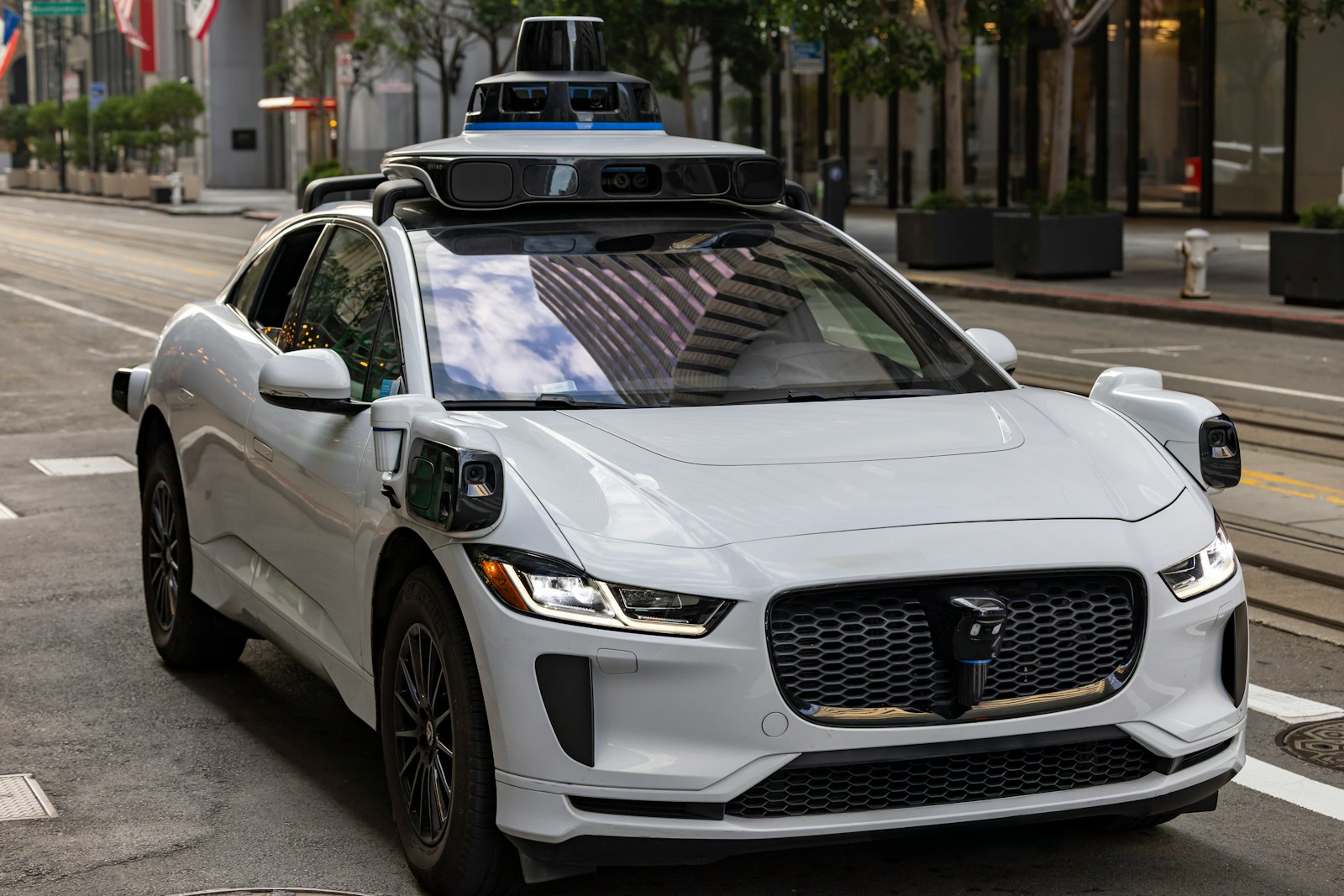
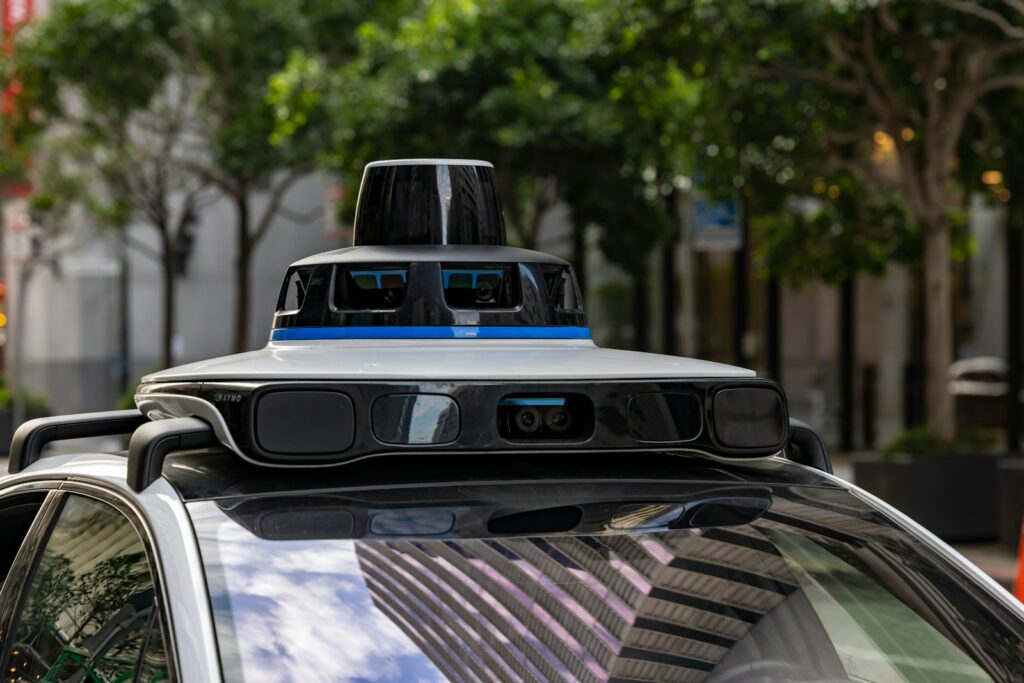
The clearest sign that self-driving technology has left the lab is that companies are now making money from it. Waymo, Alphabet’s autonomous vehicle unit, has scaled its robotaxi fleet to roughly 2,500 vehicles across U.S. cities, offering paid rides in San Francisco, Phoenix, Los Angeles and Austin. That fleet size forces a shift in how city planners, insurers and transit agencies engage with autonomy: it is no longer a curiosity but a service that shares lanes with buses and bikes.
Freight may be where the economics bite hardest. A 2025 World Economic Forum roadmap on autonomous vehicles outlines how driverless trucks can operate continuously on long-haul interstate corridors, cutting per-mile costs by removing the need for mandatory rest stops. Human drivers, in this model, handle the complex first and last miles through city streets while the autonomous system covers the predictable highway stretches overnight. Transportation analysts tracking the sector note a broad shift from pilot programs to commercial deployment, particularly in freight and long-haul transport.
The picture is not uniformly rosy. GM’s Cruise robotaxi program suspended operations in late 2023 after a pedestrian-dragging incident in San Francisco and has been slow to restart. Tesla’s Full Self-Driving software remains at Level 2 automation, requiring constant driver supervision despite its name. The gap between Waymo’s cautious, sensor-heavy approach and competitors’ more aggressive timelines illustrates that “autonomous driving” is not one technology but a spectrum, and the companies at different points on that spectrum face very different regulatory and safety realities.
Cars become software platforms
While headlines focus on when cars will fully drive themselves, automakers are quietly rebuilding the vehicle as a software product. Industry observers describe 2026 as the year the car completes its transition from hardware-led machine to AI-first platform. Features arrive as over-the-air updates. The same physical car can gain new driver-assistance capabilities, improved battery management or a redesigned dashboard interface years after it rolls off the assembly line.
At CES 2026 in January, this shift was on full display. In-vehicle AI systems demonstrated the ability to monitor driver attention in real time, detecting fatigue or distraction and intervening with alerts or even adjusting cabin lighting and temperature to help the driver refocus. Nvidia unveiled its Cosmos platform (previously code-named Alpamayo), designed to cleanly separate hardware and software layers in autonomous driving development, letting carmakers swap in new AI models without redesigning physical sensor arrays.
This software-centric model could also change what cars cost over their lifetimes. As value migrates from expensive mechanical components to scalable digital features, some suppliers argue that the long-term cost of ownership may drop, particularly for buyers who keep vehicles longer and benefit from continuous software improvements rather than trading in for a new model every few years. The catch: it also creates new dependencies on subscription fees and manufacturer support cycles that did not exist when a car was just a car.
Electric air taxis edge toward certification, not mass adoption
Electric vertical take-off and landing (eVTOL) aircraft have moved from renderings to physical prototypes completing real test flights. But the gap between a working prototype and a certified, revenue-generating air taxi service remains wide. Aviation analyst Liam Dorsey, in a March 2026 assessment for Future Transport News, weighs which manufacturer strategies will survive once regulators and investors demand actual routes and paying passengers rather than demonstration flights.
The leading contenders are Joby Aviation and Archer Aviation in the United States, Lilium in Europe (which emerged from insolvency proceedings in early 2025), and EHang in China, which already holds a type certificate from China’s Civil Aviation Administration and has conducted commercial demonstration flights in Guangzhou. In the U.S., both Joby and Archer are pursuing FAA Part 135 air carrier certificates, the same certification framework used by helicopter charter operators.
Pricing keeps early vehicles firmly in luxury territory. California-based Alef Aeronautics is taking preorders for its Model A, a road-legal vehicle that also flies, at a listed price of $300,000. Other eVTOL aircraft designed purely for air taxi service are projected to cost operators between $800,000 and $1 million per unit. Market research firm Mordor Intelligence tracks the global eVTOL aircraft market through a study period extending to 2031, projecting meaningful fleet growth only as type certifications are granted and infrastructure catches up.
From Dubai to Dallas, cities compete for the sky
Cities and national governments are racing to position themselves as hubs for urban air mobility, a sector that one investor analysis on Yahoo Finance values as a potential $100 billion market (though that figure represents a long-range projection, not current revenue).
Dubai has moved fastest. Joby Aviation has a formal agreement with Dubai’s Roads and Transport Authority to launch commercial air taxi service, with plans to integrate booking directly into the Uber app. The city’s existing helicopter infrastructure and relatively uncongested low-altitude airspace give it a head start that denser, more regulated cities cannot easily replicate.
In the United States, Dallas, Los Angeles and Miami have emerged as leading candidates for early routes, partly because of favorable weather and partly because of active state-level support. The FAA, under pressure from both industry and the White House, has signaled a willingness to streamline eVTOL certification. A Seattle Times report on the policy landscape describes how the current administration has positioned advanced air mobility as a priority, though the aircraft themselves still look and operate more like helicopters than airplanes, raising familiar questions about noise and community acceptance.
European regulators are proceeding more cautiously. Paris explored air taxi demonstrations during the 2024 Olympics, but permanent routes depend on EASA certification timelines and municipal noise ordinances that remain unresolved. The Middle East, meanwhile, is folding vertiport construction into broader smart-city master plans, with year-by-year infrastructure forecasts extending to 2036.
Infrastructure, regulation and money still lag behind the hardware
The common bottleneck across autonomous vehicles, software-defined cars and air taxis is not the technology itself but everything around it. Roads need vehicle-to-infrastructure communication systems. Cities need vertiports with charging capacity. Insurance companies need actuarial data that barely exists yet. And regulators at every level, from the FAA to state DMVs, are writing rules for machines that are still changing shape.
Funding is flowing, but unevenly. Venture capital and public-market investors have poured billions into Joby, Archer, Waymo and a constellation of autonomous trucking startups. Yet many of these companies remain pre-revenue or deeply unprofitable. The history of transportation technology suggests that the companies building today’s prototypes may not be the ones operating tomorrow’s fleets. What seems increasingly certain is that the vehicles of the next decade will be electric, networked and, to varying degrees, autonomous, whether they travel on asphalt or through the air.
The question is no longer whether these technologies work. It is whether the cities, laws and business models around them can keep pace.
More from Wilder Media Group: