

Across the country, drivers are discovering that a brief stop in the wrong place can trigger bills that look less like routine towing and more like punishment. A few minutes in a private lot or a misread sign can escalate into four‑figure charges, aggressive confrontations and a maze of fine print that feels stacked against anyone without a commercial fleet or a lawyer on speed dial. The story suggested by a 15‑minute park is not an outlier, it is a window into a system that often treats minor parking mistakes as revenue opportunities.
From semi‑truck operators hit with invoices that balloon from thousands to five figures, to shoppers and hospital visitors who return to find their cars gone before their paid time expires, the pattern is strikingly consistent. Drivers describe surprise tows, opaque fees and companies that move faster than any meter maid, then slower than any bank when it comes to explaining the bill. Their accounts, backed by police body cameras, community complaints and legal advice forums, show how a basic service can morph into something that feels like a financial trap.

The 15‑Minute Stop That Turned Into a Four‑Figure Bill
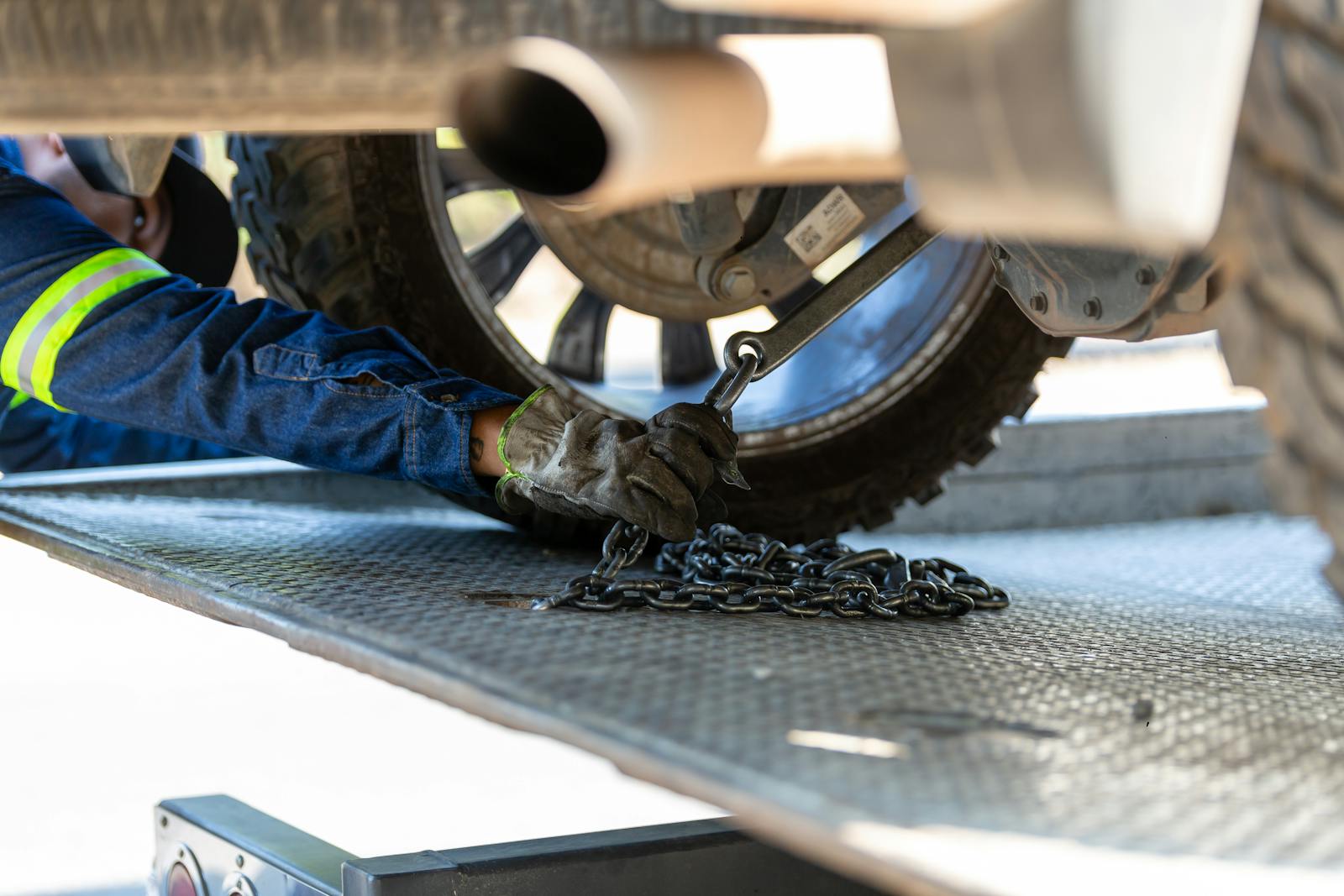
The clearest illustration of how quickly a routine stop can spiral comes from a trucker who left his semi in a private lot for what he believed would be only a short break. He expected to be gone a few minutes, not long enough, in his mind, to trigger anything more serious than a warning. Instead, the tow operator moved in almost immediately, and by the time the driver realized what was happening, the rig was already being hooked up and the meter on his miscalculation was running hard. As one account put it, “Since he thought it was just a short time that he was going to be there, probably a few minutes, he didn’t really think that there would be a problem,” yet the company began preparing to remove the semi as soon as it could justify the callout, turning a brief stop into a multi‑thousand‑dollar ordeal.
What started as a roughly $3,000 tow did not stay that way. Disputes over storage, labor and add‑on services pushed the total toward $12,000, a figure that would be eye‑watering even for a major carrier, let alone an individual driver trying to keep a small operation afloat. Both sides later acknowledged that other trucks were also parked illegally in the same area, yet the one driver whose vehicle was already in the process of being removed faced the full brunt of the charges. When the driver tried to intervene as the tow progressed, the company treated the partial hookup as justification for the full fee, a stance that helped the bill explode and raised questions about how fairly such charges are calculated.
Orlando’s Clock‑Running Tow and the Question of Time Limits
If the trucker’s story shows how quickly a tow can escalate, an incident in Orlando highlights how aggressively some companies interpret time limits. A driver there paid to park and believed he still had minutes left when he returned to find his vehicle already on the hook. Body camera footage from the Orlando Police Department captured the tense exchange that followed, with the motorist, identified as John Quillinan, insisting that his time had not expired and that the tow truck driver had taken off with the car before he could even argue his case.
Quillinan said the operator refused to provide a receipt on the spot, forcing him to chase answers after the fact while his car sat in a yard accumulating storage fees. The dispute turned on a narrow window of time, the kind of margin that most drivers assume will be resolved in their favor if they have proof of payment. Instead, the Orlando case suggests that once a vehicle is in motion on the back of a truck, the leverage shifts almost entirely to the company, and any ambiguity about whether the meter had truly run out becomes a secondary concern to the immediate demand for cash to get the car back.
Fast‑Moving Lots and “Predatory” Patrols in Everyday Parking
Beyond high‑profile confrontations, everyday drivers describe a quieter pattern in which tow trucks lurk near busy lots, waiting for any technical violation. In Allston, a Boston neighborhood packed with students and small businesses, one motorist recounted parking in a spot near a convenience store and fast‑food restaurant, only to discover that the signage was fragmented and confusing. The driver said they were in a section away from the building, where “Other signs touching the building and in different sections” created a patchwork of rules that were hard to parse at a glance. By the time they realized the space was being treated as off‑limits, the car was already gone, prompting them to warn others that the situation “is crazy, and be careful” in that lot.
Stories like this often hinge on technicalities: a small sign mounted high on a pole, a faded line on the pavement, or a rule that applies only during certain hours. Yet the enforcement can be anything but technical. Drivers describe trucks circling like enforcement patrols, ready to swoop in the moment someone steps off the property or walks toward a neighboring business. For a shopper who thought they were grabbing a quick snack or coffee, the result can be a several‑hundred‑dollar bill and a lost afternoon, all because the boundaries of a private lot were drawn more to generate revenue than to manage traffic.
When a Short Tow Costs as Much as a Month’s Rent
Even when a tow is undisputed, the price can be shocking. In one case that drew local attention, a driver named Ramponi said his car was removed from a spot in Kansas City and held for less than an hour, yet the bill came to 45 m of custody and a charge of $857. Ramponi told local outlet KSHB that the company towed the car only about three miles, yet the invoice read like a major recovery operation, with line items and fees that bore little relation to the time or distance involved.
The case landed in the middle of a broader debate over new rules in the city that were supposed to rein in aggressive towing and booting practices. Instead, drivers like Ramponi argued that companies had simply shifted tactics, leaning on high base rates and administrative fees to keep revenue flowing. For someone living paycheck to paycheck, an $857 surprise is not a minor inconvenience, it is a crisis that can mean missed rent, skipped medical bills or a drained savings account, all triggered by a tow that took less time than a typical commute.
Hidden Fees, Special Equipment and the Business of Add‑Ons
Behind many of these eye‑popping totals is a second layer of charges that only appears once the car is already in the yard. Some cities have allowed towing companies to bill for “special equipment” or administrative processing on top of the basic hook‑up and mileage, creating a menu of add‑ons that can quickly double or triple the cost. In one investigation, officials calculated that a single fee of 125 dollars per tow, justified as a charge for specialized gear, could generate more than $1.1 million in revenue over time, a figure that stunned residents who assumed their payments were covering only the direct cost of moving a vehicle.
Other reports have focused on companies accused of pushing the boundaries of what the law allows. In Salem, customers complained that a firm called Discount Towing & Recovery was charging excessive rates and skirting regulations meant to protect consumers, while declining to offer detailed explanations. In another city, a company called Sons was filmed towing vehicles from a lot while refusing to answer basic questions from reporters, with one employee slamming a door and another driving off rather than discuss the fees. These examples suggest that the real money in towing often lies not in the initial hook, but in the opaque extras that follow.
“This Was Wrong”: Paid Parking, Vanishing Cars and Outraged Drivers
For many motorists, the most infuriating cases are not those where they misread a sign, but where they did everything right and still lost their car. In Charlotte, a Woman said she paid to park, left her vehicle in a marked space, and returned to find it gone and a demand for $400 to get it back. She described the experience as a clear injustice, insisting that she had followed the posted rules and that the company’s actions felt less like enforcement and more like a trap set for unsuspecting visitors to that part of Charlotte.
Similar anger surfaced in Florida, where a tow operator was accused of hauling away a car before the driver’s paid time had actually expired. In that confrontation, captured on video, the situation escalated quickly, with raised voices and one person shouting “You’re the one in my way do not touch him” as the dispute over the tow turned physical. The clip, which centered on a Dec incident, underscored how emotionally charged these encounters can become when drivers feel they have been wronged and the company responds with forceful tactics rather than calm explanation.
Legal Gray Areas, From California Yards to Detroit Apartment Lots
When drivers try to fight back, they often discover that the legal landscape is murky and heavily tilted toward the companies holding their keys. On a legal advice forum, one poster described how a family emergency pulled them out of state, leaving their car in a private spot in Location California. About one month later, when they returned to retrieve it, the towing company presented a bill that had ballooned with daily storage fees, leaving the owner stunned at how quickly the total had grown. The poster, who began their account with the word About, struggled to find clear guidance on whether any of the charges could be challenged under state law.
In Detroit, community activists have taken a more direct approach. A group called New Era Detroit confronted a company known as Goch and Sons Towing over what they described as predatory practices at apartment complexes near a major hospital. During a heated encounter, New Era Detroit accused the firm of targeting vulnerable residents and visitors, suggesting that the towing patterns around those apartments were less about safety and more about extracting money from people who had few alternatives for parking. The clash, which unfolded in Oct, showed how towing disputes can spill into broader debates about housing, policing and economic justice.
Community Backlash and Calls to “Contact Your Councilmember”
As more drivers share their experiences online, local officials are facing growing pressure to intervene. In New Orleans, residents have used neighborhood forums to document what they describe as aggressive behavior by a company called Mid‑City Towing, posting photos, invoices and detailed accounts of surprise tows. One widely shared thread urged people to “Contact your councilmember,” with one commenter, Bill Plunkett, replying that he already had and another offering a terse “Thanks.”
Commenters in that same discussion did not mince words. One wrote, “Not saying where you parked was right but DANG!,” capturing the sense that even when a driver is technically in the wrong, the response can feel wildly disproportionate. Another simply wrote “DANG,” a one‑word reaction that nonetheless captured the shock many feel when they see the totals on these invoices. The chorus of voices calling for lawsuits, complaints to the attorney general and coordinated reviews suggests that, in some cities, towing has become a political issue as much as a consumer one.
Criminal‑Level Consequences for Everyday Mistakes
Why Reform Is So Hard, and What Might Change It
Supporting sources: Driver stunned as.
More from Wilder Media Group: